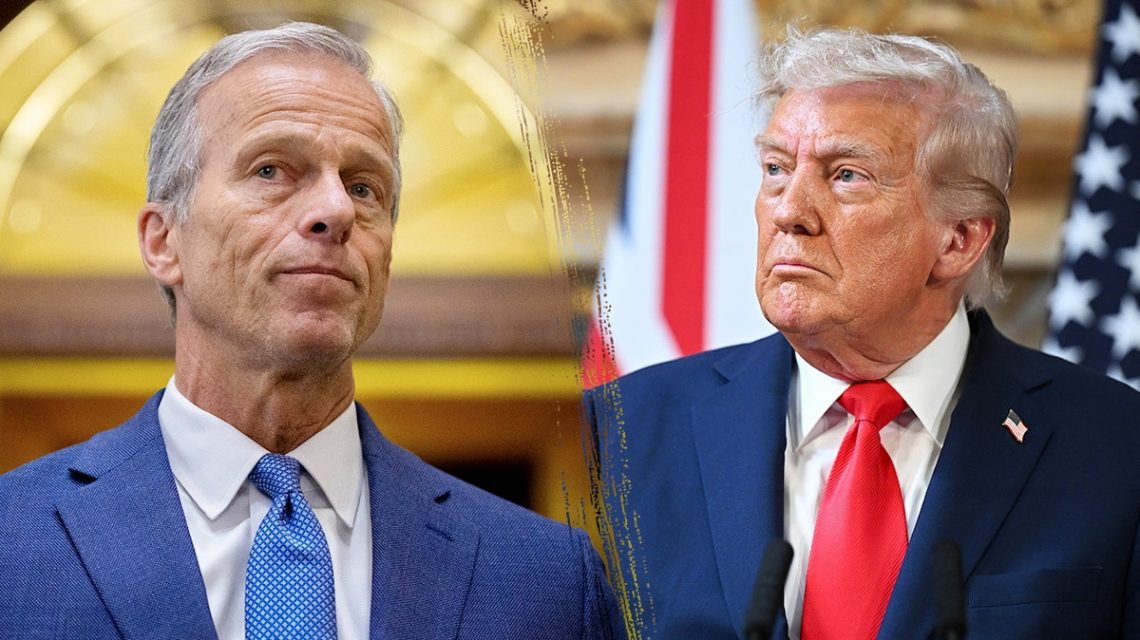
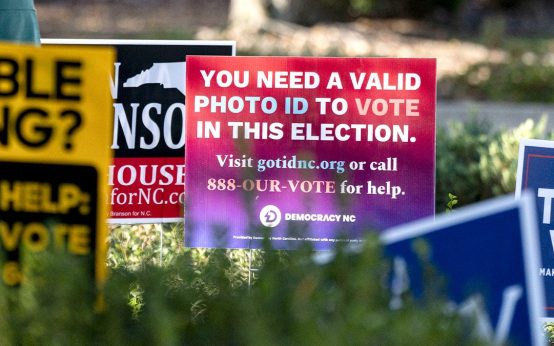
Congressional Republicans, supported by President Donald Trump and their voter base, are pushing for the passage of voter ID legislation. However, the Senate presents a significant obstacle, rendering it a distant possibility for now.
The GOP’s insistence on implementing stricter voter registration requirements nearly threatened Congress’ efforts to bring an end to the recent partial government shutdown. Much like past legislative battles, such as the Democrats’ fight to preserve Obamacare subsidies, the House Republicans attempted to attach election integrity measures, referred to as the SAVE America Act, to a funding package endorsed by President Trump. This thrust the issue back into the spotlight.
Schumer labeled the GOP’s effort as a return to ‘Jim Crow-era’ voter ID laws in the Trump-backed shutdown deal.
Although President Trump earlier urged House Republicans to compromise on their demands, he reaffirmed his advocacy for voter ID legislation during the signing of the funding package. Trump mentioned that many citizens desire voter ID to ensure fair elections. He stated, “We should have voter ID, by the way. We should have a lot of the things that I think everybody wants to see. Who would not want voter ID? Only somebody that wants to cheat.”
While several Senate Republicans are in favor of the proposed bill, they acknowledge it would likely fail without the backing of some Senate Democrats, most of whom adamantly oppose it. Senator Ron Johnson, R-Wis., expressed concerns, indicating that Democrats want to maintain an electoral system susceptible to manipulation.
A central issue is the 60-vote filibuster, which has recurrently stalled Trump’s agenda during his second term. Trump has repeatedly urged Senate Republicans to dismantle the filibuster barrier.
Senator Ron Johnson talks to reporters after the House passed the One Big Beautiful Bill Act.
Senator Johnson and some of his fellow Republicans have considered reviving the talking or standing filibuster. Unlike the modern filibuster, which demands a 60-vote majority, the standing filibuster requires extensive floor debate, utilizing one of the Senate’s most valuable resources: time.
Johnson stated, “The only way that’s going to get passed is if we do a talking filibuster, or we end the filibuster.” However, many Senate Republicans are hesitant to abolish the filibuster, fearing it would inadvertently aid Senate Democrats, who have previously attempted to alter the procedure without success.
One Republican senator indicated that ending the filibuster is off the table, while acknowledging the legislation might still garner 51 Republican votes in the Senate. The subsequent question would be what happens in the likely event of the bill’s failure.
The prospect of returning to the standing filibuster was dismissed by Senate Majority Leader John Thune, R-S.D., who acknowledged some Republican interest in discussing it, but reported no firm commitments.
Senator Eric Schmitt, R-Mo., speaks to reporters after a Republican Caucus meeting.
Implementing the standing filibuster could have significant implications for the Senate due to rules that allow each senator to give two speeches on a bill. As amendments to the bill reset the schedule, this could lead to prolonged debates and a virtual standstill over months.
Despite these challenges, some Republicans are hopeful the bill will secure a moment on the Senate floor. Senator Eric Schmitt, R-Mo., an original supporter of the bill, stated that it is crucial to give the legislation a chance, saying, “I don’t know, I mean, we’ll never know unless it happens.”
Alex Miller is a writer for Fox News Digital, covering the U.S. Senate.
 Federal Reserve Maintains Interest Rates Amid Economic Developments
  Bipartisan Legislation Targets Data Center Power Usage to Protect Consumers
  Democratic Candidates Debate Corporate PAC Contributions in Michigan Senate Race
  Senator McConnell Discharged from Hospital, Working from Home
  Former Deputy Announces Congressional Bid in Virginia
  House of Representatives Advances Voter ID Bill for 2026 Elections