
In a move that could significantly affect the rights of federal employees, the Trump administration has put forth a plan to alter job protections for approximately 50,000 government workers. The Office of Personnel Management (OPM) has issued a final rule seeking to reclassify high-ranking employees whose responsibilities primarily involve implementing presidential policies. This change would strip these employees of the robust job protections they have historically enjoyed, similar to political appointees who can be dismissed more readily.
The reclassification plan, initially reported by The Wall Street Journal, would recategorize career employees who, for decades, benefited from strong job protections, including the ability to contest dismissals before an independent board. Once reclassified, these employees would lose such rights, aligning their status closer to that of political appointees.
In a news release, the OPM described this initiative as a key civil service reform focused on enhancing accountability, improving performance, and reinforcing a merit-based federal workforce. OPM Director Scott Kupor stated, “This rule preserves merit-based hiring, veterans’ preference, and whistleblower protections while ensuring senior career officials responsible for advancing President Trump’s agenda can be held to the same performance expectations that exist throughout much of the American workforce.” The rule also explicitly forbids political patronage, loyalty tests, or political discrimination, and will not be used to alter existing reduction-in-force laws.
Despite these assurances, federal workforce advocacy groups have criticized the reform, arguing it undermines merit-based principles and prioritizes aligning with President Trump’s agenda over public service. The Partnership for Public Service, a nonprofit organization, expressed concern that this reclassification allows for the removal of expert career federal employees who prioritize legal compliance and public service over personal loyalty to the president. The organization warned that such positions might be filled with individuals willing to unequivocally support the president’s directives.
The American Federation of Government Employees (AFGE), the largest union for federal workers, also voiced opposition to the new rule. The AFGE stated that the reform could lead to political patronage and suppress free speech, weakening protections against reprisal for whistleblowers. The AFGE emphasized that the practical implication of the rule is that employees under the new designation could be fired “at will” by political appointees, without the procedural or appeal protections that were previously in place to safeguard the integrity of government functions.
Meanwhile, White House press secretary Karoline Leavitt expressed support for the rule change, suggesting it is a beneficial measure. She remarked, “I think if people aren’t doing their jobs, if they aren’t showing up for work, if they’re not working hard on behalf of this president, they’re not welcome to work for him at all.”
This move follows an executive order signed by Trump before leaving office in 2020, intending to implement a similar employee reclassification known as “Schedule F.” Although President Joe Biden rescinded that order upon taking office, Trump reinstated it following the resumption of his administration. Under Trump’s leadership, significant efforts have been made to reduce the federal workforce, including agency closures and implementation of reduction-in-force notices.
Data released by the OPM recently indicate that since Trump took office again, a total of 242,260 employees have either voluntarily left or been involuntarily removed from the federal workforce.
This development continues to stir significant debate and concern among those working within or watching the federal government, affecting the future landscape of public service employment.
 Federal Reserve Maintains Interest Rates Amid Economic Developments
  Bipartisan Legislation Targets Data Center Power Usage to Protect Consumers
  Democratic Candidates Debate Corporate PAC Contributions in Michigan Senate Race
  Senator McConnell Discharged from Hospital, Working from Home
  Former Deputy Announces Congressional Bid in Virginia
 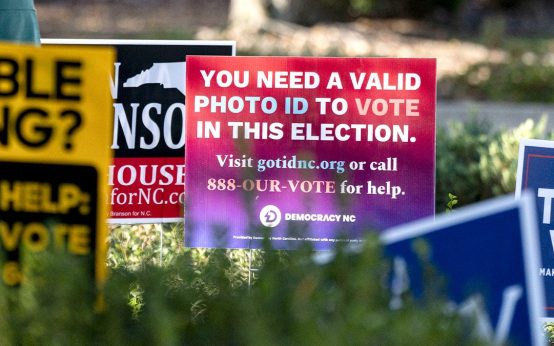 House of Representatives Advances Voter ID Bill for 2026 Elections