The expiration of the New START Treaty on Thursday signifies the end of the last remaining arms control agreement between the United States and Russia, the two countries with the world’s largest nuclear arsenals. The treaty, established in 2010, restricted each country to 1,550 deployed strategic nuclear warheads and included provisions for on-site inspections to ensure compliance.
Despite the ongoing conflict in Ukraine, where Russia ceased its participation in notifications and inspections, the State Department’s recent report suggests that Russia has not significantly surpassed the treaty’s limits. Although former President Joe Biden extended the treaty’s duration for another five years in 2021, further extensions are not possible.
In recent statements, President Trump implied that he might allow the treaty to expire without renewal. A White House representative mentioned that the president intends to decide on the future direction of nuclear arms control independently and expressed interest in maintaining nuclear weapon limits and including China in future discussions.
“This path would allow the U.S. to reinforce strategic stability with Russia and address nuclear weapons at negotiation tables,”
said former Under Secretary of State for Arms Control Rose Gottemoeller. She also noted that none of the three former officials found the treaty flawless, pointing out its inadequacies, specifically in not addressing China’s rising nuclear capabilities and non-strategic nuclear armaments like tactical nuclear weapons.
China, with its rapidly expanding nuclear stockpile, is projected by the Pentagon to possess over 1,000 nuclear warheads by 2035, a substantial increase from approximately 200 in 2019. Both the U.S. and Russia maintain significant nuclear arsenals, estimated at 4,300 and 3,700 warheads, respectively.
Secretary of State Marco Rubio emphasized the challenges of reaching an agreement without including China, acknowledging its growing nuclear arsenal as a critical factor. Russian President Vladimir Putin proposed that both countries adhere to the treaty’s terms for another year without a formal agreement, a suggestion supported by Gottemoeller as viable.
However, others like retired Adm. Charles Richard and Tim Morrison, a former national security aide during Trump’s first term, contended the treaty does not effectively address current strategic concerns. While acknowledging imperfections, Gottemoeller asserted that minimal constraints are preferable to none, citing the potential complications of managing Chinese nuclear expansion concurrently with Russian nuclear activities.
With the treaty’s expiration, concerns have arisen about the possible proliferation of nuclear programs among other countries. Morrison, highlighting the aging U.S. stockpile, emphasized the need for continuous investment to maintain effective nuclear deterrence. He noted that by 2035, every U.S. nuclear warhead will have exceeded its designed lifespan by an average of 30 years.
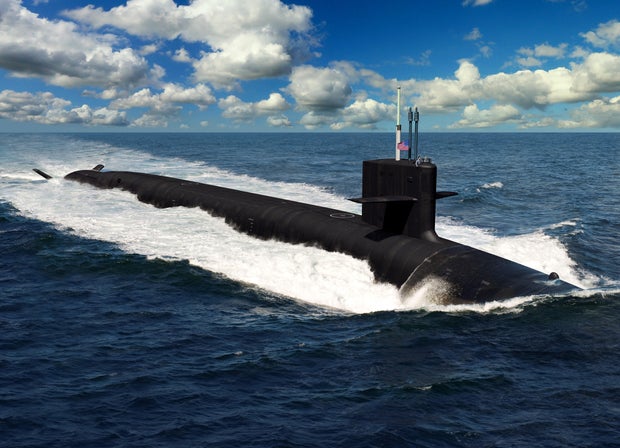
Additionally, effective deployment of nuclear weapons necessitates strengthening the U.S. defense industrial base, particularly concerning the construction of Columbia-class submarines, which are intended to replace the older Ohio-class submarines and become a crucial element of the sea-based nuclear triad.
Retired Adm. Richard pointed out the necessity for additional capabilities alongside the recapitalization of the triad, stressing the need to amplify the numbers, specifically within the bomber and ballistic missile submarine sectors.
 Federal Reserve Maintains Interest Rates Amid Economic Developments
  Bipartisan Legislation Targets Data Center Power Usage to Protect Consumers
  Democratic Candidates Debate Corporate PAC Contributions in Michigan Senate Race
  Senator McConnell Discharged from Hospital, Working from Home
  Former Deputy Announces Congressional Bid in Virginia
  Tensions Between the U.S. and Iran: Navigating Protests and Military Pressure