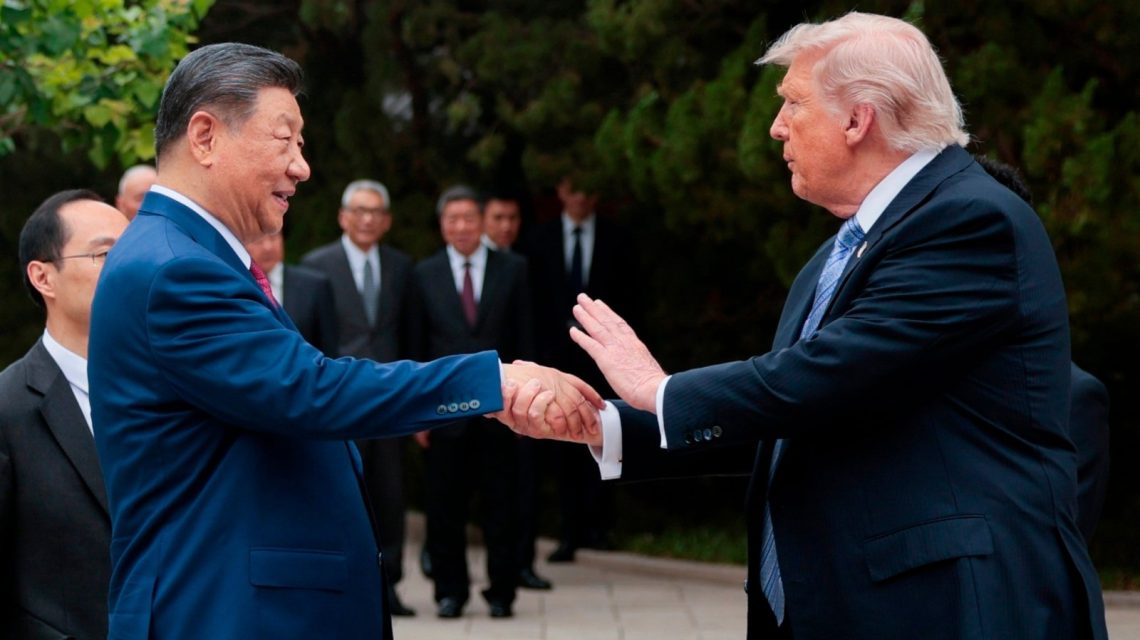
The Office of the U.S. Trade Representative is seeking public opinions on which “nonsensitive” goods might be eligible for tariff reductions in the establishment of a new “Board of Trade” with China. This initiative is a direct result of President Donald Trump’s recent visit to Beijing for discussions with Chinese President Xi Jinping.
U.S. Trade Representative Jamieson Greer stated, “We welcome comments from interested parties on effective ways to facilitate mutually beneficial trade with China while continuing to use tariffs to defend American economic and national security and promote balanced and reciprocal trade.” The administration plans to collaborate with stakeholders from various sectors, such as manufacturing, fishing, ranching, and small businesses, to pinpoint non-sensitive goods that can yield positive outcomes.
The deadline for submitting public comments is July 10. Newsweek sought comments from both the USTR and the Chinese embassy on this matter.
“Since the existing trade dispute was primarily triggered by U.S. tariff actions, any substantive reduction in U.S. duties could help ease long-standing tensions and create space for more constructive engagement in bilateral trade,” said Xin Qiang, deputy director of the Center for American Studies at Fudan University.
The Trump-Xi summit did not yield many results on contentious issues like artificial intelligence and Taiwan, but trade was seen as a promising area for immediate progress. According to a White House statement, the U.S. Trade Representative has defined the Board of Trade as a forum for handling trade in nonsensitive goods, whereas the Board of Investment will address investment-related discussions.
Zongyuan Zoe Liu, a senior fellow at the Council on Foreign Relations, highlighted that these mechanisms, rather than reported purchases of American goods, serve as the “cornerstone” of the U.S.-China agreement.
The trade conflict initiated by Trump during his first term escalated last year with high tariffs on a wide range of countries. Tariffs on Chinese goods reached up to 145 percent in response to what Trump called unfair trade practices and a lack of action on fentanyl precursor producers.
Progress was made in a previous meeting between Trump and Xi in October in Busan, South Korea. The U.S. reduced fentanyl-related tariffs on Chinese products from 20 percent to 10 percent, while China agreed to resume importing U.S. soybeans and temporarily lift restrictions on rare earth exports for one year.