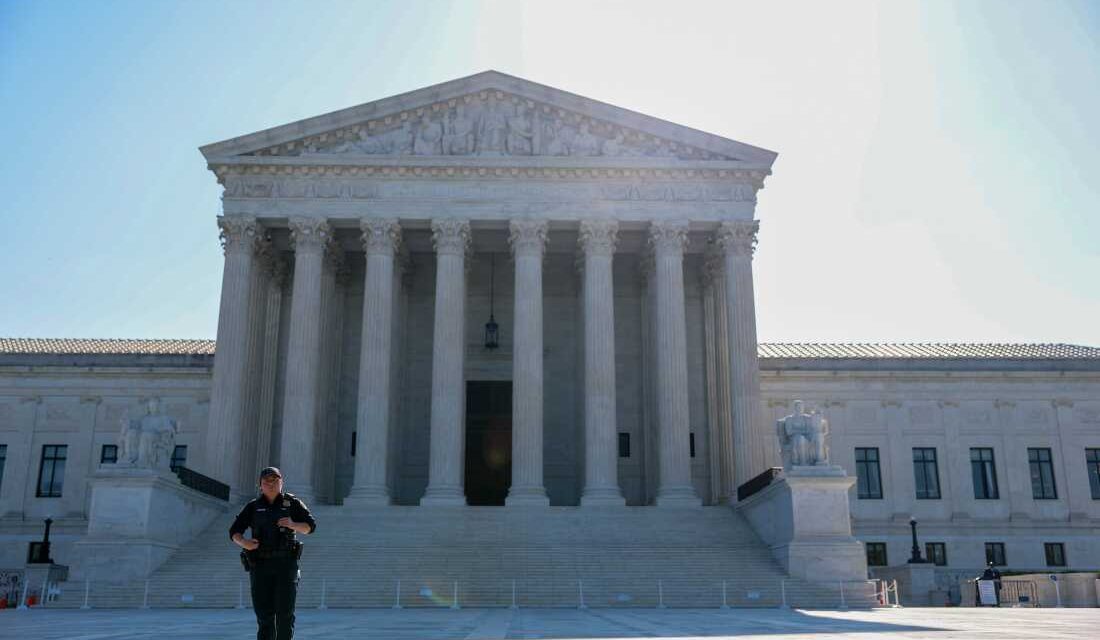
The Supreme Court ruled late Thursday that Alabama cannot immediately carry out an execution using nitrogen gas. This decision supports a lower court’s stance that the use of nitrogen gas violates the Eighth Amendment’s ban on cruel and unusual punishment. In a succinct order, the court denied Alabama’s request. Justices Clarence Thomas, Samuel Alito, and Neil Gorsuch were in favor of Alabama’s position, although they did not issue a written dissent.
For Jeffery Lee, convicted of a 1998 double murder, the decision is a temporary victory. Lee, who was scheduled for execution on July 11, argued against the execution method, claiming it results in prolonged and painful suffocation. Initially, a federal district court dismissed Lee’s argument, allowing Alabama to use its chosen method. However, an appeals court later ruled that the protocol involving nitrogen gas posed a substantial risk of serious harm, causing pain beyond the act of dying.
Reports from journalists and advocates who have witnessed nitrogen gas executions describe the experience as distressing, with individuals reportedly writhing and suffering severely. Justice Sonia Sotomayor referred to the suffocating process as “intense psychological torment” in a prior dissent regarding another execution.
A group of doctors informed the court that, in their opinion, execution via nitrogen gas results in inhumane suffering. The Supreme Court has a history of rulings since 2008 requiring death row inmates to propose alternative execution methods that do not breach the Eighth Amendment. In Lee’s case, he suggested a firing squad as an alternative.
Alabama, appealing to the Supreme Court, claimed that nitrogen gas executions do not inflict severe pain as defined by historical standards of cruel punishments. The Supreme Court had authorized the state’s first nitrogen gas execution in 2024. Since that ruling, Alabama has conducted eight such executions.
The state contended that organizing a firing squad is impractical. This ruling occurs against the backdrop of a growing number of annual executions. According to the Death Penalty Information Center, 47 people were executed across states in 2025, the highest figure in over ten years. So far, 15 executions have been carried out this year, excluding Lee’s case.
Amid these developments, President Trump has pushed for expanded use of the death penalty during his second term, although federal death row currently comprises only three individuals. Additionally, states face difficulties in obtaining drugs for lethal injections as major pharmaceutical companies refrain from participating in executions. This challenge has prompted some states to explore alternative execution methods, such as firing squads and gas chambers.
As a result of the Supreme Court’s decision, Lee’s execution is postponed, although he remains under the death penalty.
 The Complex Case of Rachel Buffett and Daniel Wozniak
  Lindsay Clancy’s Murder Trial: Mental Health and Legal Perspectives
  Justice Department Weighs Options on Fauci’s Contempt of Congress Case
  Attempted-Murder Charge for Diver’s Air Supply Incident
  The Need for Modernizing Family Recognition Laws
  Testimonies in the Lindsay Clancy Murder Trial