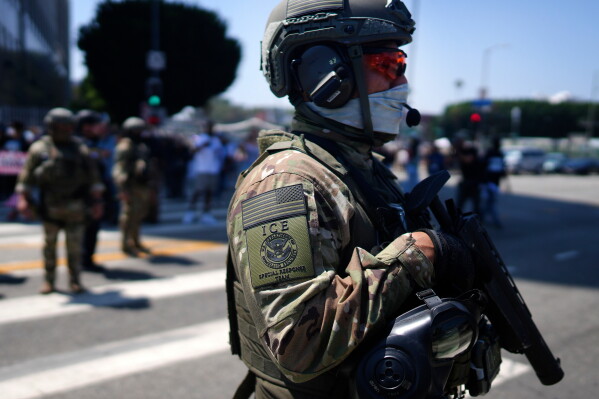
U.S. Immigration and Customs Enforcement (ICE) announced plans to equip every officer and agent with body cameras by the end of August. This move aims to enhance the documentation of the federal government’s immigration enforcement activities. However, the extent of public access to this footage remains unclear, largely determined by ICE policies.
ICE’s body-worn camera policy has faced scrutiny due to provisions allowing agency leadership to withhold or delay footage release, especially in cases of serious injuries or deaths in custody. Acting Director David J. Venturella stated these restrictions are intended to protect investigations and privacy, aligning with federal law and practices at other federal agencies.
The agency’s policy came under the spotlight after an Associated Press (AP) report discussed the provision for expedited footage release after serious incidents when in the “agency’s best interests.” Venturella claimed that the AP misrepresented the policy, clarifying that footage should not be released if it could jeopardize investigations or privacy.
The AP focused on ICE’s policy for releasing footage related to encounters involving serious injury or death. The report highlighted past incidents where ICE officers were involved in fatal shootings, noting the absence of body camera footage in those cases. Examples included a motorist shooting in Maine and a homebuilder’s shooting in Houston, both unrecorded.
Venturella reassured that ICE is committed to transparency and accountability, stating that the agency is on track to equip all field officers with body cameras by August. ICE faced heightened scrutiny due to these incidents, prompting demands for clearer policies on footage release.
Christopher Schneider, a sociology professor from Brandon University in Canada, provided insights on selective footage release practices in law enforcement, noting that ICE’s policy candidly addresses such practices.
The AP report also referenced Customs and Border Protection (CBP), another agency under scrutiny for withholding footage of a fatal shooting in January. CBP Commissioner Rodney Scott claimed the footage was part of an investigation and would be released when deemed appropriate.
 Karoline Leavitt on Trump’s Direct Diplomacy
  Virginia’s Data Center Plan Sparks Tensions Over Energy and Environmental Goals
  Penn State Fraternity Members Charged in Cocaine Ring Bust
  Orland Park Plans New Traffic and Emergency Measures
  Texas Man Charged with Capital Murder in Shooting of 5-Year-Old
  Far-Left Groups Allegedly Organize Protests in Austin