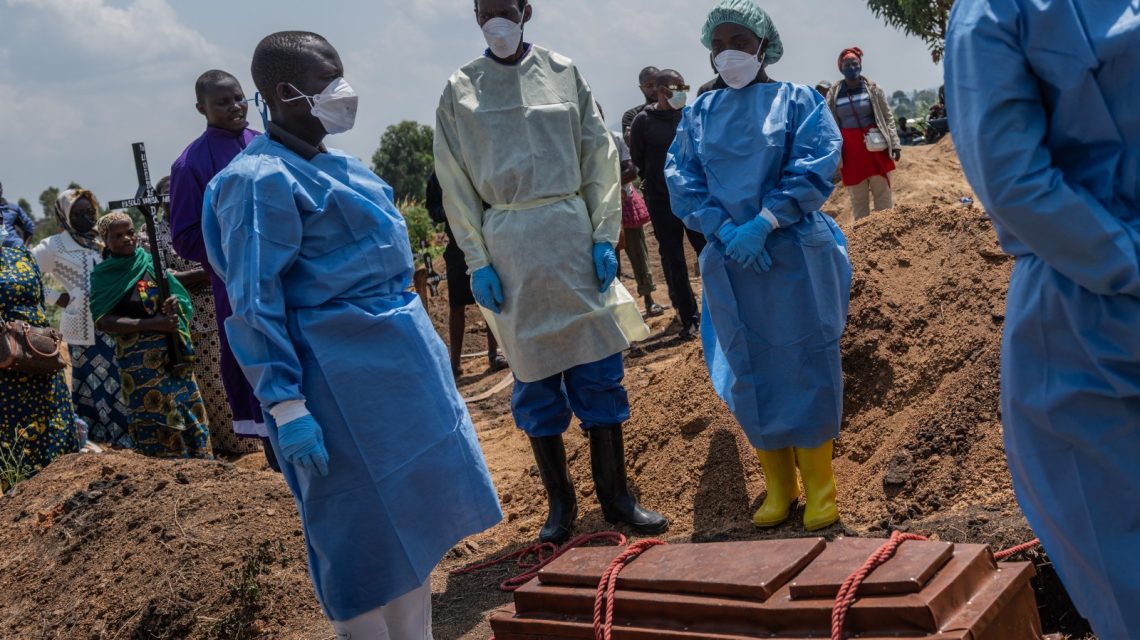
A 6-month-old girl has died from Ebola at an orphanage in eastern Congo. Her death marks the third child fatality at this facility, highlighting the rapid expansion of a major health crisis. Officials face challenges in containing this fast-growing outbreak.
According to the Africa Centres for Disease Control and Prevention (Africa CDC), regional cases increased by 38 percent over the past week. The virus has spread across 32 health zones in eastern Congo. The outbreak is primarily concentrated in the Ituri province, which accounts for over 90 percent of reported infections. Containment efforts by international and local authorities are hindered by community resistance, limited medical resources, and tensions surrounding strict safe-burial protocols.
What to Know About the Orphanage Outbreak
The latest victim, Vanisa Anifa, was an orphaned infant who succumbed to the virus earlier this week. She was buried Friday at the Bigo Cemetery in Bunia under strict safety measures. Only health workers in specialized protective gear handled the body.
Anifa’s death indicates a worrying cluster of infections among infants and young children in close-contact caregiving environments.
Timeline of the Orphanage Cluster
The Index Case: Initially, a newborn brought to the orphanage after her mother’s death developed a fever and died within days. This was later confirmed as Ebola.
Secondary Transmission: Subsequently, an orphaned triplet under one-year-old also succumbed to the virus.
Staff Infections: The virus spread beyond the children, with multiple caregivers at the facility, including a nun, testing positive.
Public health officials emphasize that infants and young children are particularly vulnerable to Ebola. The virus spreads through direct contact with bodily fluids like saliva and vomit. This makes the hands-on care in orphanages conducive to transmission.
“She was a baby. She had her whole life ahead of her. Unfortunately, she was taken by the disease; a disease transmitted from one person to another,” said Alex Lock, a communications officer at the International Federation of Red Cross and Red Crescent Societies.
Understanding the Bundibugyo Ebola Strain
Ebola is a severe viral disease causing hemorrhagic fever. It’s often fatal. The current outbreak in the Democratic Republic of the Congo (DRC) and neighboring Uganda involves the Bundibugyo strain, a less common variant first identified in 2007.
Unlike the Zaire strain, which can be managed with existing, approved vaccines and treatments, the Bundibugyo strain has no approved vaccine or specific antiviral treatment. Medical response relies on aggressive supportive care.
Primary Symptoms of Ebola:
- Sudden onset of fever and profound fatigue
- Severe muscle pain and weakness
- Vomiting and diarrhea
- Impaired kidney and liver function
- In advanced stages, internal and external bleeding
Death Toll in Latest Outbreak
Here are the latest figures (mid- to late-June 2026) based on CDC and Africa CDC data:
Democratic Republic of the Congo (DRC):
- Confirmed cases: 896
- Confirmed deaths: 232
Uganda:
- Confirmed cases: 19
- Confirmed deaths: 2
- Probable deaths: 1
Total (DRC + Uganda):
- Confirmed cases: 915
- Confirmed deaths: 234
These numbers reflect one of the most recent snapshots of the outbreak, which is evolving rapidly. Totals are expected to shift as new cases emerge. This story includes reporting from the Associated Press.
 The Ongoing Importance of ‘The Talk’ in Navigating Challenges for Black and Brown Youths
  Silent Atherosclerosis: Insights from New Research
  Dining with Loved Ones: A Boost for Blood Sugar Regulation
  Facing Life with a Terminal Diagnosis: A Story of Courage and Hope
  Foods Linked to Longevity and How to Include Them in Your Diet
  A Journey from Wedding Joy to Unexpected Health Struggles