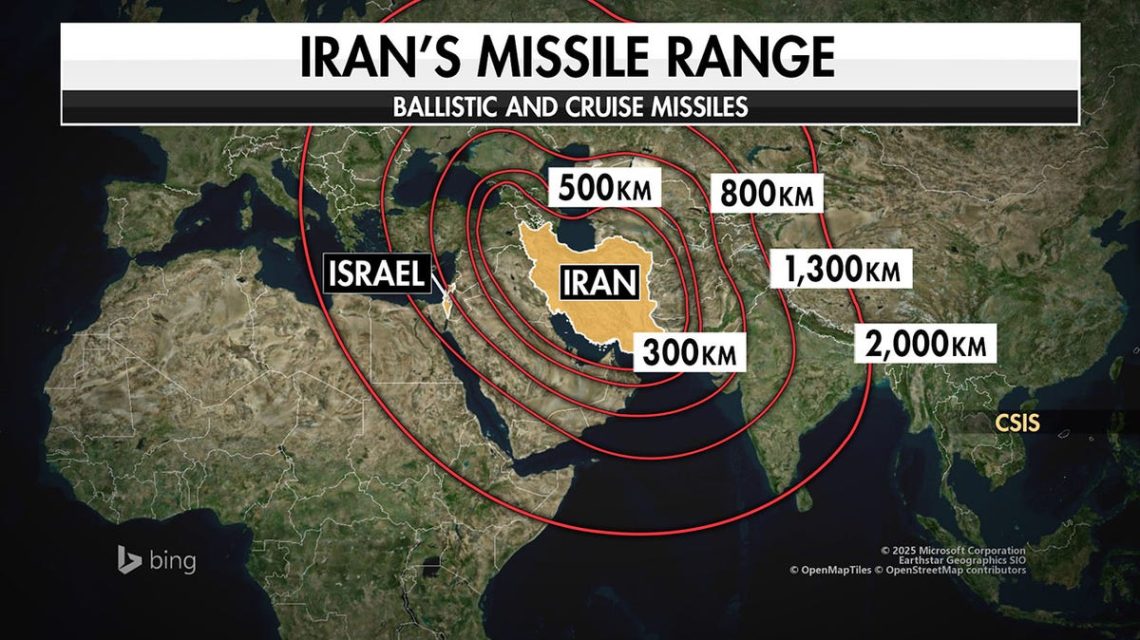
U.S. President Donald Trump recently addressed the issue of Iran’s missile capabilities during the G7 forum. For months, senior officials from the Trump administration asserted that Iran’s ballistic missile arsenal was a defense for its nuclear pursuits, prompting the initiation of Operation Epic Fury. Surprisingly, Trump remarked that the presence of missiles in Iran might not be a significant concern.
In a noteworthy statement, Trump suggested that if neighboring countries like Saudi Arabia and Qatar possess missiles, allowing Iran similar capabilities seems fair. He argued that missiles, while destructive to localized targets, do not pose a global threat.
During the news conference, Trump indicated that Gulf nations would tackle non-nuclear issues, including Iran’s ballistic missiles and its terrorist proxies.
“Missiles aren’t the problem. They hurt a little location, but they don’t blow up the planet,” Trump said.
The discussion arrives as the U.S. and Iran unveil details of a memorandum of understanding, shifting the narrative from prior months where the administration identified Iran’s missile forces as threats to regional stability and a shield for its nuclear agenda. Secretary of State Marco Rubio previously stressed the urgency of preventing Iran from utilizing missiles as cover for nuclear weapon development.
Operation Epic Fury has been clear in its objectives. Trump and other officials aimed to dismantle Iran’s missile capabilities and destroy missile production facilities. War Secretary Pete Hegseth emphasized the mission’s focus on eradicating these threats, a sentiment echoed by White House Press Secretary Karoline Leavitt.
Recent remarks at the White House outlined goals to degrade Iran’s missile forces, preventing Iran’s military from serving a nuclear weapons shield in the future.
In addition to these developments, Trump’s comments at the G7 have sparked questions about his administration’s approach to Iran’s nuclear program. The memorandum does not definitively address Iran’s ability to retain enrichment capabilities but points towards diplomatic negotiations over the nation’s uranium stockpile.
Under the framework agreement, the U.S. and Iran will spend an upcoming period negotiating the fate of Iran’s uranium resources with potential supervision from the International Atomic Energy Agency. While officials consider Iran’s willingness to dilute its uranium as a significant concession, the agreement leaves unresolved whether Iran can continue enriching uranium.
Trump remarked at the G7, “It is a little hard, though, when you say that somebody wants it, other people have it, other adjoining states have it. And you’re not letting them have it for purposes of electricity and things like that.”
Previously, administration officials expressed strong resistance to Iranian enrichment capabilities. Special envoy Steve Witkoff was adamant about preventing any enrichment capabilities in Iran, a sentiment repeatedly highlighted as a red line.
Despite such positions, Trump’s recent comments offer a shift in tone, as noted by a State Department spokesperson, maintaining the President’s stance without further elaboration. Reactions from the Pentagon were not immediately available.
 Art Collective Strikes with Game Console Installation on National Mall
  Democrats’ Path to Retaking Senate Majority in Red States
  Latest Developments in Politics and Policy
 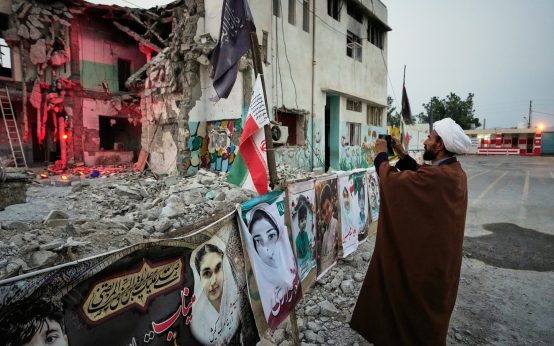 U.S. Airstrike on Iranian Girls’ School: UN Report and Global Reactions
  Cornell University Sexual Assault Investigation Reopened
 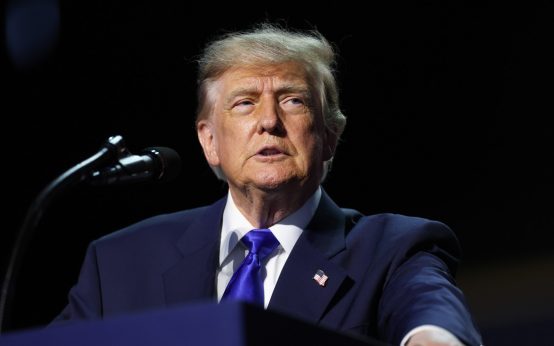 Debate on Trump’s Public Advertisements Before Midterms