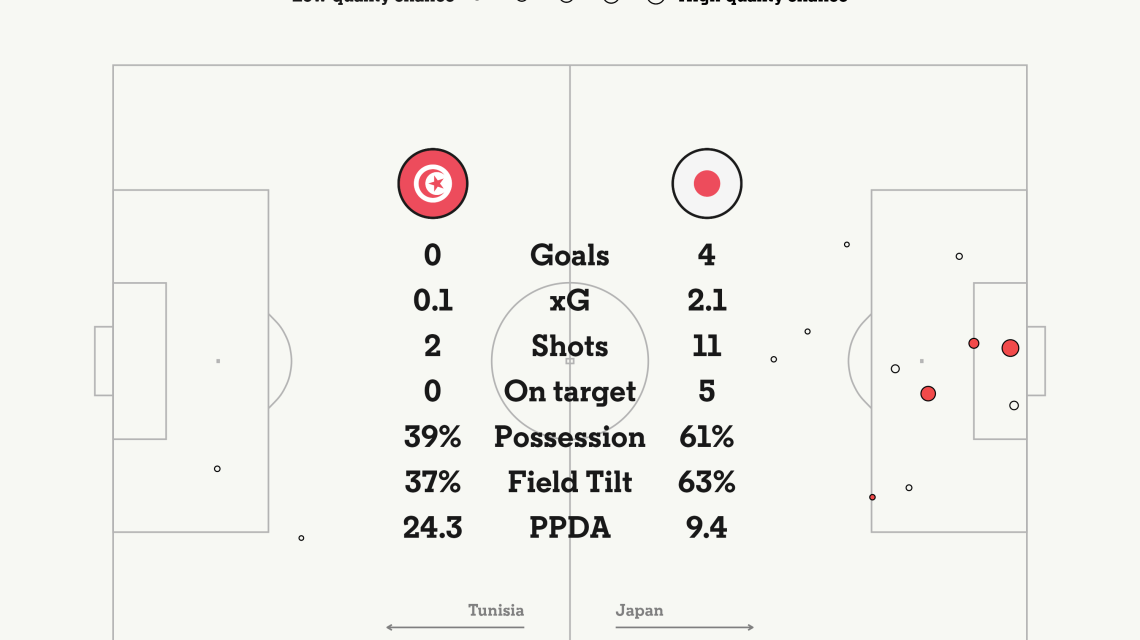
Japan took a significant step towards the World Cup knockout stages with an impressive victory against Tunisia in Monterrey, leading to the elimination of the North African team. The focus before the match was on Herve Renard, the new Tunisia coach, and the defensive improvements he promised after replacing Sabri Lamouchi.
Japan’s Dominance
Japan struck early with Daichi Kamada scoring within the first four minutes. They maintained control and added to their lead with Ayase Ueda’s finish after the half-hour mark. Junya Ito extended Japan’s lead in the 69th minute, with Ueda completing the scoring with a header. This marked the highest number of goals an Asian team has scored in a World Cup match.
Future Challenges
According to projections, Japan can expect a round of 32 game against formidable teams like Brazil, Morocco, or France. Despite injuries to crucial players like Kaoru Mitoma, Takumi Minamino, and Wataru Endo, Japan’s dynamic style and players such as Keito Nakamura have excelled. Their performance positions them well in the group standings, sharing a positive goal difference with the Netherlands.
Nevertheless, progress in the knockout stage remains challenging. The potential opponents in the round of 32 present significant hurdles, yet this team is prepared for tough battles.
Tunisia’s Disappointment
Renard vowed a strong performance after Tunisia’s heavy loss to Sweden but struggled to deliver. Defensive gaps were evident early on, contributing to Japan’s easy scoring. Renard, wearing his recognizable white shirt on the sidelines, expressed frustration watching his team’s subpar defenses.
Tunisia’s earlier decision to replace Lamouchi did not yield the transformation they hoped. This experience illustrates deeper organizational issues that extend beyond coaching changes.
Technological Insights
Japan’s early goal from Kamada and a subsequent goal-line decision highlighted close refereeing calls. The latest goal-line technology confirmed a crucial non-goal decision even when replays suggested otherwise. Such fine margins have previously influenced Japan’s World Cup journey, as seen in last tournament’s controversial decisions.
With new technology to track ball position along the line, officials now have improved tools to make accurate calls throughout the match.
 Ronald Acuna Jr. Suffers Injury During Game Against Cincinnati Reds
  Joe Burrow’s Unexpected Post-Game Recovery
  Rangers Place Players on Waivers Ahead of Season Opener
  Cubs Face Crucial Pitching Decisions Amid Wild Card Race
  Chicago Cubs vs. Miami Marlins: 12-Inning Game Recap
  Alabama Football’s Comeback and Controversy