
A salary of $75,000 can still secure a home, although perhaps not the same one as a few years ago. Buying a property involves significant financial hurdles for many today, with mortgage rates hovering around 6.5% and property prices remaining high. Inflation has climbed to 4.2%, exerting additional strain on household budgets.
Concerns about the broader economy and future interest rate trends have made potential buyers question the timing of their purchase. For households earning roughly $75,000 annually, these pressures may seem particularly intense. Previously, this income level afforded a wider range of purchasing options, but current conditions have altered buying capacities. Increased financing costs, insurance premiums, and property tax bills significantly impact how much home buyers can currently afford.
Understanding affordability is crucial alongside finding the right home. But how much house can you buy with a $75,000 salary in today’s market? Are there ways to expand your budget?
Evaluating Home Affordability with a $75,000 Salary
The affordability question depends on various factors. Most lenders adhere to the 28/36 rule: spending a maximum of 28% of gross monthly income on housing and keeping total debt payments below 36%. With a $75,000 salary translating to approximately $6,250 a month before taxes, your housing payment cap is about $1,750.
This $1,750 must cover all housing-related expenses — not just the loan. This includes property taxes, homeowner’s insurance, and private mortgage insurance (PMI) if your down payment is under 20%. Typically, homebuyers should allocate a fair portion for these costs, leaving roughly $1,300 per month for principal and interest calculations if you earn $75,000.
With a 6.5% mortgage rate over 30 years, a $1,300 monthly budget allows for a $205,000 loan. Adding a down payment clarifies your target purchase price. By putting down 10%, the price range is around $225,000. Increasing the down payment to 20% helps attain about $255,000 while removing PMI. Generally, $75,000 earners find themselves between $215,000 and $270,000, depending on available cash and existing monthly debts. Pre-existing obligations, such as a $450 car payment or $200 student loan, directly affect the 36% debt ceiling, reducing potential mortgage qualifications despite unchanged income.
Strategies to Expand Your Homebuying Budget on a $75,000 Salary
If budget limits feel restrictive, numerous factors remain within your influence, with potential budget shifts of tens of thousands of dollars.
Focus on your credit score. The 6.5% average is simply that — an average. Borrowers with favorable scores might qualify below this rate, and lowering the rate by even half a point can substantially expand your budget. Paying down existing debts and disputing errors before applying is invaluable work.
Tackling current debts aids your budget doubly. Eliminating a car loan or methodically paying down credit card debt frees space under the 36% threshold, translating directly to increased borrowing power with lenders.
A larger down payment produces dual benefits: it reduces the loan amount required and once above 20%, eliminates PMI, redirecting funds toward the home itself.
Don’t ignore loan programs. Government-backed mortgage loans may allow down payments as low as 3.5%. Many state and local first-time buyer programs offer down payment assistance or below-market rates. Where you purchase is also significant, as property tax rates and insurance costs differ by state and county. Choosing lower tax areas can seamlessly increase your budget.
Conclusion
A $75,000 salary can still purchase a home today, yet not the same home as previously. For many in this income bracket, a suitable target lies within the low to mid $200,000s, contingent upon down payment, debts, and local costs. Before proceeding, calculate your figures based on the 28/36 rule, seek pre-approval to see lender offerings, and regard the listing price as one element of a more complex equation.
 Understanding Real Estate Fees
  Homeowners’ Guide to Home Equity Loans: Costs and Considerations
 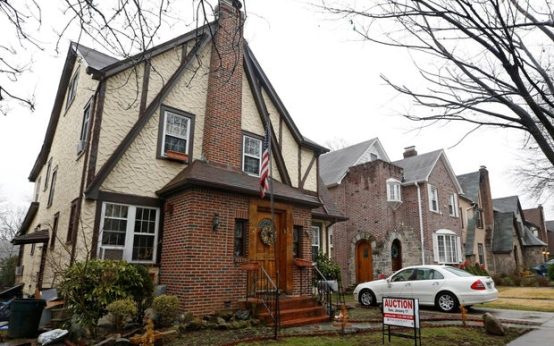 Trump’s Childhood Home Renovated and Sold for Nearly $2 Million
 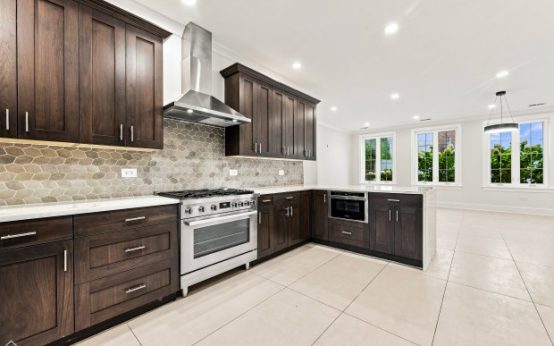 Luxury Five-Bedroom Home for Sale in Edgewater, Chicago
  Skokie Trustees Revise Short-Term Rental Regulations
  U.S. Housing Market Trends: Opportunities and Challenges for Homebuyers