NASA is preparing a crucial mission to rescue the Swift Observatory from its declining orbit. The $30 million initiative involves launching a robotic spacecraft aimed at elevating Swift to a higher orbit. Katalyst Space Technologies, a startup, has been contracted to build a robotic spacecraft named Link to assist Swift in its orbital ascent. This spacecraft will be launched via a Pegasus rocket from the Marshall Islands as early as Tuesday.
Swift Observatory, which has been operational since its 2004 launch, is suffering from increased solar activity that is causing it to lose altitude. A higher orbit will be essential to maintain its function and prevent it from falling back to Earth.
NASA’s Hubble Space Telescope faces similar challenges, also losing altitude due to solar flares. Katalyst CEO Ghonhee Lee expressed confidence in developing technology that could save Hubble in the future. This mission represents a new capability for American space robots, illustrating a potential model for future observatory support.
The autonomous Link spacecraft will take approximately one month to meet Swift in space, followed by a few months to raise its orbit from 224 miles (360 kilometers) to 373 miles (600 kilometers). The goal is to prevent Swift from entering a threshold altitude of 185 miles (300 kilometers), which it is expected to reach by October.
Sporting a design resembling a small fridge with a 40-foot solar wingspan, Link’s three arms are equipped with grasping mechanisms to facilitate its rescue mission. Swift’s primary task is to quickly capture transient cosmic phenomena, including gamma-ray bursts and exploding stars. NASA shut down Swift’s scientific functions in February to limit its descent rate.
If successful, Swift could return to service by September. This mission also marks a potential leap forward for Katalyst’s ambitions in space repair, targeting more satellites and infrastructures like solar farms and data centers.
While NASA aims to preserve the decades-old Swift, future plans include safeguarding treasured assets like Hubble. The astrophysics community values Swift’s capability as a rapid-response telescope, deeming it vital to scientific discovery.
Katalyst’s approach may lead to an evolving space service economy, with hundreds of robots performing critical functions like repairs and refueling in years to come.
 NASA’s New Space Telescope Launch: A Breakthrough in Cosmic Exploration
 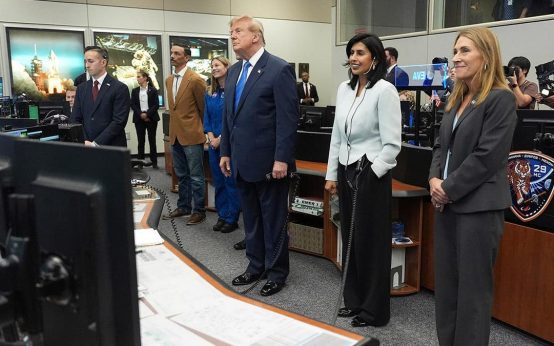 Trump’s Call with ISS Astronauts and Honors at NASA
  Anticipated Northern Lights Due to Solar Activity
  NASA’s Nancy Grace Roman Telescope Prepares for Launch
 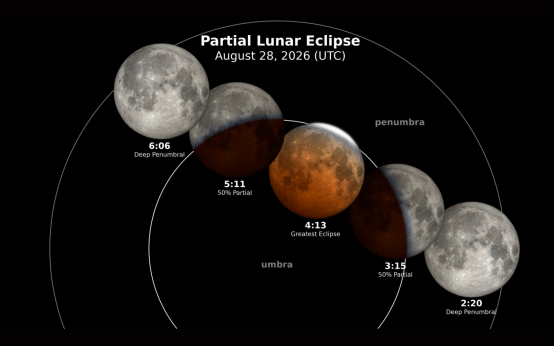 Rare Deep Partial Lunar Eclipse Visible Across the U.S.
 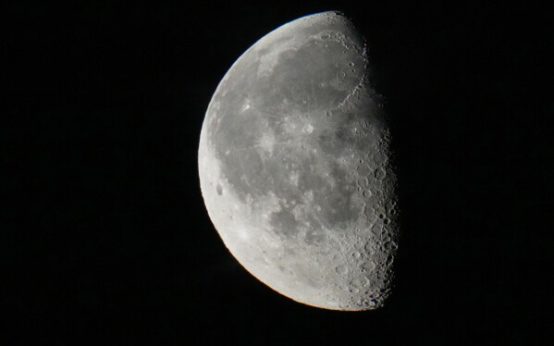 China Delays Chang’e-7 Lunar Mission Plans