
SpaceX plans to halt Falcon 9 and Falcon Heavy launches by 2030, shifting focus to the Starship. This move affects companies aiming to deploy commercial space stations since the Dragon spacecraft will become obsolete. NASA’s request for private space station proposals has heightened urgency, and companies like Axiom Space, Voyager Space, and Vast Space are likely contenders. Though Blue Origin is developing its own space station, its response to NASA’s request remains uncertain.
As SpaceX phases out Dragon, NASA and Boeing collaborate to revamp the Starliner, despite its troubled past. Starliner’s previous uncrewed flights faced setbacks, and its sole crewed mission ended with astronauts Sunita Williams and Butch Wilmore stranded on the ISS due to safety issues. They returned via a Crew Dragon. Boeing is now tasked with fixes to ensure Starliner’s readiness. NASA aims for a Starliner cargo mission around December or January and another crewed flight in 2028.
Blue Origin emerges as another U.S. entity with the potential to develop crew and cargo spacecraft for low Earth orbit. Blue Origin’s Space Vehicle is making headway, as reported by Ars Technica’s Eric Berger, yet it needs NASA support akin to Boeing’s. Building spacecraft independently is challenging, even with Jeff Bezos’ financial backing. An endorsement and financial aid from NASA could mirror the beneficial dual-spacecraft strategy seen in the Commercial Crew Program, where SpaceX’s Crew Dragon succeeded despite Boeing’s challenges.
SpaceX is advancing Starship test flights, marking a milestone in space launch capabilities. Starship’s potential to revolutionize space access contrasts with the Falcon family’s retirement. While the Starship is capable of extensive missions, using it for space station trips might be excessive given its payload capacity. However, SpaceX’s right as a private company to terminate or continue services post-contract must be noted. A potential solution could involve spinning off the Dragon and Falcon vehicles into a new entity, Dragon Spaceline, allowing SpaceX to concentrate on Starship while servicing commercial stations.
This restructuring would finance SpaceX’s other ventures, like Starlink and space-based data centers, benefiting all stakeholders, though creating competition for Boeing and Blue Origin. NASA remains committed to maintaining a presence in low Earth orbit while targeting lunar and Martian exploration. Future strategies will gauge the seriousness of this commitment.
Mark R. Whittington, a frequent writer on space policy, has authored works including “Why is It So Hard to Go Back to the Moon?” and “The Moon, Mars and Beyond.” He shares his insights on Curmudgeons Corner.
Copyright 2026 Nexstar Media Inc. All rights reserved. This material may not be published, broadcast, rewritten, or redistributed.
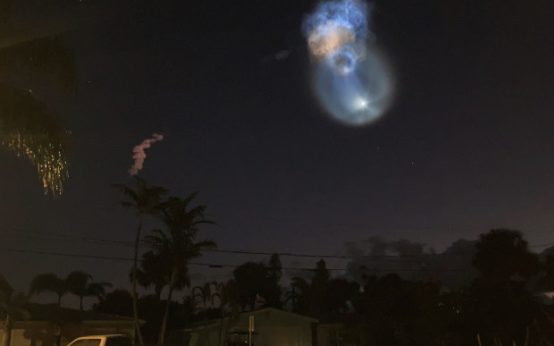 SpaceX’s Latest Launch Creates Stunning Visual Phenomenon
 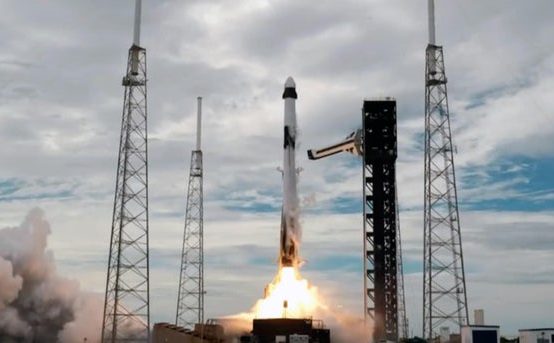 SpaceX Falcon 9 Delivers Crew to International Space Station
 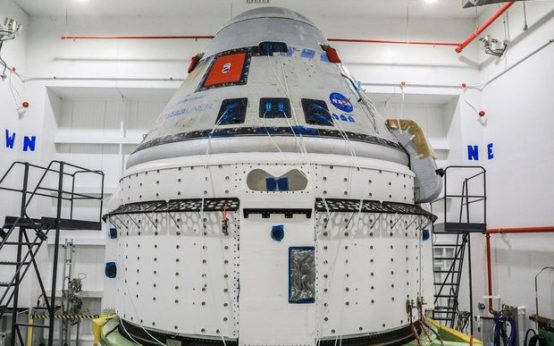 NASA Collaborates with Boeing to Launch Unpiloted Starliner Test
  NASA’s New Space Telescope Launch: A Breakthrough in Cosmic Exploration
 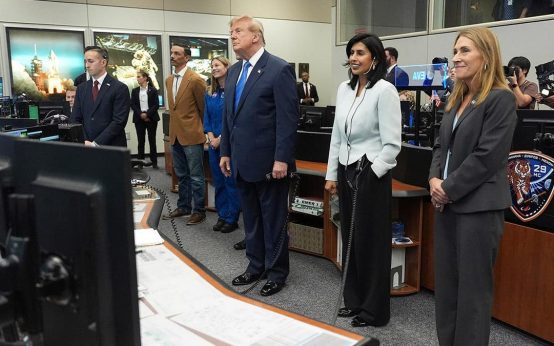 Trump’s Call with ISS Astronauts and Honors at NASA
  Anticipated Northern Lights Due to Solar Activity