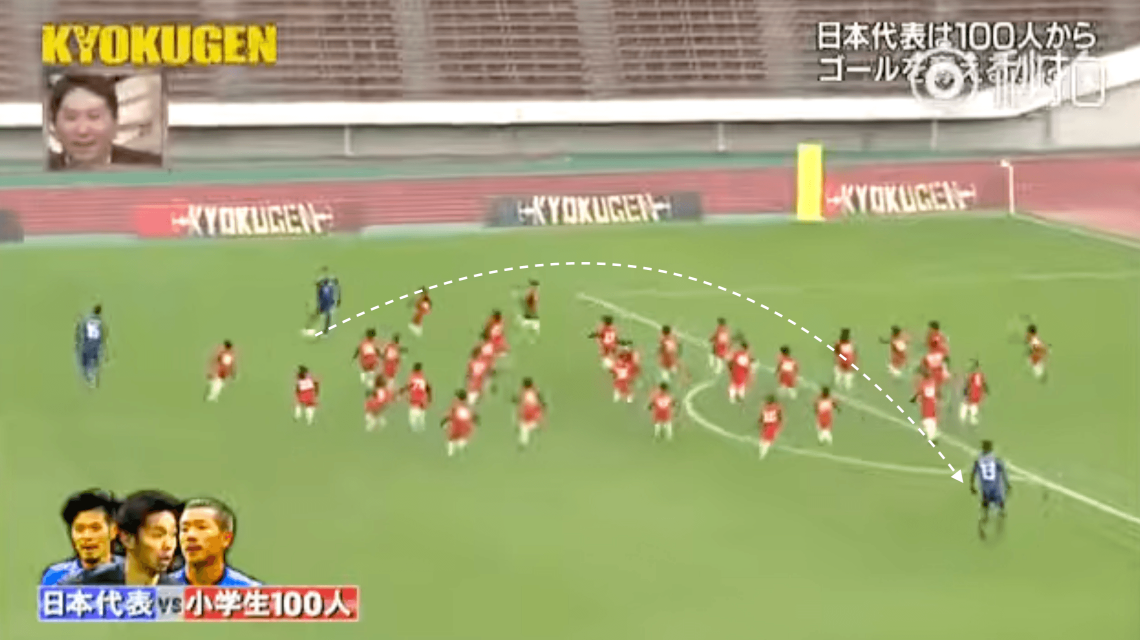
If you have used social media, you might have seen the well-known clip of Japan internationals Hotaru Yamaguchi, Hiroshi Kiyotake, and Yosuke Ideguchi facing 100 schoolchildren on a full-sized football pitch. While the scene appears far-fetched, the footage is captivating. Observing how these international players manage to pass the ball amidst a sea of schoolchildren is intriguing. They adeptly switch the play to open spaces, constantly finding teammates despite the potential for an obstructive opponent.
Their strategy relies on the schoolchildren’s tendency to swarm towards the ball. The professionals exploit this by switching the play to the opposite side, ensuring one player remains open. The young opponents’ positional naivety allows for this tactical advantage.
Watching the current Japanese team compete against 10 adult outfield players reveals a similar approach. Japan employs a 3-4-3 formation that forms a front five when in possession. This tactic frequently creates opportunities by allowing a spare player to run unmarked into the opposition’s defensive blind spot, readily available for a switch of play. If the strategy can succeed against 100 opponents, then facing ten might pose a lesser challenge.
Japan’s wing-backs, Ritsu Doan and Keito Nakamura, are not traditional late-runners. Doan plays on the right but is left-footed, while Nakamura is on the left but right-footed. They can move inside to shoot or switch play with angled passes, exemplifying their diverse roles.
An example from Japan’s match against Sweden highlights this method. Central midfielder Daichi Kamada ventured to the left, cut back, and delivered a cross for Yukinari Sugawara to pursue. Although the ball wasn’t met cleanly, the play demonstrated Japan’s strategy. After Sweden’s partial clearance, Ao Tanaka switched play to Kamada again, who took a volley but directed it at the goalkeeper. This illustrates Japan’s consistent search for a spare man at the far post.
As Japan prepares to face Brazil, their tactics seem promising. Brazil’s vulnerable full-back positions present an opportunity. Right-back Danilo, nearing 35, lacks the agility typically associated with Brazilian defenders. Left-back Douglas Santos has not reached top-class standards, although Brazil’s central defense remains formidable. Japan aims to bypass Marquinhos and Gabriel’s aerial prowess by switching play around them.
Brazil might struggle with Japan’s off-the-ball runs. Opponents often drop an additional player into defense, forming a back five against Japan’s system, as seen when the Netherlands utilized Frenkie de Jong in this role. How Brazil will respond is uncertain. Will Casemiro replicate De Jong’s role, or could the inexperienced Rayan adapt on the right? Carlo Ancelotti must decide if this is a tactical dilemma worth addressing.
Facing Brazil holds great significance beyond this tournament. Though football is considered a global sport, Western European and South American teams continue to dominate. Japan, with their infrastructure and technical prowess, is emerging as a potential powerhouse. However, they have yet to win a World Cup knockout match. Eliminating Brazil might mark a turning point. Japan’s tactics could be crucial in achieving this significant milestone.
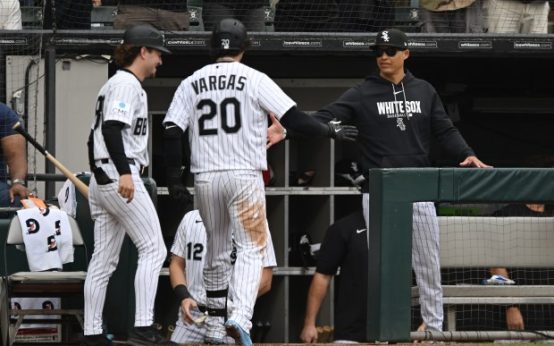 Chicago White Sox’s 2026 Success and Team Dynamics
 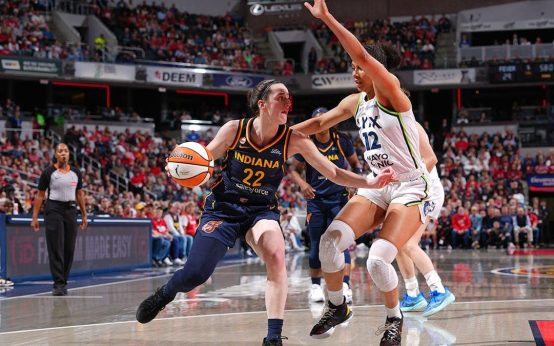 Indiana Fever Bounce Back with Win Against Minnesota Lynx
  Kurt Angle Reflects on His TNA Wrestling Career
  Analyzing NFL Teams After Two Weeks
  Seattle Seahawks Coach Mike Macdonald’s Strategic Approach
  Massachusetts Youth Hockey Player Suspended Indefinitely After Slashing Incident