
Fifty years after America celebrated its bicentennial, much has evolved. As the nation marks its 250th birthday this Fourth of July, similarities to 1976, though unenviable, are striking. Then, as now, the country faced post-war recovery, rising costs, White House controversies, and a disfavored president.
Despite challenges like the Vietnam conflict, Watergate, and an unsteady economy, the 1976 celebration offered a moment of national pride. The New York Times headline stated: “Nation and Millions in City Joyously Hail Bicentennial.” This sentiment reflected hope that the American experiment would not only endure but also flourish.
President Gerald Ford, not renowned for rhetorical skills, addressed 100 newly naturalized citizens at Monticello on July 5, 1976. He celebrated diversity, quoting, “‘Black is beautiful’ was a motto of genius which uplifted us.” He declared that all colors — brown, white, red, and yellow — are beautiful. He emphasized equality and shared future promise for new Americans.
In stark contrast, President Donald Trump’s views diverge considerably. Trump’s stance against diversity and immigrants is widely known. He labeled undocumented migrants as harmful and legal Somali immigrants as “garbage.” Such attitudes betray the bicentennial’s principles.
Post-Watergate reforms represented change. Congress enacted measures against ethical abuses and curbed presidential power. The Supreme Court ordered President Nixon to release incriminating tapes. Despite such achievements, Trump’s actions have been controversial. Critics say he misused his office, oppressed protesters, and subjugated the Justice Department, with Republicans showing allegiance to him rather than challenging his actions.
By 1976, America embraced significant progress. Black citizens achieved full voting rights. Women gained anti-discrimination protection and the right to abortion. Several states decriminalized homosexuality. Immigration policies expanded to welcome new regions, promoting a diverse America.
Recent years have witnessed regression from past advancements. Efforts have emerged to bypass the Voting Rights Act’s Black-majority districts, echoed by the Supreme Court. Trump’s administration has challenged affirmative policies, seen the right to abortion overturned, and waged battles against transgender rights. Efforts targeted same-sex marriage, with diversity seen unfavorably by his administration.
Trump aimed to retract Temporary Protected Status for communities and restricted refugee admissions, favoring white South Africans. An attempt to repeal birthright citizenship faced legal pushback. His approach to the 250th anniversary has focused on self-celebration, deviating from the unifying message of 1976.
A People’s Bicentennial Commission in 1976 had limited impact, unlike today’s presidential attempt to overshadow the event. Trump’s strategy largely curbed public enthusiasm for the milestone. This serves as a symbolic representation of what some view as his detrimental impact on American institutions and norms.
Amid these reflections, there remains uncertainty about what the next 50 years might hold, questioning the enduring aspects of America’s legacy.
Steve Chapman served on the Tribune Editorial Board from 1981 to 2021. His monthly columns appear with the Tribune. Contact him at [email protected].
Submit a letter up to 400 words to the editor at [email protected].
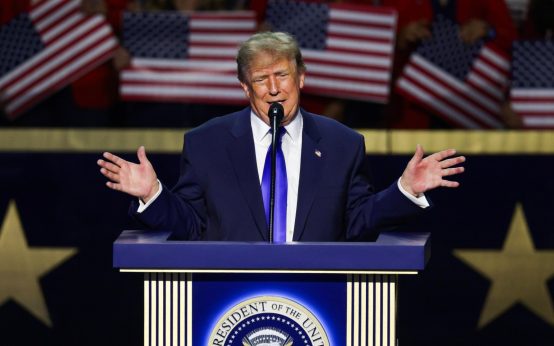 Republican Senator Criticizes Trump’s $5,000 Check Proposal
  Trump’s Approach to Iran at the United Nations
 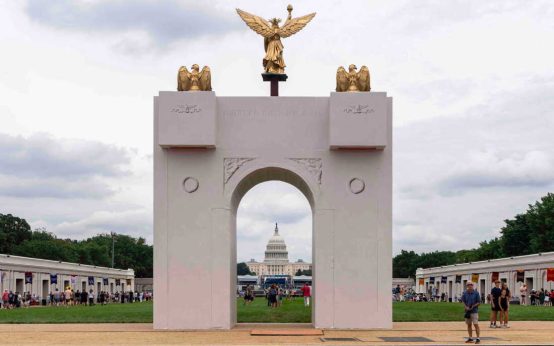 Trump’s Triumphal Arch Controversy
 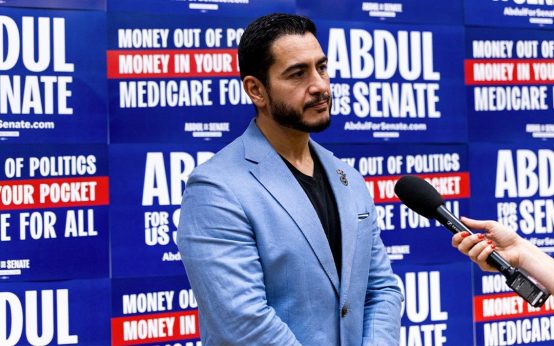 Concerns Over Abdul El-Sayed’s Potential Senate Role and National Security
  Kentucky Governor Andy Beshear Discusses Tariffs, Faith, and Political Ambitions
  Sunday Highlights: Lane Kiffin, Nancy Mace, and College Football Drama