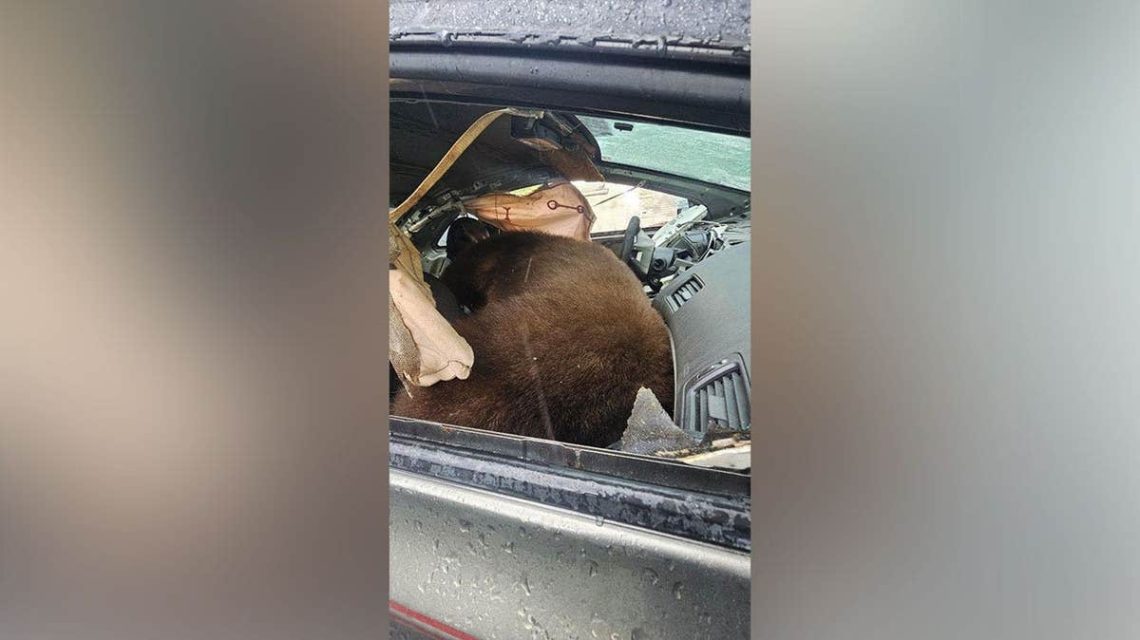
A black bear in Colorado met a tragic fate after becoming trapped inside a vehicle. This incident led to significant damage to the car’s interior before the bear was found dead. The Denver Gazette reported that the approximately 300-pound bear was stuck inside the vehicle for several days before discovery in Colorado Springs.
Bear Behavior and Vehicle Encounters
Travis Sauder, a Colorado Parks and Wildlife (CPW) officer, explained to The Gazette that bears possess the intelligence and skill to open unlocked car doors in search of food. However, if a door closes behind them, they often struggle to exit.
Sauder noted, “Typically, bears open the door, enter, find their food, and leave. But sometimes, the door closes behind them, and they have trouble figuring out how to get out.”
The deadly encounter comes amid an unusually high year for bear sightings and conflicts in Colorado.
Between January 1 and August 13, CPW received 6,129 reports of bear sightings and conflicts. This nearly doubles the 3,115 reports during the same timeframe last year, and surpasses the 5,299 reports recorded throughout 2025.
Food Scarcity and Bear Activity
Wildlife officials have linked the spike in bear encounters to poor natural food conditions. CPW Officer Sauder mentioned that low snowpack and late freezes have diminished available food sources. Consequently, bears are venturing further and taking greater risks to find food.
This timing is critical as bears enter hyperphagia, a period during which they eat and drink in large quantities to build fat reserves for winter.
Preventative Measures
CPW advises individuals in bear habitats to remove potential food sources and attractants near homes, campsites, and vehicles. Items like food, trash, and scented products can attract bears looking for easy meals. Keeping vehicles clean and free from attractants is crucial.
Sauder emphasized, “Treat your vehicle like a campsite by removing any attractants. Whether it’s pet food, a kid’s snack, or even flavored bubble gum, get it out of your vehicle.”
Additionally, CPW warns against feeding bears intentionally. Doing so may cause bears to lose their natural fear of humans, increasing conflict risks.
The number of bear-human interactions this year is set to be the highest since CPW began digital tracking in 2019, according to The Gazette.
 Python Hunter Helps Capture Record-Breaking Snake in Puerto Rico
  Environmental Concerns Halt Tree Removal at East Potomac Golf Links
  West Virginia’s Nuclear Proposal Faces Local Opposition
  Texas Data Centers Face Criticism Over Water Use Reporting
  First Offshore Mining Lease Sale by U.S. Government
  Unseasonal Warmth Delays Fall Foliage and Brings Impacts