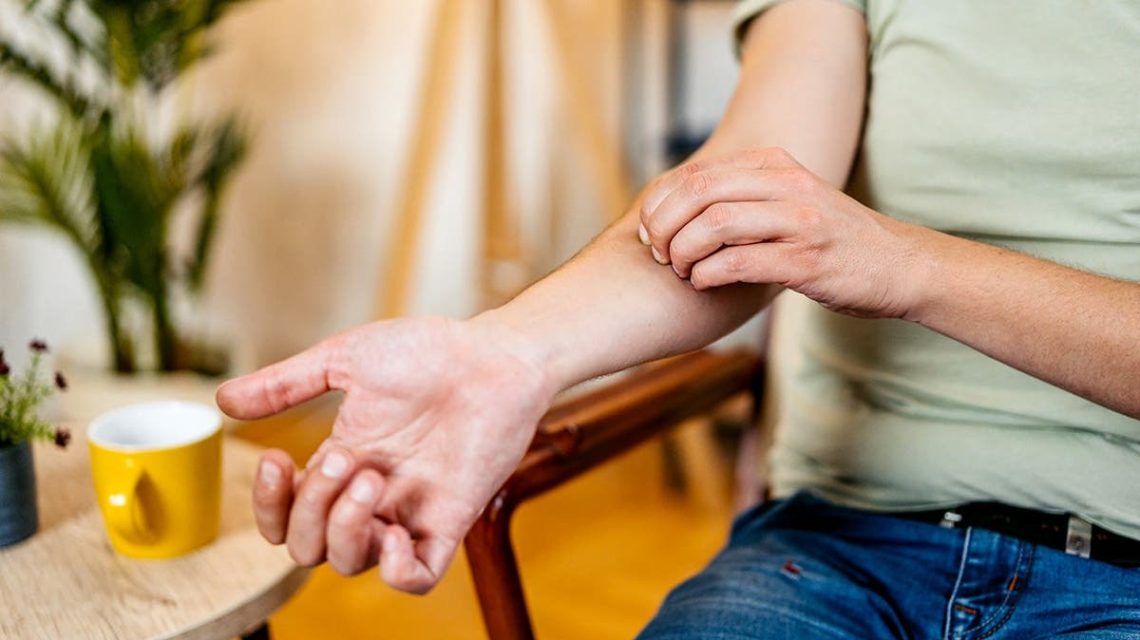
Many find it hard to resist scratching a bug bite or rash, but while it may seem to offer quick relief, researchers have found it is only temporary and might extend the itching period. Scratching is the body’s natural reaction to skin irritation, yet it can heighten skin inflammation and worsen conditions like eczema.
The Study of Itch and Scratching
University of Pittsburgh researchers, led by Professor Daniel H. Kaplan, explored the connection between itching, scratching, and inflammation. Despite being a common human reaction, the role scratching plays in swelling and its potential evolutionary benefits have not been thoroughly examined. To address this, researchers conducted studies on mice by applying allergens to their ears, inducing allergic-contact dermatitis, an inflammation akin to eczema.
The skin condition in mice mirrored typical human reactions to substances such as poison ivy and certain metals, like nickel. Mice were split into two groups: a normal group and one lacking an itch-sensing neuron. Some mice were allowed to scratch freely, while others were fitted with a collar to prevent scratching.
Findings on Scratching and Skin Inflammation
The study revealed that scratching activated mast cells. According to Cleveland Clinic, mast cells are components of the body’s alarm system, releasing histamine and inflammatory chemicals that produce itchiness. Mice that scratched released more substance P, a molecule that further activated mast cells, exacerbating inflammation and prolonging the itch-scratch cycle.
Mice that couldn’t scratch or lacked the itch-sensing neuron experienced reduced inflammation. Researchers caution that as the bug-bite season approaches, scratching itchiness can worsen inflammation.
The Evolutionary Aspect of Scratching
Though scratching can become satisfying, the action to sense itch and respond by scratching evolved millions of years ago, offering both benefits and detriments. Researchers found that scratching decreased levels of Staphylococcus aureus, associated with skin infections. Despite this, Kaplan highlighted that the damage from scratching might outweigh the potential benefits when chronic itching occurs.
“Scratching, while often seen as pleasurable, evolved likely to offer some benefit. Our research suggests scratching helps defend against bacterial infections,” Kaplan noted.
Alternative Relief Methods
The American Academy of Dermatology recommends using cold compresses and 1% hydrocortisone cream to relieve itching. The research, published in the journal Science, aims to bridge the gap between the pleasurable aspect of scratching and its biological effects.
 Fraud Task Force Saves Billions by Tackling Obamacare Misuse
  Presley Gerber’s Passing Raises Addiction Recovery Concerns
  Understanding October SNAP Benefits: Payment Dates and Changes
  Managing Distress and Discomfort Effectively
  Trump Administration Seeks to Influence NIH Grantmaking
  Understanding School Shooting Preparedness Drills