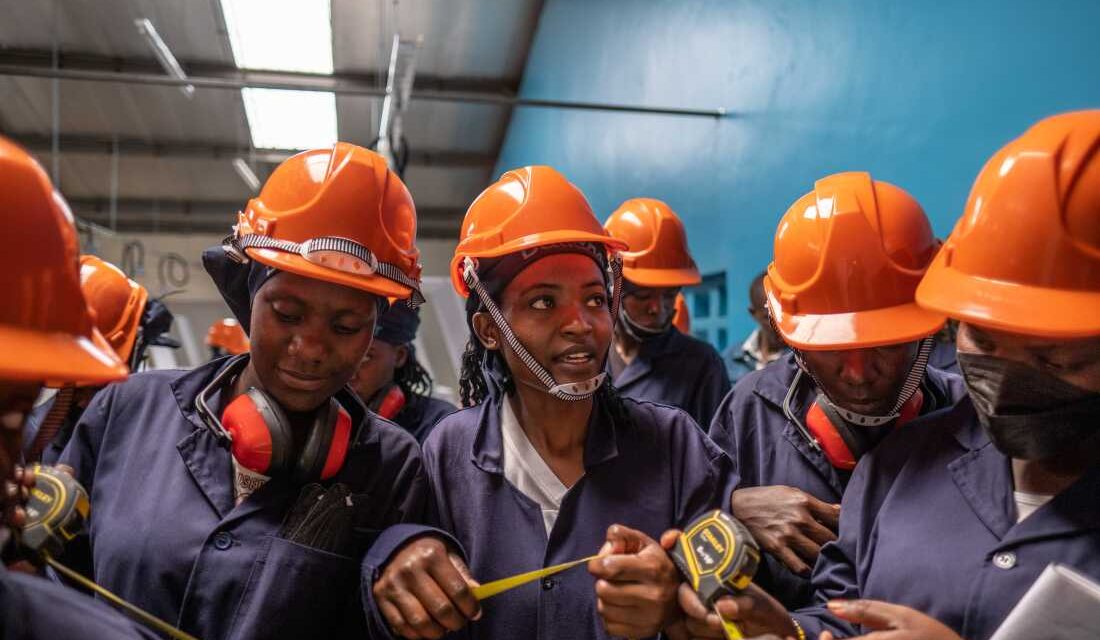
At the Buildher training facility in Nairobi, Kenya, women participate in classes aimed at learning various construction skills. The workshop at Furniture International is bustling with activity, where workers often have to raise their voices over the loud machines. Among them, Diana Ojiambo, a 24-year-old machine operator, shares her journey of gaining confidence while working alongside her male counterparts.
In an industry dominated by men, women are a rare presence. Many women are confined to lower-paid informal jobs in Kenya’s construction sector. Statistics from Kenya’s National Construction Authority reveal that women make up only 3% of the country’s accredited construction artisans.
Breaking Barriers with Buildher
Buildher, a Nairobi-based nonprofit, aims to change this narrative. It offers year-long training and internship programs in specialized construction trades. Since 2019, over 1,000 women have received training, with their daily earnings increasing from around $1.50 to between $11 and $12.
An advisory firm, Dalberg, reports that 65% of Buildher graduates remain in the construction industry a year after completing the program. Tatu Gatere, an architect and Buildher’s cofounder, wanted to help women overcome the mental barriers that kept them in low-paying jobs.
Diana Ojiambo illustrates the impact of the program. Previously unemployed, she learned of Buildher from a friend. Now employed, she plans to start her own carpentry business, challenging the perceptions of her male colleagues about women’s capabilities in construction.
Comprehensive Training Approach
Buildher’s programs provide not just technical skills but also emotional and physical preparation. Trainees face challenges beyond the workshop, from childcare to resistance at home. Classes in yoga, calisthenics, and mental wellness support participants in managing stress and maintaining focus.
These women come here knowing nothing about tiling. By the end of this training, they are able to work, earn money and improve the life of their family,
says Trainer Robert Ndungu.
Research shows Buildher graduates not only earn more but also participate more in household decisions and receive stronger community support.
Expanding Opportunities
Projects like Tatu City offer practical training grounds. Around 50 trainees worked on Eneo at Tatu Central, impressing contractors with their quality of work. Buildher collaborates with about 150 employers, aiming to boost women’s participation in skilled roles to 10% by 2030.
Changing an industry requires more than training. Structural changes, such as improved site conditions and policies against harassment, are vital. Gatere envisions a future where women’s safety and dignity are ensured, allowing them to pursue broader ambitions.
Success Stories
Margaret Klamaitha, a Buildher graduate, now works at Tatu City. Her journey reflects the mindset that learning and growth in the construction field are achievable, despite obstacles.
The efforts of Buildher highlight an important shift—providing women with the tools and opportunities to thrive in traditionally male-dominated industries.