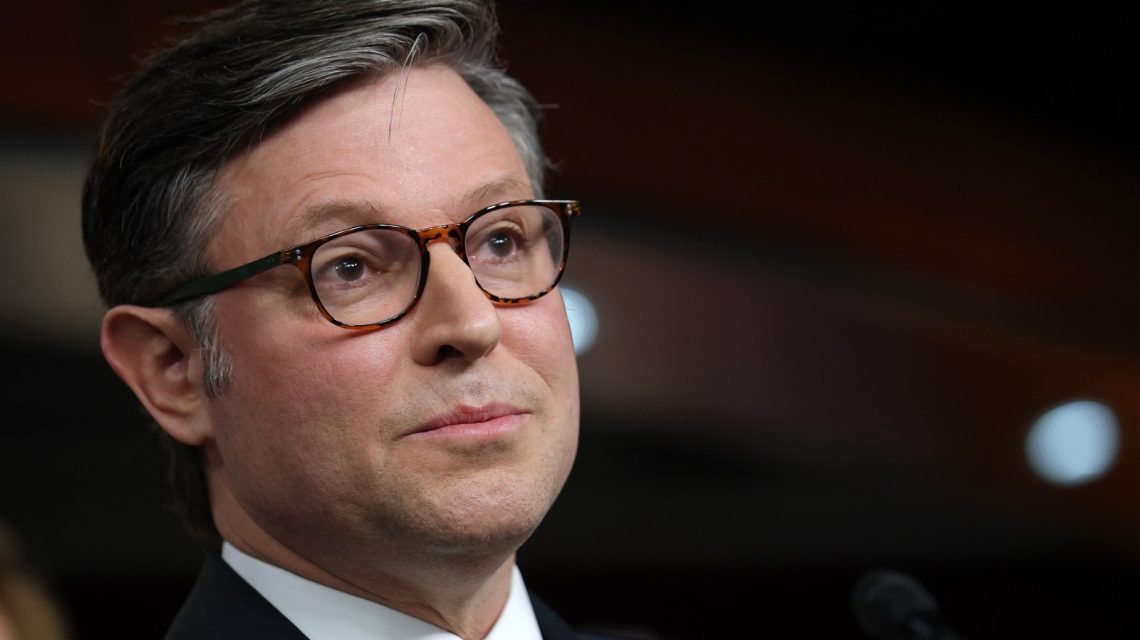
House Speaker Mike Johnson highlighted a need for Congress to address birthright citizenship after the Supreme Court overturned President Donald Trump’s executive order restricting it. The court’s decision upheld automatic citizenship for children born on U.S. soil, stirring Republicans to rethink their strategy.
Congressional Action on Citizenship
Johnson argued that the current system allows abuse, referencing ‘birthright tourism.’ He urged Congress to act quickly, following the Supreme Court’s 6-3 ruling against Trump’s order. The ruling blocks attempts to end birthright citizenship through executive action, pushing the debate to legislative arenas.
On Fox News Sunday, Johnson stated, “The 14th Amendment’s original intent valued citizenship, but it has been devalued due to birthright tourism. We need to address this threat to the rule of law and national security.” His comments align with a call from Trump encouraging Congress to craft legislation ending birthright citizenship.
Supreme Court’s Decision Upholds Tradition
The Supreme Court’s ruling in the case, Trump v. Barbara, delivered a significant setback to Trump’s efforts. Chief Justice John Roberts reaffirmed that children born in the United States are citizens at birth, citing the 1898 case United States v. Wong Kim Ark. That case determined that a child born in the U.S. to immigrant parents is an American citizen.
Trump had aimed to deny automatic citizenship to children of undocumented or temporary resident parents. However, lower courts blocked the policy before it reached the Supreme Court, which ultimately struck it down.
Trump Encourages Legislative Efforts
Despite the defeat, Trump urged Congress to act, proposing that legislation could address the issue without needing a constitutional amendment. He emphasized quick legislative action to address birthright citizenship concerns, repeating his belief that the 14th Amendment was not designed for children of temporary visitors or undocumented immigrants.
Johnson echoed this sentiment without specifying legislative details but suggested Congress could redefine jurisdiction under the 14th Amendment. Meanwhile, Missouri Senator Eric Schmitt announced plans to pursue a constitutional amendment, though Johnson recognized the challenges of such a path.
Dissenting Opinions Signal Conservative Frustration
Johnson pointed to Justice Clarence Thomas’s dissent, signaling potential conservative discontent with the ruling. Thomas challenged the expansion of the 14th Amendment’s meaning, questioning whether current interpretations would last.
Justice Samuel Alito also dissented, arguing that the Citizenship Clause should not apply broadly. These dissents have become focal points for conservatives who were disappointed by the decision.
The Importance of Wong Kim Ark
The decision against Trump leaned heavily on precedent from Wong Kim Ark’s case. Born in San Francisco to immigrant parents, Wong’s citizenship was confirmed by the Supreme Court after a legal battle, cementing a legal framework for birthright citizenship over a century ago. Supporters of birthright citizenship cited this case heavily in recent deliberations.
Future Legislative Challenges
Any legislative attempt to limit birthright citizenship could lead to significant constitutional challenges. A constitutional amendment would need significant support, requiring two-thirds of Congress and ratification by three-fourths of the states. Nevertheless, Republicans seem intent on pursuing avenues to test the issue further.
Johnson’s comments, Trump’s appeals, and Thomas’s dissent suggest a shift in conservative focus to Congress. Though the Supreme Court upheld birthright citizenship, the debate may persist as Republicans explore legislative and amendment possibilities.
 Federal Appeals Court Decision Against Trump’s ‘Third-Country’ Deportation Policy
  President Trump’s Controversial Ban on Media Outlets Sparks Press Freedom Concerns
  U.S. Security Agreement in Greenland Sparks Optimism and Concerns
  Cook County’s Property Tax Bridge Loans
  A Controversial Stance on Immigration Policies Sparks Debate in South Carolina
  Trump Administration Challenges In-State Tuition for Undocumented Students