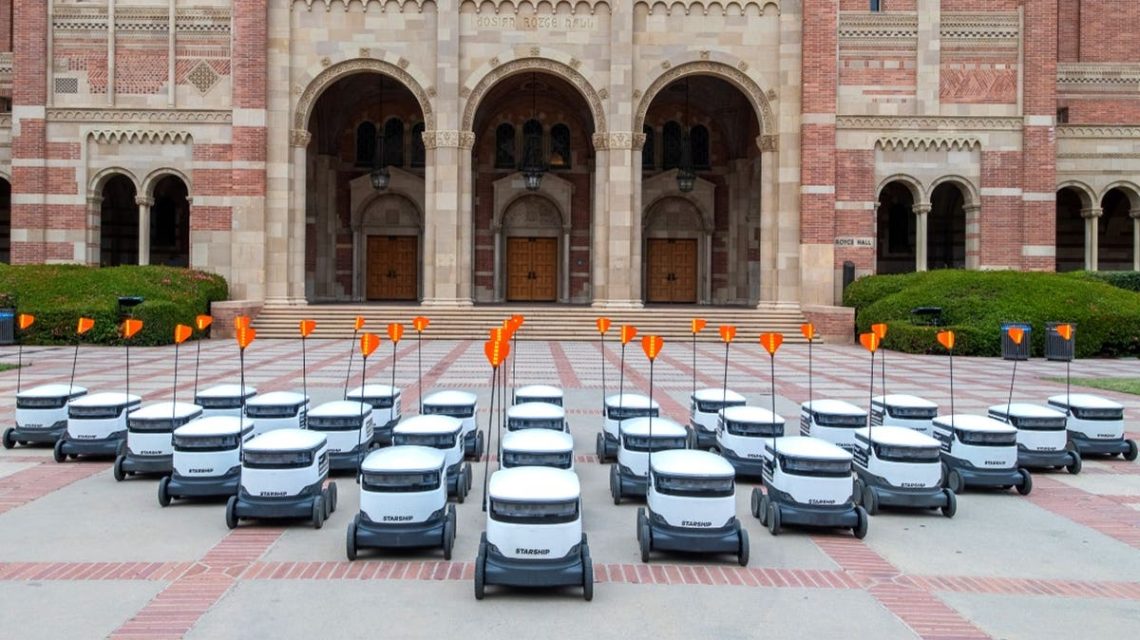
The small white robots familiar to college campuses are shifting gears. Known for delivering lattes and snacks to students, they are now assigned to grocery chains and city-wide hot food delivery. Starship Technologies has declared a transition from U.S. universities to urban environments across the U.S. and Europe.
Campus Robots Redeployed
These robots became part mascot, part convenience on campuses. Their polite presence at crosswalks endeared them to students. Now, the company is moving them from controlled campuses to the unpredictability of city sidewalks.
Shifting Priorities for Starship
Starship is shifting focus to expand grocery delivery in U.S. and Europe.
The company aims to boost grocery delivery, predicting tenfold growth driven by major retailers. In Finland, the robots already handle about 20% of grocery deliveries. To replicate this success, over 1,200 robots from U.S. campuses will shift to grocery delivery.
Why Campuses Were Ideal
Starship’s U.S. debut happened at George Mason University in 2019. The robots quickly spread to several campuses due to their appeal to tech-hungry students often needing late-night food without leaving their dorms.
The pandemic amplified their appeal through contactless delivery options, further cementing their popularity on campus.
Smooth Transition Plans
Starship plans a gradual pullback from campuses, maintaining services through the 2026–2027 school year. This isn’t an abrupt stop but a shift toward larger markets.
Facing City Sidewalk Challenges
In urban settings, delivery robots face new challenges. They need to coexist with pedestrians, strollers, wheelchairs, and more. Design choices will be crucial in avoiding disruptions. Any miscalculations could lead to frustration and pushback, as previously seen in Chicago.
Reports of robots bumping into people and causing accessibility concerns underline the need for considerate integration into urban areas.
Grocery Delivery: A New Frontier
Transitioning from campus to grocery delivery alters the scene. Unlike a student ordering a snack, grocery deliveries can mean heavier, more frequent orders with higher expectations.
If successful, this could lead to significant savings for retailers, as Starship claims their service costs $3-$4 less per delivery than traditional methods.
Estonia’s Role in Starship’s Evolution
Founded in Tallinn, Estonia, Starship continues to rely on its core engineering team there. This shift is not only in operational location but strategy.
The Path Forward for Robots
The future of delivery robots lies in cities. College campuses helped the brand thrive. However, grocery delivery might make the business profitable. Public sidewalks require trust, rules, and designs that respect pedestrians.
Robots should not complicate life for users with canes or strollers. If these are to become mainstream, they must integrate seamlessly into daily life without complicating it.
Implications for Residents
With robots appearing near groceries and restaurants, observe their behavior. Check that they do not obstruct pedestrian paths and comply with local regulations.
Report any issues with documentation, and remain informed about privacy implications due to the sensors and cameras these robots employ.
 Transforming Healthcare with AI: A Human-Centric Approach
  White House to Exempt Some AI Systems from Government Vetting
  SpaceX Reports Significant Loss After Initial Public Offering
  Understanding the Rise of AI-Powered Phishing Scams
  Concerns Arise Over Anthropic’s New AI Model and Transparency in AI Journalism
  The Complex Dynamics of Remote Work and Productivity