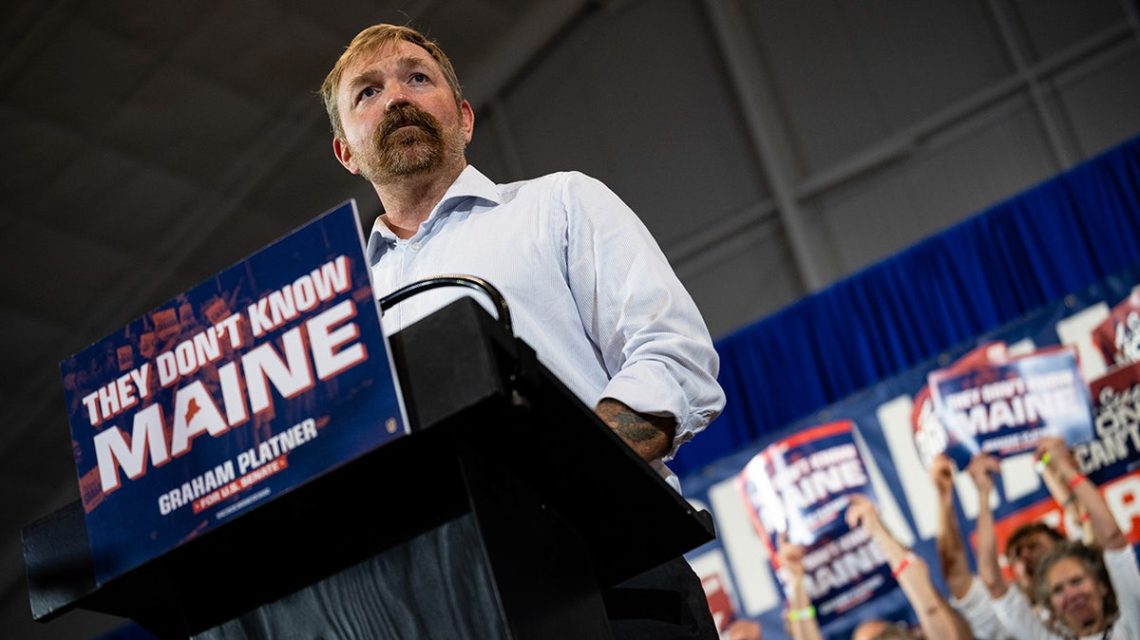
Graham Platner, a Maine Senate candidate, faces controversy following accusations of sexual assault from five years ago. Platner strongly denies these claims, labeling them as false and politically motivated. As this situation gains attention, Democrats urge him to withdraw from the race.
The Democratic Party is under pressure to reclaim the Senate majority from Republicans in the upcoming midterm elections. Flipping Maine is a key part of this strategy. The state, known for its moderate stance, often votes Democrat in presidential elections. However, it currently has a Republican and an Independent senator who caucuses with Democrats.
Platner’s campaign is in trouble as top Democrats in Maine and nationwide call for his exit after the recent allegations. This situation complicates Democratic efforts to win back the Senate. A Republican strategist highlighted the challenge it presents for Democrats.
The forced implosion of Graham Platner does not make life any easier for Democrats,the strategist said.
Platner, a military veteran and oyster farmer, had gained progressive support before these allegations. He was set to challenge Republican Senator Susan Collins, who is seeking her sixth term. This race is crucial, among a few others, that will decide the Senate’s control. If Platner steps down before July 13, the Democratic Party can replace him on the ballot.
Defeating Collins is no easy task. Six years prior, she appeared vulnerable in polls but secured re-election by defeating State House Speaker Sara Gideon by nine points. Collins’ position seems at risk due to current political and economic conditions, such as sustained inflation and former President Trump’s low approval ratings. Yet, the controversy around Platner benefits Collins and her party.
Republicans are using the situation to attack other Democrats who initially supported Platner. A Democratic strategist mentioned the uncertainty this drama adds to their campaign strategy, stating, “it depends on who replaces Platner.”
The turmoil in Maine follows developments in Michigan. There, State Senator Mallory McMorrow suspended her Senate campaign amidst low poll numbers and fundraising challenges. Her withdrawal has shifted focus to the primary battle between Abdul El-Sayed and Rep. Haley Stevens. El-Sayed, backed by prominent progressives, and Stevens, supported by the Democratic establishment, face off for the party’s nomination.
The outcome will determine who competes in November against former Republican Rep. Mike Rogers. The seat, currently held by retiring Democratic Senator Gary Peters, is vital for the Democrats to maintain control. Party leaders consider Stevens more electable, concerned that El-Sayed may risk their hold on the seat in a state narrowly won by Trump two years ago.
With Maine’s situation looking bleak for Democrats, Michigan’s stakes have increased. Democrats require a net gain of four Senate seats, challenging in the current climate. Their plan involves reversing seats in states like Maine and North Carolina, while maintaining their holds in Michigan, New Hampshire, and Georgia.
This crisis has also intensified divisions within the Democratic Party. Moderate Senator John Fetterman criticized Bernie Sanders for endorsing Platner, demanding an apology for supporting a “predator.” Such internal disputes further complicate their push for a Senate majority.
In summary, the issues surrounding Platner present significant hurdles for the Democratic Party as they navigate the lead-up to the midterms.
 Karoline Leavitt Offers Insights on Trump’s Calls With Putin and Xi
  Curtis Pushes for Investigation into Trump Jr. and Biden
  Israeli Prime Minister’s Visit to the U.N. Amid Controversy
  Reader Perspectives on Social Security Reform and Competency-Based Degree Programs
  Republicans in Battleground States Urge End to Iran Conflict
  The Role of Consumer Choice in Restaurant Industry Dynamics