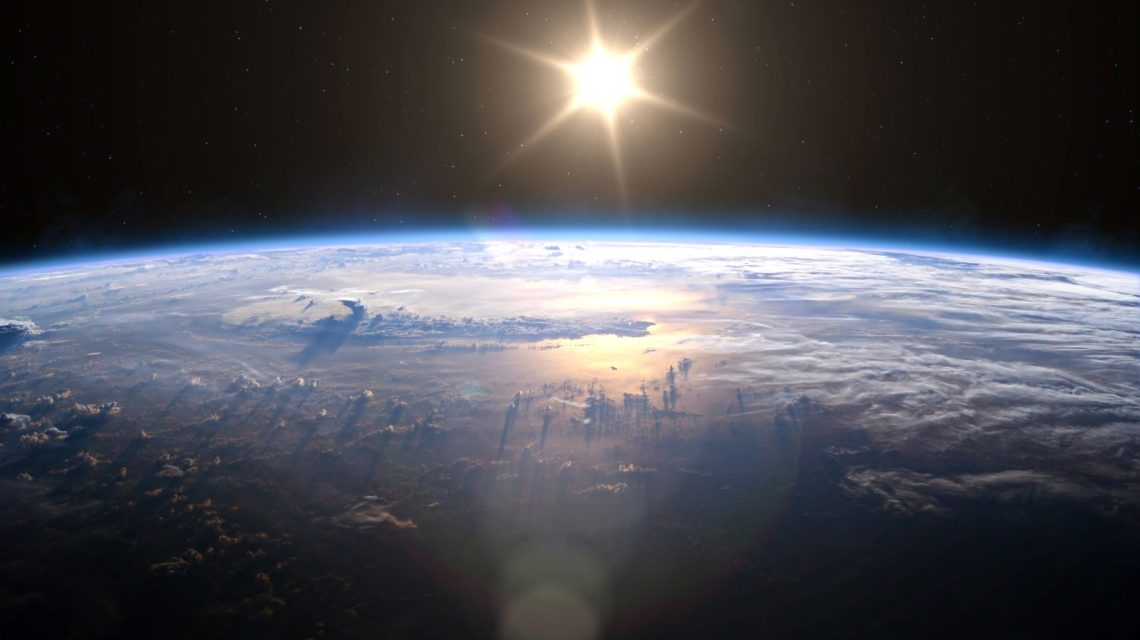
The Federal Communications Commission (FCC) has approved a test satellite from Reflect Orbital, intended to provide “sunlight on demand” from space. The satellite, equipped with a large reflective mirror, aims to redirect sunlight onto specific locations on Earth, sparking a debate about potential benefits and risks.
Project Overview
Reflect Orbital, based in California, developed the Earendil-1 satellite to explore the possibility of using reflected sunlight for various applications. The light would cover an area approximately 5 kilometers (3 miles) wide, adjusting its mirror every four minutes to stay on target. This technology could enhance agricultural productivity, support emergency response efforts, and contribute to solar-energy generation by focusing sunlight on designated areas.
Currently, the FCC’s approval concerns a single demonstration satellite. However, Reflect Orbital envisions expanding to a larger network if initial tests prove successful.
Opposition and Concerns
The proposal faces strong opposition from astronomers, environmentalists, and scientists who warn of unintended consequences. University of Texas professor Moriba Jah criticized the pattern of acting first and evaluating consequences later, noting the risks of commercialization in space.
“This approval is deeply concerning,” Jah said. “It reflects a pattern we have seen repeatedly in the commercialization of space: act first, assess later, and let someone else deal with the consequences.”
Astronomy expert Samantha Lawler from the University of Regina argued that a single satellite would not suffice for the proposed uses. She highlighted that hundreds of satellites would be necessary for practical applications like providing adequate solar power.
“It can only provide light a few times brighter than moonlight,” Lawler stated. “That is absolutely useless for pretty much every application they suggest.”
Environmental and Safety Risks
Critics warn that large reflective satellites may introduce a novel form of light pollution. Bright reflections could interfere with astronomical studies and telescope operations, compromising research on faint celestial objects. Environmental groups worry about potential impacts on wildlife and human health. Artificial nighttime lighting affects natural cycles critical for species’ survival, while human circadian rhythms might also be disrupted.
Additional concerns include safety risks for pilots and drivers due to sudden bright reflections. The deployment of numerous satellites could further congest low-Earth orbit, escalating risks of collisions and space traffic management challenges. The FCC acknowledged awareness of these issues but clarified that they fall outside its regulatory scope, which pertains to radio-frequency spectrum authorization.
Governance Challenges
The absence of comprehensive governance is a significant concern. The FCC’s decision, which dismissed over 1,600 public comments, highlights a gap in federal oversight of optical light and satellite environmental effects. Professor Jah emphasized the challenges posed by this regulatory void.
“What troubles me most is not the technology itself, but the governance posture behind it,” Jah said.
Lawler shared similar worries, noting that opposition letters and petitions from the public and scientific community went unheeded. She pointed out a loophole being exploited by American satellite companies due to the lack of a federal agency regulating such issues.
“The FCC says that they don’t have to listen to those concerns,” she explained.
Future Prospects
For now, the Earendil-1 mission serves as an initial trial for reflecting sunlight from orbit to Earth. This experiment might determine the concept’s feasibility and provide insights into the environmental and societal implications of adding more light to the night sky.
Newsweek editors Samantha Beech and Dave Siminoff provided oversight for this story.
 Congressional Inaction Amid AI Concerns
  Rising Demand for Data Centers Driven by AI Development
  Hurricane Formation and Strengthening
  Understanding AI’s Impact Compared to Historical Threats
  California Governor Declares Statewide Emergency Ahead of El Niño Storms
  Debate Over AI’s Governance Amidst Fearful Predictions