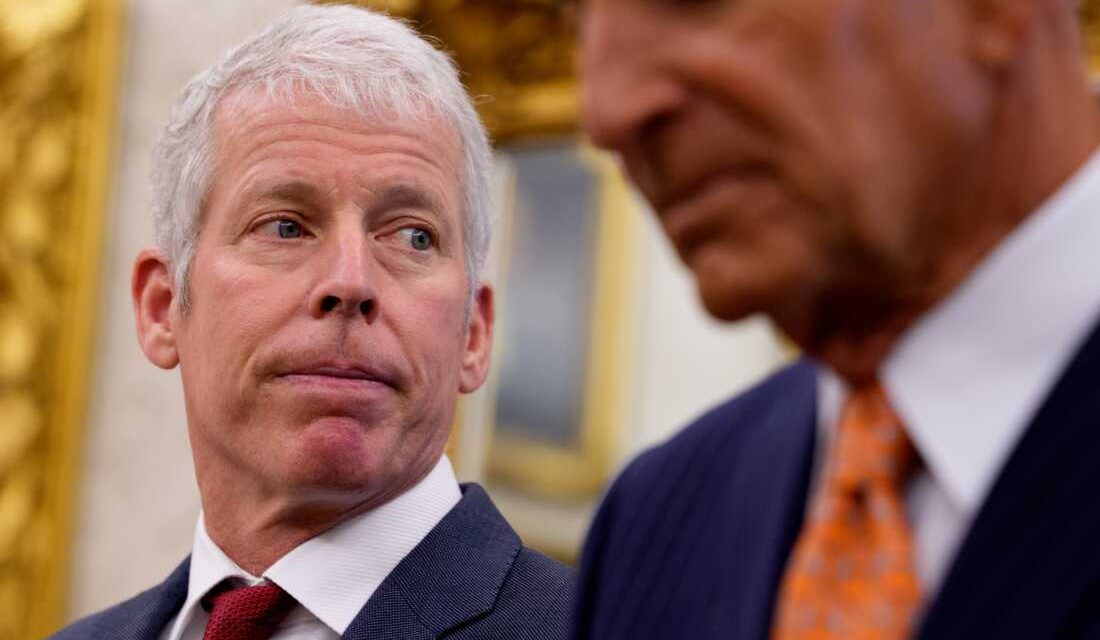
The Trump administration has entered into a nuclear cooperation agreement with Saudi Arabia. This deal would enable American companies to operate commercial nuclear power plants in the country. Energy Secretary Chris Wright and Saudi Arabia’s energy minister, Prince Abdulaziz bin Salman, finalized the agreement. An announcement from the Department of Energy indicated that an associated agreement on safeguards was also signed.
Congress will review the agreement, with a 90-day period to consider it. The cooperation agreement gives U.S. companies primary access to the Saudi nuclear energy industry, allowing them to supply nuclear reactors and fuel. According to an administration memo, the agreement is expected to last several decades and is valued at billions of dollars.
“These agreements reflect our two nations’ shared commitment to strengthening U.S.-Saudi commercial relations, delivering prosperity at home and security to our allies abroad,” Wright stated in a public announcement.
The Secretary emphasized that the agreement maintains high nuclear safety and nonproliferation standards, utilizing advanced U.S. nuclear technology and expertise. However, concerns arise as the agreement lacks certain restrictive elements known as the “gold standard.” These would prevent the kingdom from enriching uranium and reprocessing nuclear fuel, and they do not mandate additional oversight from the International Atomic Energy Agency.
Saudi Crown Prince Mohammed bin Salman has mentioned that Saudi Arabia might pursue nuclear weapons if Iran develops them. This raises questions about the agreement’s lack of these vital restrictions.
Representative Brad Sherman expressed his concerns on social media, stating, “Congress should approve only if the deal has the same gold-standard safeguards as our deal with the UAE.” He emphasized that facilitating proliferation for profit contradicts the U.S. stance against nuclear proliferation in the Middle East.
According to the memo, the U.S. does not endorse a Saudi nuclear weapons program. The agreement focuses on peaceful nuclear energy collaboration and includes some nonproliferation measures under the Atomic Energy Act. Additionally, it provides a legal route for cooperation on the nuclear fuel cycle but does not obligate the transfer of any such U.S. capabilities or technologies to Saudi Arabia.
Matthew Bunn, a nuclear proliferation expert at Harvard University, noted potential complications in negotiating with Iran. He mentioned that Iran might resist agreements involving detailed inspections if Saudi Arabia is not held to similar standards.
 Federal Appeals Court Decision Against Trump’s ‘Third-Country’ Deportation Policy
  Ed Sheeran’s Philadelphia Concert Amid Controversy
  U.S. Secures Strategic Control Over Greenland
  U.S. Security Agreement in Greenland Sparks Optimism and Concerns
  Impact of Gender-Based Violence in South Africa
  UNIFIL Operations in Southern Lebanon Amidst Ceasefire Challenges