On July 16, 2024, a bright meteor blazed across the sky over New York City. Reports of the fiery display poured in from various states, including Connecticut, Rhode Island, and Pennsylvania. Many witnesses also recalled a thunderous sonic boom accompanying the celestial event.
NASA experts initially dismissed the likelihood of the meteor reaching the ground. They estimated the rock was around a foot long and believed it completely disintegrated during its atmospheric descent. However, homeowners in Hillsborough, New Jersey, had a different experience that day.
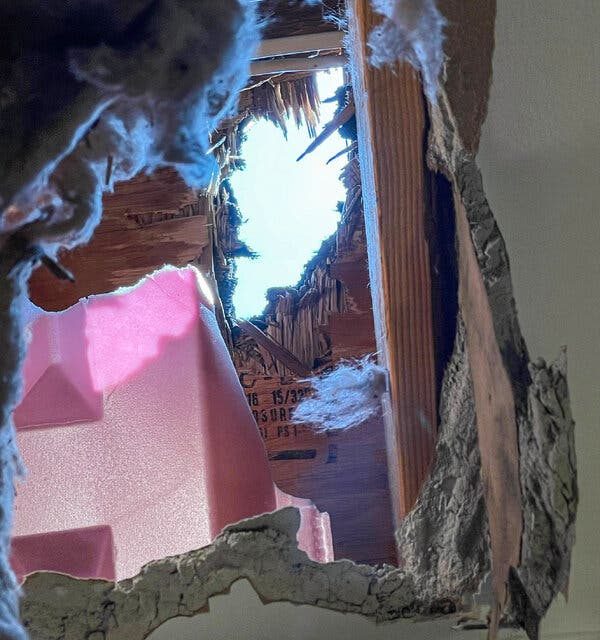
At around 11:20 a.m., just minutes after the meteor sighting, a man working in his home office heard a loud crash. The noise shook the entire house. He described it as if his kitchen cabinets had suddenly collapsed.
When he went to inspect the noise, he discovered a hole in the bedroom ceiling. The room was filled with a sulfurous smell, reminiscent of rotten eggs, and coated in a layer of fine dust and black soot. On his pillow lay several dark, rock-like objects.
The homeowners, who chose to remain anonymous, expressed relief. “Good thing I didn’t sleep in,” the man remarked.
The meteorite crash not only startled the homeowners but also attracted scientific interest. The fragments provided researchers with rare material for studying the composition of a unique asteroid. These discoveries potentially offered new insights into the asteroid’s characteristics.
 Hurricane Formation and Strengthening
  Ancient Mastodon Tooth Unearthed in California Creek
  The Tiny World of the Pumpkin Toadlet
  Chimps and Self-Medication: Insights from Gombe Stream
  Rovelli Challenges Physics with Relational View
  Legal Waiver for Sharing UAP Information Announced