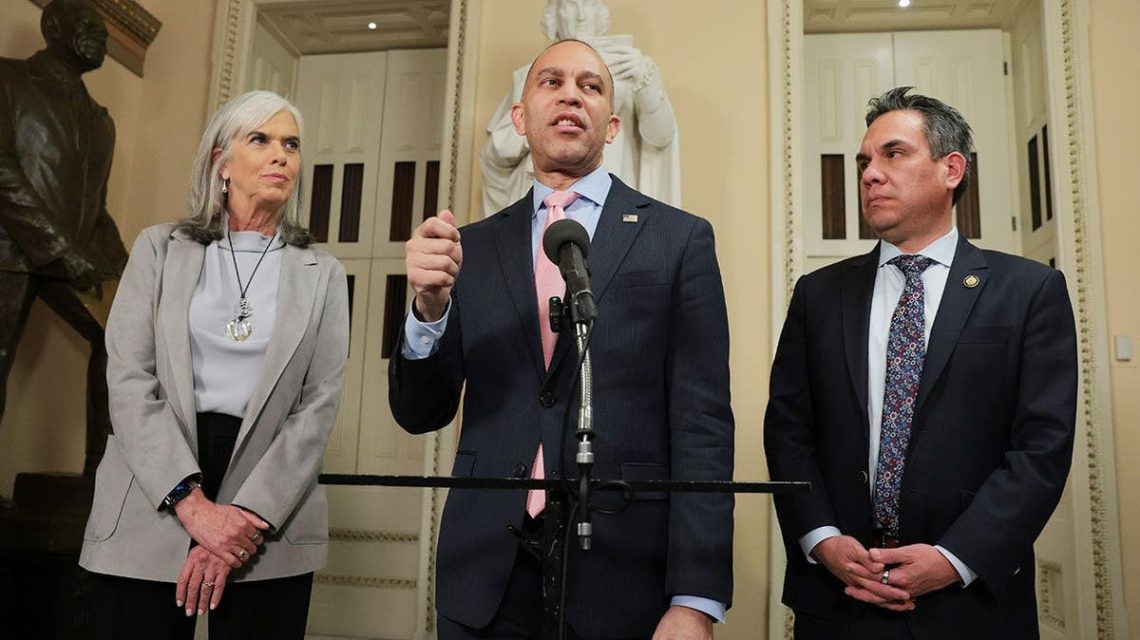
Democrats are facing a deep division over proposed legislation to terminate aid to Israel, reflecting shifting views towards the nation as support for the Palestinian cause rises within the party. In a recent House vote, lawmakers rejected an amendment by 104-313 that aimed to cut $3.3 billion in aid to Israel for the upcoming fiscal year. The vote split the House Democratic leadership, and leaders did not direct members on how to vote.
House Minority Leader Hakeem Jeffries, D-N.Y., opposed the amendment, joining 97 other Democrats. In contrast, Rep. Katherine Clark, D-Mass., the second-ranking Democrat, backed the measure along with 102 other Democrats. Ten Democrats chose to vote present.
Rep. Thomas Massie, R-Ky., a key critic of Israel, proposed the amendment as part of a State Department appropriations bill, criticizing Israel as the “biggest welfare recipient of the United States.” He was the only Republican to support it.
Opponents of the amendment argued that it would harm the United States’ crucial relationship with Israel in the Middle East, especially during the Iran war, and weaken Israel’s capacity to counter terrorist outfits like Hamas and Hezbollah. Rep. Mario Diaz-Balart, R-Fla., emphasized that the terrorists threatening Israel also pose a direct threat to the U.S. By providing Israel with military tools, America enhances its own security.
Diverse voices within the Democratic Party echoed these concerns. Former House Majority Leader Steny Hoyer, D-Md., argued that the amendment would strengthen adversaries of peace and jeopardize Israel’s safety.
While the amendment did not pass, its supporters viewed the vote as a step forward. Greg Casar, D-Texas, Chair of the Congressional Progressive Caucus, remarked that more Democrats than ever voted against supporting Israeli policies under Prime Minister Benjamin Netanyahu. He called this an imperfect vehicle for their movement but expressed determination to reshape party priorities towards domestic spending.
Jeffries, during a confidential meeting, criticized the amendment for its broad language, noting it could impact funding for humanitarian efforts, refugee support, and peace-building initiatives. Pete Aguilar, D-Calif., Chair of the House Democratic Caucus, shared similar reservations.
Meanwhile, Clark and other Democrats argued that Israel’s actions in Gaza necessitated a reevaluation of financial aid. Rep. Joaquin Castro, D-Texas, advocated for using leverage to influence Israeli behavior, citing public opposition to further military support.
Massie’s proposal did not distinguish between military and non-military aid, causing concern among some lawmakers like Greg Landsman, D-Ohio, who debated its detrimental impact on both national security and the U.S.-Israel alliance.
Analyses suggest a pivotal shift in Democratic sentiment towards Israel. An NBC News poll in March found that a majority of Democratic voters sympathized more with Gaza than with Israel. This underscores evolving perspectives evident in New York’s June primaries, where candidates opposing Israel succeeded over establishment figures.
The amendment was introduced amidst growing intra-party challenges. Rep. Alexandria Ocasio-Cortez, D-N.Y., noted that this issue transcends ideological lines within the party and affects various factions.
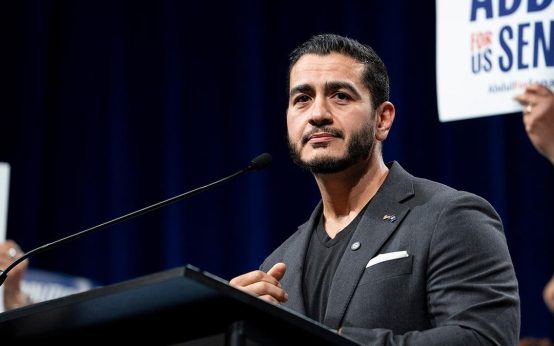 Michigan Senate Nominee Abdul El-Sayed Criticized for Remarks on Reproductive Rights
  AFL Investigates Fairfax County Schools’ 9/11 Teaching Guidance
 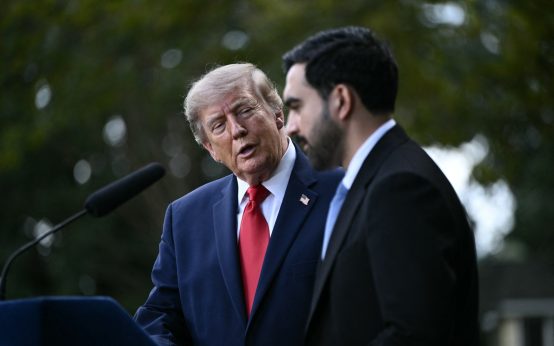 Poll Reveals Voter Preferences Between Socialist Democrats and MAGA Republicans
  Challenges of Electing a Female President: Insights from ‘The View’
  Upcoming Concerns and Influence in Health Politics
  Rep. Donalds Distances Himself from Trump as Florida Governor Race Tightens