The Reflecting Pool at the Lincoln Memorial, recently renovated for $14 million, has shown signs of damage. The Washington Post analyzed visuals and spoke with experts, attributing the issue to installation problems. President Donald Trump accused vandals of causing the damage, which appeared shortly after the project’s completion. He claimed, “Thugs” slashed and damaged the pool’s floor.
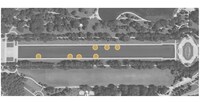
Interior Secretary Doug Burgum echoed these claims, suggesting vandalism led to 350 feet of gashes in the pool lining. However, when Post reporters visited on June 25, they found seven locations where the waterproof lining had peeled. This lining was painted onto the concrete, forming irregular patches along the pool’s edges.
The Washington Post’s analysis concluded that the issues arose at seams in the lining.
Four experts on waterproofing materials reviewed the evidence. They agreed that the failure pattern likely indicated application errors during the renovation. The lining peeled at the seams, which were created when different areas were painted at various times. Experts stated that a precise cause requires on-site examination and lab tests.
Despite the findings, White House and Interior Department spokespeople rejected the notion of improper application. Taylor Rogers, a White House spokeswoman, described incidents of vandalism causing the damage reported in the media. An Interior spokesperson claimed the Reflecting Pool is now leak-proof, referencing consultations with the Army Corps of Engineers and other experts.
During the renovation, workers applied two products from San Diego-based Rhino Linings. The first layer, Rhino 406, served as a light blue epoxy base coat. The second layer, Pipeliner 5000, a dark blue hybrid polyurea, completed the waterproof membrane. Timing of the application was crucial, but analysis found that both coatings were not applied within the necessary timeframes, leading to numerous adhesion failures.
Experts indicated that seams required specific treatment to prevent such problems. The failure pattern highlighted the need for special techniques, although opinions varied on the best approach. Some recommended sanding edges to ensure better adhesion, while others suggested using separate materials like tile and grout between sections.
Both the primary contractor, Atlantic Industrial Coatings, and the subcontractor, Mid-America Industrial Coatings, did not respond to requests for comment. Rhino Linings acknowledged reports of finish coat separation but stated that the underlying waterproofing remained unaffected.
The no-bid contract was awarded to Atlantic Industrial Coatings in April, citing that only a few contractors were qualified for the task. The pool had encountered algae and leakage issues for years. Previous renovations had addressed these issues with a hydrophilic joint sealing strip from another company, Sika, which declined to participate in the recent renovation.
The Reflecting Pool also suffered an algae bloom soon after reopening. Burgum stated that Atlantic Industrial Coatings will handle repairs, anticipated to cost tens of thousands of dollars.
Contributors to the report included Salvador Rizzo and Luis Melgar.
 Trump Delivers Warning to Iran, Cuba at UN General Assembly
  Trump Delivers Stern UN Speech on Iran, AI, and Global Security
  Lukashenko and Putin’s Unique Relationship and Belarus’ Strategic Role
  Harris Discusses Potential 2028 Presidential Run
  Far-Left Groups Allegedly Organize Protests in Austin
 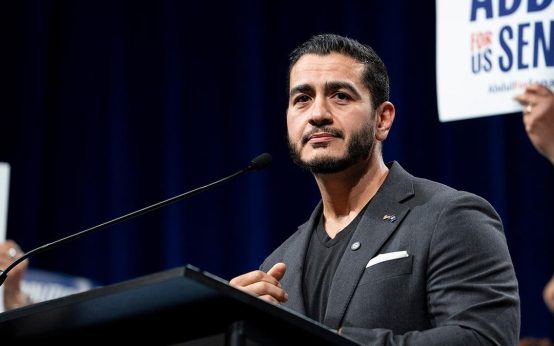 Michigan Senate Nominee Abdul El-Sayed Criticized for Remarks on Reproductive Rights