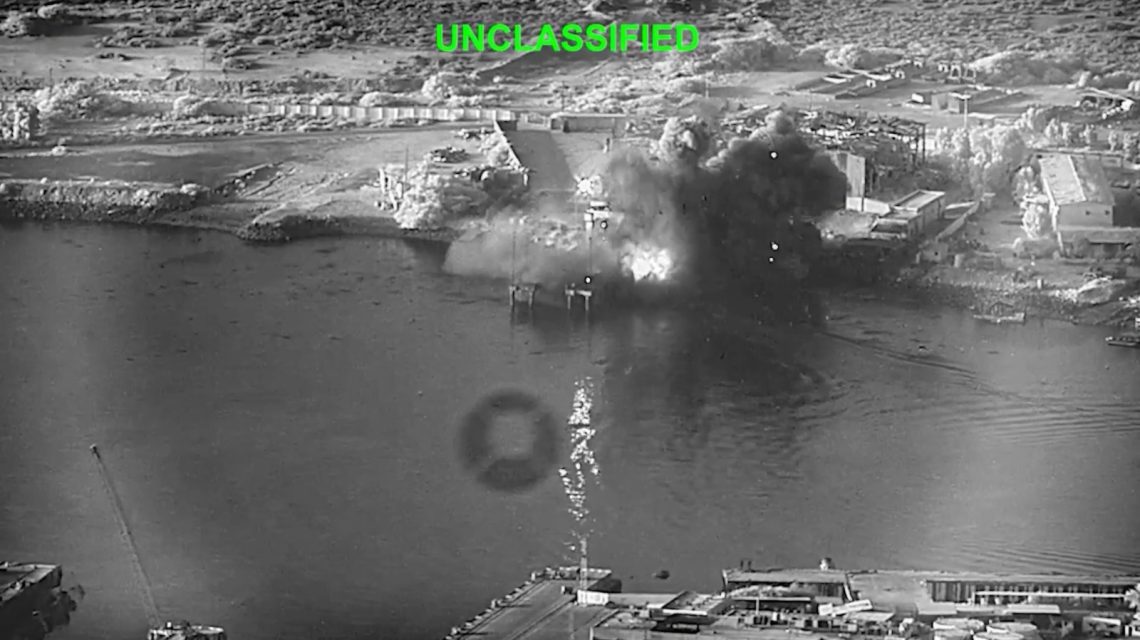
While many Americans slept peacefully, U.S. missiles were striking targets in Iran relentlessly. President Donald Trump threatens to target bridges and power plants after five continuous days of attacks. The situation leaves ordinary Iranians with little hope, yet for the leaders of Iran’s Revolutionary Guard Corps (IRGC), the conflict is beneficial.
During his second campaign, Trump claimed he was the one to end foreign conflicts and criticized former leaders for prolonged wars in Iraq and Afghanistan. Now, he risks starting a third prolonged conflict. This would ironically benefit the regime he aims to change.
Understanding Iran’s Resistance
Iran’s refusal to yield to Trump’s pressure reveals a critical truth: What benefits Iranian citizens is not the same as what benefits the IRGC. Dr. Andreas Krieg, from King’s College London, explains that a continuing conflict strengthens the IRGC’s political influence. It keeps Iran mobilized, justifies repression, sidelines civilian authorities, and enhances the IRGC’s role as the nation’s protector. Furthermore, it enables them to wield their most significant leverage: the power to disrupt the global economy by threatening the Strait of Hormuz.
“Iran’s military, largely reliant on missiles and drones, might seem weaker than the U.S., but it can significantly disrupt global trade,” Krieg said.
Economic and Strategic Implications
The IRGC could leverage its position to negotiate trade deals, offering safe passage in exchange for economic concessions. Peiman Salehi, a political analyst in Tehran, views this as part of a broader power struggle between dominant and emerging global influences. A destabilized Iran would complicate Middle Eastern energy exports to China, giving Beijing a vested interest in Iran’s stability.
However, despite the airstrikes damaging Iran’s infrastructure, eliminating its offensive capabilities remains challenging. The specter of a long ground war is unappealing to the U.S., which IRGC leaders count on, betting that they can endure economic struggles longer than the U.S. can handle escalating oil prices and rising tensions.
The IRGC’s Long-Term Challenges
However, there are risks to the IRGC’s strategy. Iran’s economic and social fabric is strained, and continuous U.S. strikes worsen the situation, as emphasized by Dr. Burcu Ozcelik from RUSI. Should Trump carry out threats against crucial infrastructure, Iranian citizens would face severe challenges. Economic stability is crucial for the regime; without it, pressures at home would grow, potentially undermining the IRGC’s control.
China, a major buyer of Iranian oil, currently supports Iran. Still, if Iran’s leaders refuse to compromise and keep disrupting energy supplies, they risk losing China’s backing. This might force Iran into dependency on greater powers, such as China.
The Path to Resolution
In politics, appearances often hold significant sway. Neither Iran nor the U.S. wants to appear defeated. Trump might back off if he can spin the situation as a win, such as Iran pledging no nuclear weapon development. Similarly, Iran’s leaders need to portray resistance as a victory.
Despite a Memorandum of Understanding (MOU) intended to form a basis for negotiations, the lack of clarity and differing interpretations has stymied progress. The U.S. seeks unconditional access to the Strait, whereas Iran believes it has the right to control traffic. Without a dispute resolution framework, both countries remain locked without a clear path back to talks.
“Neither side is near a real settlement, and full-scale war is undesired. This reality suggests an ongoing cycle of talks, threats, and strikes,” Krieg summarized.
 Marco Rubio Criticizes NATO’s Role Amid Middle East Conflict
  Israeli Prime Minister’s Visit to the U.N. Amid Controversy
  U.S. Secures Strategic Arctic Agreement
  Trump Administration’s Plan to Resettle Afrikaners as Refugees
  Trump’s Vision on Iran, AI, and Global Security at the UN
  Lithuanian Leader Seeks U.S. Military Commitment Amid Rising Russian Threats