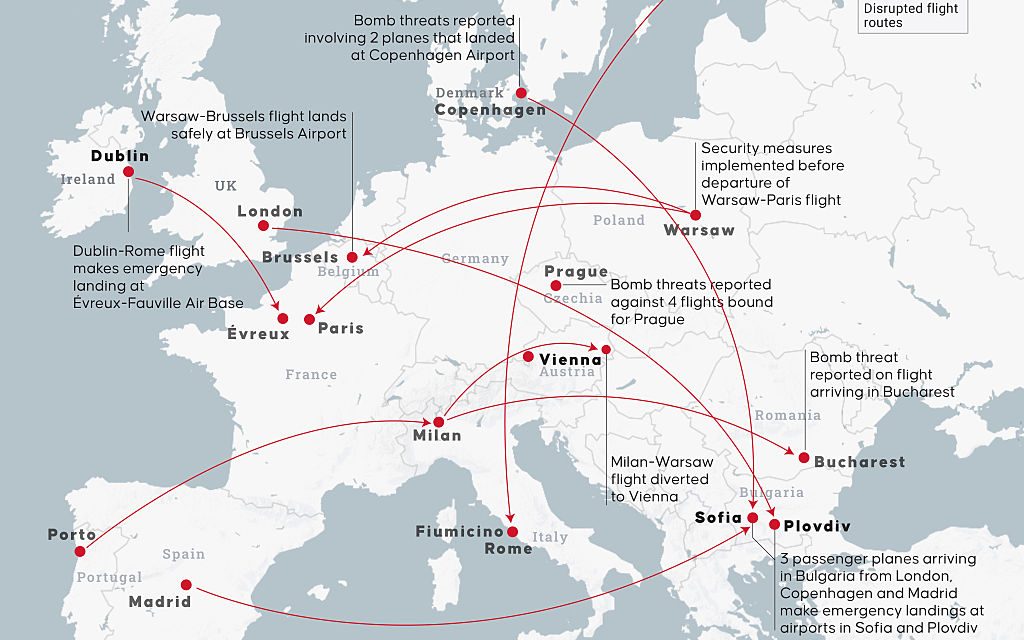
This week, Europe experienced a wave of bomb threats targeting numerous flights and extending to newsrooms, causing widespread concern. These threats, identified as hoaxes, came through anonymous calls and emails starting on November 2. On Monday, a Wizz Air flight from London to Bulgaria made an emergency landing in Budapest following a mid-flight threat. The following day, seven passenger flights faced similar threats, resulting in emergency actions. By Thursday, over two dozen flights were targeted, with the threats persisting into Friday. Flights impacted connected Italy, Ireland, Spain, Bulgaria, Romania, Poland, Finland, Austria, Denmark, Belgium, Portugal, France, Greece, Serbia, Czechia, and the United Kingdom.
A source: Omar Zaghloul—Anadolu via Getty Images
Authorities, including the U.K. Transport Secretary, confirmed these were hoaxes as all affected flights landed safely. The hoaxes disrupted thousands of passengers, inciting fear among potential travelers and straining the aviation system.
The threats grew on Friday when several European broadcasters received bomb warnings via email, prompting evacuations at outlets like Sky News, Nova TV in Bulgaria, and RTÉ in Ireland. A message to broadcasters warned of more to come, according to Reuters.
European Union Transport Commissioner Apostolos Tzitzikostas decried the threats, noting the activation of EU-level aviation security mechanisms. He stated conclusions on possible links between incidents were premature. Ireland’s government commented on a likely coordinated disruption campaign.
Experts suggest these threats aim to incite fear and disrupt societal systems. Spanish Foreign Minister José Manuel Albares remarked on their hybrid aggression and psychological war nature.
Elisabeth Braw from the Atlantic Council categorizes these threats as “gray zone conflicts,” sitting between war and peace. Italian Prime Minister Giorgia Meloni noted civilian, not military, infrastructure was targeted, creating a challenging scenario if another nation were involved.
Braw points out the unprecedented scale and succession of these threats, amid other politically motivated attacks on Europe. Recent cyberattacks hit grocery refrigeration systems in nine European countries and French blood banks, with pro-Russian groups claiming responsibility, though not verified.
U.S. federal agencies advised hospitals and retailers to bolster defenses with strong authentication. The Kremlin’s Dmitry Peskov dismissed allegations of Russian involvement as unfounded.
Robert Jordan of the Royal United Services Institute cautioned against hastily attributing the threats to hostile states, though there are instances of Russian and Iranian online recruitment for similar activities. An individual or non-state group could also be exploiting regional safety standards.
Before motives and responsible parties can be understood, security forces need to trace these threats’ sources, Jordan explained. Until then, airline disruptions are likely. Braw warns that even suspected hoaxes demand serious attention due to aviation’s catastrophic potential if an actual attack occurs.
French prosecutors are examining potential foreign power links to the threats, as reported by Agence France-Presse (AFP). Their goal is to identify email authors and any international connections. Some emails bore the signature “fighters of the Male State,” a Russian extremist group, though no confirmed link exists. Group founder Vladislav Pozdniakov denied involvement, stating the group disbanded in 2021.
Jordan predicted a rising priority for identifying the perpetrators among European security services. Meanwhile, airlines and airports are likely reevaluating screening protocols to manage the situation.
Even once those behind the threats are identified, Europe may still face challenges addressing future hybrid attacks, Braw concluded. As democracies can’t retaliate with threats, the growing and complex nature of such attacks presents ongoing dilemmas for European governments.
 Eisenkot to Form New Israeli Government as Netanyahu Faces Setback
 Macklemore’s Free Palestine Tour Faces U.S. Venue Rejections
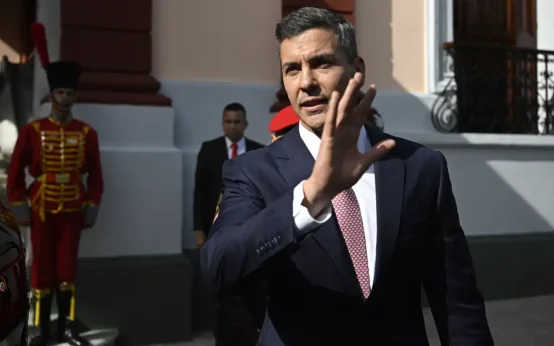 Paraguay’s President Impeached Following Bank Collapse
 Pope Leo XIV Advocates for Universal Healthcare and Social Equality in Uruguay
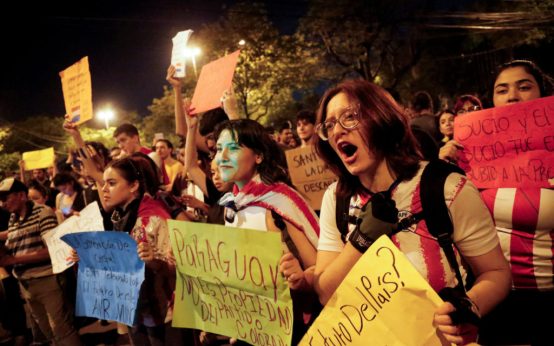 Paraguay’s Political Crisis: Former President’s Ouster and Bank Collapse
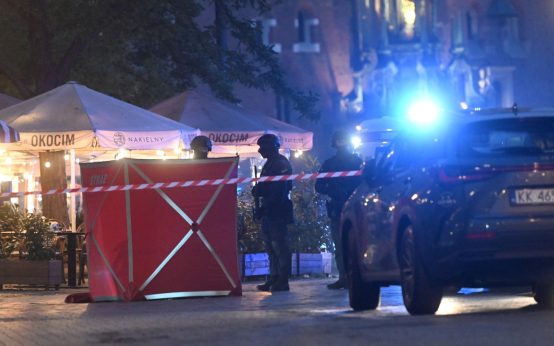 Shooting in Kraków’s Main Market Square: Five Dead, 12 Injured