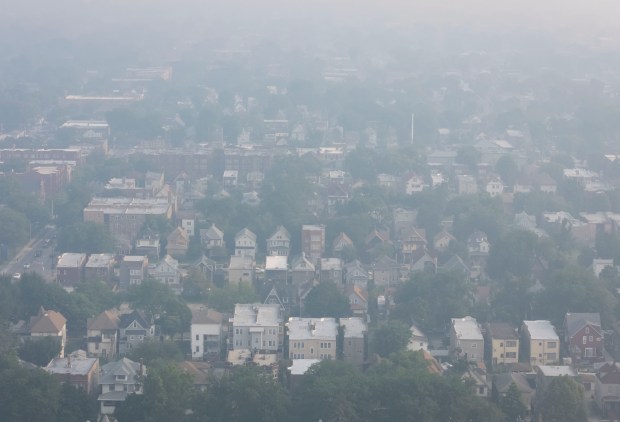
The morning haze in northern Illinois reached hazardous levels due to wildfire smoke from Canada and Minnesota. Authorities warned that conditions might deteriorate further tonight, according to the National Weather Service.
Residents of Chicago’s Austin neighborhood experienced reduced visibility on July 16, 2026, as smoke from the Canadian and Minnesotan wildfires cast a shadow over the area. Bicyclists at 31st Street Beach faced a haze-filled morning, impacting their usual routine.
The Chicago skyline, normally visible from Interstate 290, is obscured as the smoke blanket reduced visibility. The sun’s view was compromised, as the smoke mixed with clouds, altering the morning scene in Chicago on July 16, 2026.
In the Austin neighborhood on Chicago’s West Side, the haze affected the operations of the CTA “L” Green Line train, challenging commuters navigating the routine.
A notable sight was the disappearance of the Chicago skyline from around three miles north on the Kennedy Expressway, emphasizing the severity of the smoke’s presence on July 16, 2026.
In Ely, Minnesota, the Boundary Waters Canoe Area Wilderness was closed for evacuation on July 14, 2026, due to smoke from multiple wildfires, including the Camp Fire. This resulted in significant plumes of smoke hanging in the air over Moose Lake.
 Recall of Meat Products from Star Meat Delivery Inc.
  Questions Arise After Presley Gerber’s Death in Rehab
  Upcoming Concerns and Influence in Health Politics
  Fraud Task Force Saves Billions by Tackling Obamacare Misuse
  Presley Gerber’s Passing Raises Addiction Recovery Concerns
  Understanding October SNAP Benefits: Payment Dates and Changes