The U.S. military has temporarily paused its airstrikes on Iran following nearly two weeks of intensified bombing campaigns. This halt coincides with diplomatic efforts to prevent a full-scale war. President Donald Trump has both threatened additional strikes and acknowledged ongoing talks, despite concerns that escalating gas prices related to the conflict could negatively affect Republicans in the upcoming midterm elections.
Diplomatic Developments
Adding complexity to the situation is Israeli Prime Minister Benjamin Netanyahu’s planned visit to Washington next week. Israel, which initiated the conflict with the U.S. on February 28, has not participated in recent American attacks. This absence comes after Iran effectively closed the Strait of Hormuz, a crucial oil shipping route. Michael Singh from the Washington Institute for Near East Policy noted that Israel’s non-involvement might suggest a desire to limit the conflict.
Singh, a former senior Middle East director on the National Security Council, expressed skepticism about reading too much into the temporary lull in hostilities. He remarked that if this pause extended for several days, it might hold greater significance.
Ongoing Mediation Efforts
Mediators continue to press forward with their diplomatic efforts,stated a regional official involved in the mediation process. This pause in U.S. and Iranian strikes is viewed as a positive step toward de-escalation. The official, speaking anonymously, mentioned that both nations wish to return to the interim ceasefire agreement. Currently, negotiations focus on allowing Iran to manage vessel transit through the Strait of Hormuz with fewer restrictions.Initially, Iran tightened its control over the Persian Gulf’s narrow waterway by targeting tankers and freighters, causing a spike in oil prices. This situation has been unpopular among the American public and could make some Republican lawmakers vulnerable in November’s elections.
Since the interim ceasefire agreement in June, a battle for control over the strait has emerged. Iran required ships to use a route near its coastline and suggested it might impose fees. Many vessels navigated a southern route along the Oman coast under U.S. oversight when some were attacked by Iran. The U.S. renewed its attacks on Iran to counter these threats and expanded targets to include infrastructure deeper within Iran.
Challenges in U.S.-Iran Negotiations
Singh highlighted that the U.S. aims to bring Iran back to the negotiating table. He questioned what kind of diplomatic signals Iran might be sending and how eager they appeared to return to negotiations. A challenge for the U.S. is Iran’s fractured leadership, with factions competing for control. This internal struggle could hinder compromise with the U.S., as it may be perceived as a weakness.
Both the U.S. and Iran have a vested interest in reopening the strait for economic reasons. Singh pointed out the need to establish a stable agreement regarding control over the waterway before achieving long-term peace. Until then, negotiating through both diplomacy and military actions could continue.
Trump’s Stance
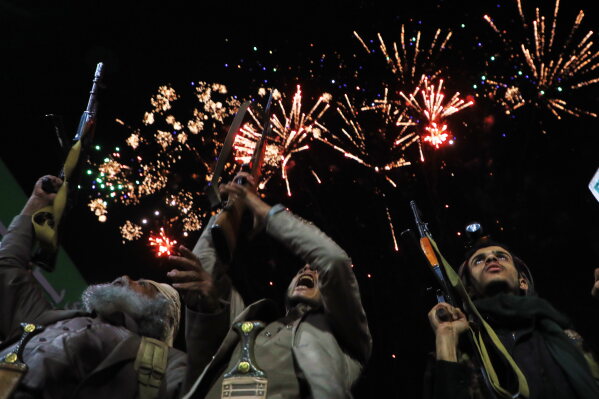
Despite the temporary halt in fighting, regional tensions remain high. Yemen’s Houthi rebels, backed by Iran, have intensified their attacks on Saudi Arabia, further complicating the situation. The U.S. military continues to enforce a naval blockade on Iranian ports, disabling a Mozambique-flagged ship on Friday.
President Trump maintains a dual approach, balancing threats against Iran with diplomatic initiatives. During a recent discussion with reporters, Trump outlined two potential strategies: continue military actions or negotiate with Iran. He indicated that he believes Iran is becoming more serious about negotiating, though he remarked that they were not ready to make a deal yet.
Trump met with national security aides to review the situation, debating whether to change the current strategy or escalate military actions. He assured that there were no airstrikes in Iran overnight after consecutive attacks.
Trump downplayed the impact of approaching elections on his decision-making, emphasizing that resolving the conflict correctly was his priority.
 U.S. Actions in the Strait of Hormuz Face Sustainability Challenges
  Escalating Violence in French Student Protests: A Call for Peaceful Solutions
  California Realtor Arrested for Alleged Espionage Activities
  U.S. Monitors Possible Pneumonic Plague Case in Russia
  Heroic Passengers Prevent Plane Disaster
  FBI Arrests Suspected Chinese Agent in Los Angeles