For a long time, physicists pondered a significant question about the nature of the universe: Why do certain particles, like protons, have mass while others, such as light particles, do not? Understanding this was vital for grasping the formation of planets, galaxies, and life. The prominent theory proposed that particle mass derived from interacting with an unseen field, named the Higgs field. Yet, proving its existence required extensive international collaboration.
From various countries, thousands of scientists united their efforts. Despite political tensions, they cooperated to prove the Higgs field theory, leading to discovering the Higgs boson in 2012. This breakthrough, partly thanks to U.S. contributions, earned two physicists the Nobel Prize. However, a proposal by the Trump administration to restrict international collaboration could force American scientists to observe future discoveries from the sidelines. The proposal, which involves giving appointees control over key research funding, concerns many in the scientific community.
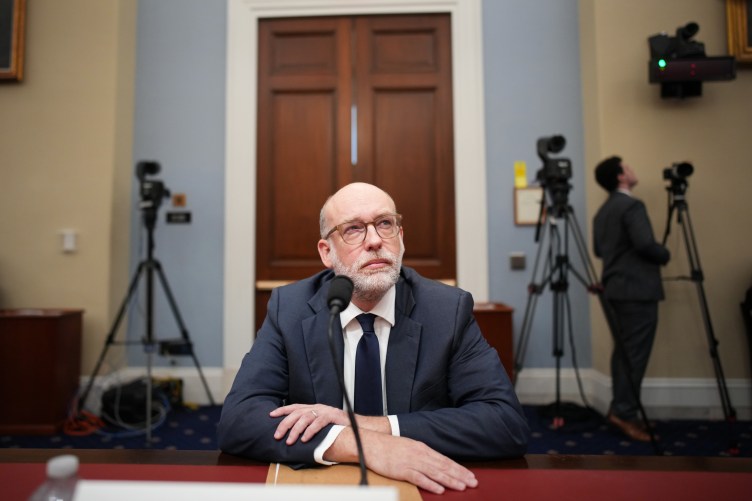
David W. Miller, a U.S. scientist involved in the Higgs boson project, expressed strong opposition. “Such projects require long-term, international effort,” Miller said. “Without U.S. leadership, the nation risks not just falling behind, but stepping aside.”
This proposal extends beyond physics. Created by the Office of Management and Budget (OMB), it grants appointees extensive authority over grants across federal agencies. Critics argue the appointees lack the necessary scientific knowledge and that the proposal undermines the peer review process.
The rule affects a wide range of federal grants, essential to cities, states, and nonprofits. Entities relying on these funds fear losing support, and over 500,000 public comments have expressed concern since the rule’s announcement.
OMB defends the rule as aligning federal spending with existing laws and ensuring accountability. Critics argue that this approach could disrupt significant research, citing examples like pediatric cancer treatment and maternal health research. The proposal contradicts the current system, where experts evaluate and recommend grants based on merit.
The Higgs boson discovery exemplifies the success of this merit-based system. Miller recalls a career sheltered by government-funded research, from early education to collaborative projects at CERN. He warns that the new rule risks turning science into a politically influenced field.
The rule’s terms prohibit certain foreign collaborations unless deemed secure by agency heads. Concerns arise from existing tensions with nations actively contributing to major scientific projects.
Chris Llewellyn Smith, former CERN director, stresses that restricting collaborations contradicts centuries-old scientific traditions. The invasion of Ukraine by Russia illustrates how geopolitical conflicts disrupt global scientific cooperation.
Technological advancements from particle physics hold promise for future applications. The GPS technology drawing on Einstein’s equations serves as an example of science’s long-term benefits.
The OMB justifies the rule as essential to prevent waste and bias, citing politicized grant decisions under Biden’s administration. But critics, including the National Science Foundation’s Inspector General, highlight the low incidence of fraud. Experts contest OMB’s authority to implement such sweeping changes, predicting potential legal challenges.
Significant revisions may depend on political pressure. Opposition from various political figures includes critiques against the rule’s potential to replace scientific merit with political priorities.
 Trump Administration Seeks to Influence NIH Grantmaking
  Protests in Austin: Analyzing the Coordination Behind Anti-ICE Demonstrations
  Controversy Surrounds Inglewood Mayor Amid Allegations
  White House Launches Trump TV Amidst Press Dispute
  Media Organizations Sue Trump Administration Over Press Access
  VP JD Vance Trails Potential Democratic Contenders in Early Polling for 2028 Election