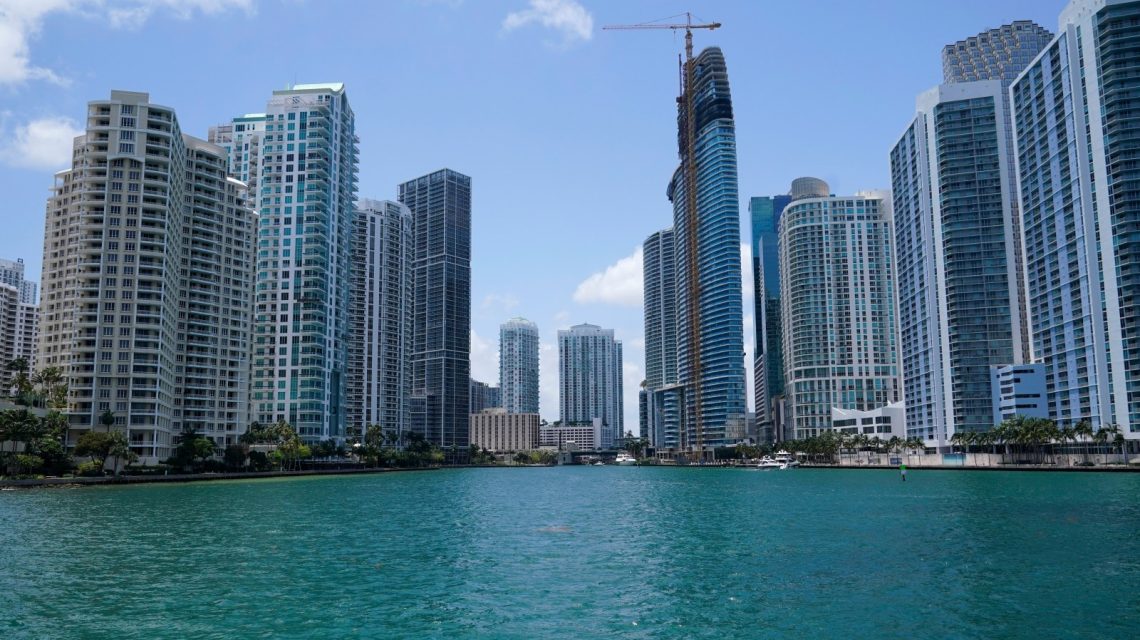
More than 2,500 condominium and cooperative buildings in Florida are set for Phase Two milestone inspections in 2024 and 2025, according to a report by the Florida Legislature’s Office of Program Policy Analysis and Government Accountability (OPPAGA). These inspections highlight signs of structural deterioration among these buildings.
During this period, building officials reported 54 buildings as “unsafe or uninhabitable.” Five were evacuated. Under Florida law, aging buildings of certain specifications must undergo milestone inspections. If a Phase One visual inspection identifies significant deterioration, a Phase Two inspection is necessary. This involves engineers assessing structural conditions and recommending repairs.
The report follows the tragic collapse of Champlain Towers South in Surfside, Florida, which resulted in 98 fatalities. This event led state lawmakers to revamp building inspection regulations. However, the report data isn’t comprehensive, as only 71 percent of jurisdictions provided inspection information for 2024 and 64 percent for 2025.
Inspection Details
Officials noted that 8,777 buildings needed Phase One inspections in 2024. Of these, 6,952 were completed. The majority, 8,132 buildings, were located in coastal areas. Phase Two inspections were required for 1,899 buildings, with 1,301 completed.
In 2025, 2,880 buildings needed Phase One inspections, with 1,784 completed. Phase Two inspections were necessary for 636 buildings, of which 274 were completed. Across the two years, 8,736 Phase One inspections and 1,575 Phase Two inspections were completed, identifying 2,535 buildings for further review.
Many of these buildings, particularly in South Florida’s coastal counties like Miami-Dade, Broward, and Palm Beach, showed substantial deterioration. In 2024 and 2025, these counties reported the highest number of buildings requiring Phase Two evaluations.
South Florida Context
South Florida’s coastal counties have a large inventory of aging buildings, vulnerable due to their long timelines of development. The area is also facing a housing affordability crisis, with an estimated shortage of 90,000 affordable units.
Only five buildings were evacuated in 2024, and none in 2025, despite 54 being deemed “unsafe or uninhabitable.” Miami-Dade County reported the majority of such buildings in 2025. Population and business growth in South Florida, with notable moves like Citadel’s relocation, contribute to this situation.
Surfside Collapse
On June 24, 2021, the partial collapse of Champlain Towers South raised significant concerns about the structural integrity of aging condominium buildings in Florida. Investigators discovered long-term deterioration and structural faults.
The incident led to major condo safety reforms, including mandatory milestone inspections for certain buildings, and stricter reserve funding requirements for major repairs.
The National Institute of Standards and Technology revealed that structural failure possibly began weeks before the collapse. Flaws in the column-to-slab connections under the pool deck likely caused premature deformation and fracture in early June 2021.
Condo Legislation
A bipartisan bill was reintroduced aiming to facilitate financing for crucial structural repairs. The Making Condos Safer and Affordable Act, presented by Representatives Debbie Wasserman Schultz and María Elvira Salazar, seeks to extend financing options for safety and rehabilitation projects.
The plan proposes expanding access to two loan programs under the Department of Housing and Urban Development (HUD). It would enlarge the Federal Housing Administration (FHA) 203(k) loan program, allowing condo owners to cover safety-related repairs.
Federal loan insurance for private lenders would be expanded. The bill includes simplifying the application process for borrowers and authorizing FHA to insure condominium association loans under Section 234 of the National Housing Act.
Lawmakers believe the bill would allow FHA-backed loans for a broader range of work, including repairs, renovations, improvements, and infrastructure enhancements in condominium developments.
The OPPAGA report, drafted five years post-Surfside, continues to reveal significant structural issues in the state’s aging buildings. This includes several buildings labeled as unsafe or uninhabitable.
 Details Emerge on Shooting of Venezuelan by ICE Officer in Austin
  Controversial Removal of ‘The Bluest Eye’ from Georgia School Libraries
  Legal Battle Over Media Ban at White House
  Kyler Murray Cleared from Concussion Protocol, Set to Start Against Buccaneers
  Fat Bear Week: A Unique Annual Tradition at Katmai National Park
  Chicago Faces Lingering Cloudy Weather After Heavy Rainfall