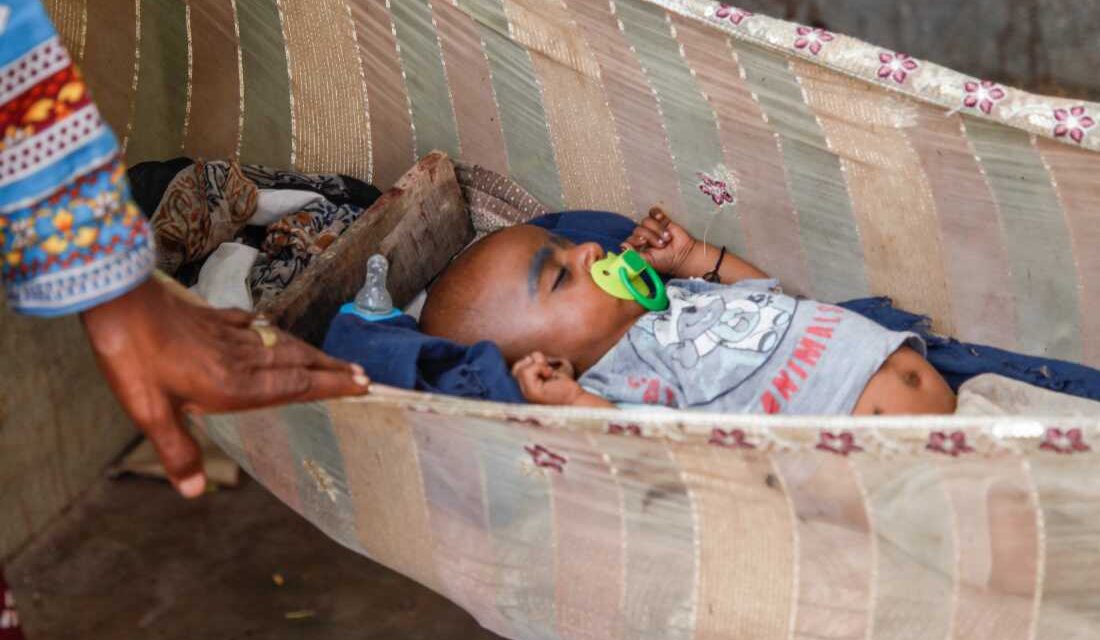
In the fishing settlement of Rehri Goth, near the port city of Karachi, premature births are alarmingly common. Residents face harsh conditions, including limited access to healthcare and widespread poverty. Many babies, like Mariam’s son Ladoo, are born early around seven months gestation, with little to no medical follow-up due to financial constraints.
Statistics are grim in Rehri Goth, where one in four infants is born prematurely. This rate is nearly double Pakistan’s national average of 14%, which already ranks among the highest globally. Many factors contribute to this crisis: malnutrition, extreme heat, and poor sanitation are prevalent.
“The prematurity rate in Rehri Goth is among the highest in Pakistan: about one in four babies here are born early,” says Dr. Fyezah Jehan of Agha Khan University.
Research by local scientists seeks answers in the microbiome, the collection of microbes in our bodies. Initial studies show that a low presence of Prevotella copri bacteria might correlate with premature births. This finding, though not yet actionable as policy, represents a critical step in understanding the issue.
Dr. Jehan’s team analyzed samples from new mothers in Rehri Goth and found that those who delivered preterm had significantly lower levels of Prevotella copri. This discovery provides potential insights into the causes of prematurity.
However, as Dr. Vincent B. Young points out, “Association is not causation.” Simply adding more of the bacteria might not be effective if underlying factors suppress it in women’s bodies.
While the research progresses, the reality for families like Sughran’s is dire. Life in Rehri Goth is filled with struggle. Sughran has buried two babies, both born preterm and unable to survive despite her desperate attempts to get medical help.
Efforts to change these outcomes face hurdles. Jehan stresses that improving sanitation and education could significantly lower the rates of premature birth. Yet, donors hesitate to fund projects perceived as political or risky due to corruption concerns.
The personal stories are heart-wrenching. Mariam follows improvised care routines for Ladoo, who endures physical challenges and inadequate nutrition. There’s misinformation about baby care; formula milk options like Cerelac used as substitutes despite health warnings from the World Health Organization.
Ladoo’s grandmother, Hanifa, highlights the desperation of his family. They lack proper resources and are forced into using unsafe practices to feed him. Despite the immense challenges, they remain determined to care for the young life entrusted to them.
 Understanding School Shooting Preparedness Drills
  Addressing the Complex Issue of Suicide and Its Prevention
  Quality of Sleep Linked to Risk Reduction in Various Diseases
  Exploring Diets and Their Potential to Reduce Alzheimer’s Risk
  Understanding School Safety Drills: Lockdowns vs. Active Shooter Simulations
  Dengue Fever Death in Florida and the Rising Cases Across the U.S.