A 17-year-old girl from Tangier reached Spanish territory by swimming through the waves. Tragically, her younger brother drowned in the Mediterranean, and her mother disappeared in the chaos as tens of thousands attempted to reach Spain from Morocco. Her story highlights the dire situation of over 800 minors facing uncertainty after the mass crossing to Ceuta.
The girl shared with an Associated Press photojournalist how her family joined many others trying to swim around a border fence on Thursday in search of better opportunities. The AP keeps her identity confidential as she is a minor in a vulnerable situation. She recounted how she saw the Spanish police retrieve her 8-year-old brother’s body from the water.
She made it to shore, separated from her mother, and spent the last four days alone. Some locals provided her with food and clothes, and a woman offered her a place to bathe. She later visited a government-run youth center for assistance, but it was full.
I saw people stepping on the dead bodies.
She shared this through a translator since she doesn’t speak Spanish. Now, she and other children beg on the streets. Local officials report about 860 minors remain in Ceuta since Thursday’s crossing, joining between 3,000 and 5,000 migrants who avoided expulsion. Around 60,000 people crossed the border.
Spanish authorities confirmed 72 deaths, primarily from swimming attempts. Morocco reported 11 additional deaths not included in the Spanish count. Spanish law requires that unaccompanied minors receive protection.
While adult Moroccan migrants face stringent criteria for asylum, minors must receive care from Spanish authorities. An AP journalist witnessed Spanish soldiers stopping a crying Moroccan child’s repatriation after media intervention and resident pressure, transferring him to the Civil Guard.
Most adult Moroccans voluntarily returned or were sent back by Spanish police, but Ceuta also hosts many from Sudan, Palestine, Afghanistan, and other African countries. The city’s migrant center, designed for 600 people, is overcrowded with limited food supply.
Local activist Ramsés Mohamed Azumik from the Association Elín commented, The plan is to have hunger, thirst, and exhaustion force people to voluntarily return to Morocco.
Many migrants rest on the beaches or hills overlooking Spanish territory, with the European mainland visible across the sea.
AP journalist Joseph Wilson contributed from Barcelona. This story was translated into Spanish by an AP editor using AI tools.
 German Chancellor Friedrich Merz Faces Challenges After Election Losses
  Trump’s Approach to Iran at the United Nations
  North Korea’s Missile Launches Escalate Tensions
 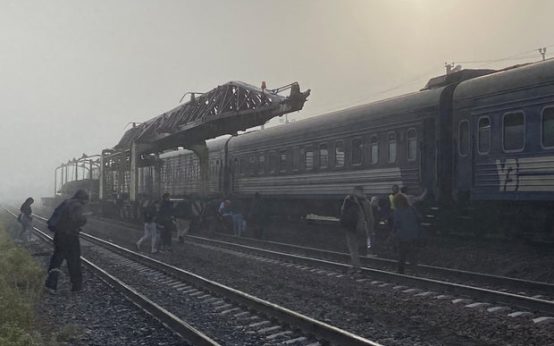 U.S. Plans for Permanent Army Base in Poland Amid Tensions with Russia
  Berlin’s Mayoral Race: A Candidate Inspired by New York Leadership
 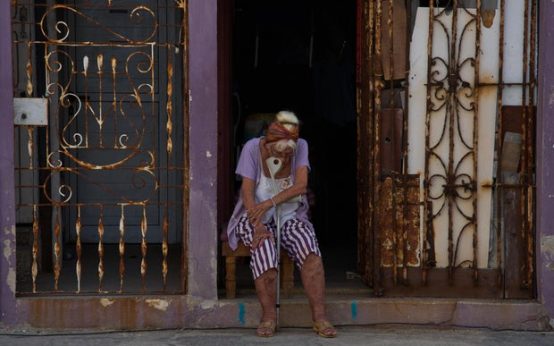 Cuba Faces Sixth Power Grid Collapse Amid U.S. Fuel Blockade