Humanoid robots showcased at Chicago’s Automate Show reveal significant advancements in AI and robotics. Jeff Burnstein, President of the Association for Advancing Automation, highlights AI’s role in enabling diverse tasks across hospitals, factories, and warehouses. He argues that robotics enhances competitiveness and fosters job creation.
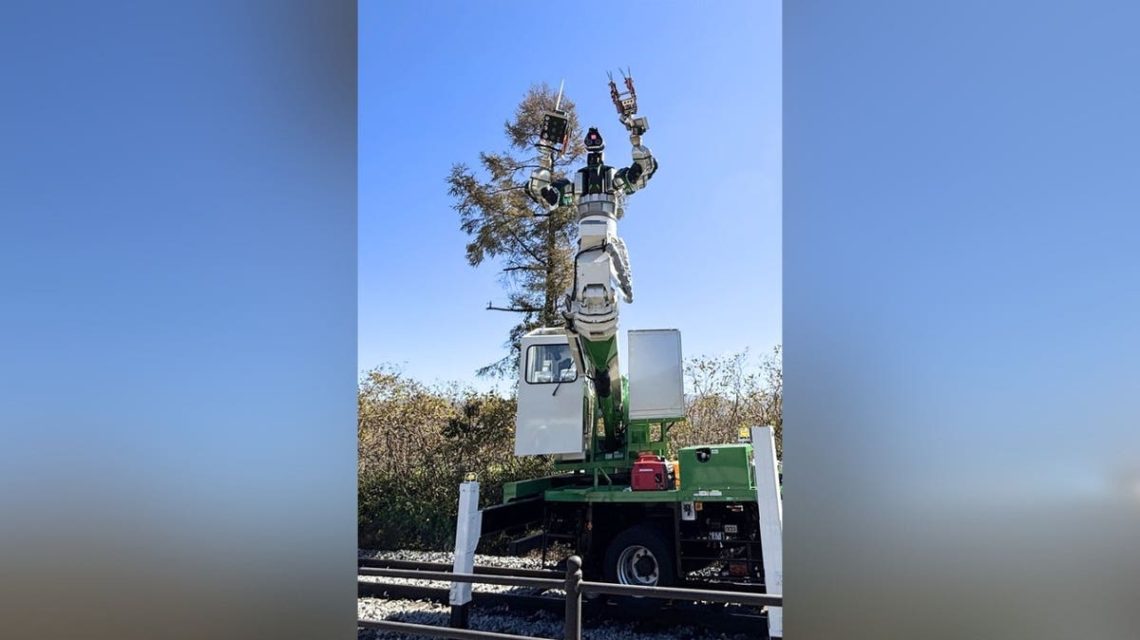
Imagine seeing a humanoid robot wielding a chainsaw near train tracks. This scenario unfolds in Japan, where a towering chainsaw robot trims branches that could obstruct trains. Although intimidating, this machine serves a crucial role.
A humanoid robot equipped with a chainsaw trims overgrown branches, allowing maintenance crews to work safely from a distance. (Kurt “CyberGuy” Knutsson)
How the Chainsaw Robot Works
Japan’s JR East railway company deploys the chainsaw robot to manage risky maintenance tasks that typically require workers to handle heavy equipment at height. The robot executes physical tasks while human operators manage movements from a secure location, offering reassurance.
This robot operates on JR East’s Koumi Line, where cumbersome branches threaten train operations. It has two mechanical arms: one grips a branch while the other saws through it. The robot’s torso extends from a boom on a maintenance vehicle, reaching high above the tracks. Named ZIZAI ZX-3, this robot, made by Nippon Signal, started working in October. A similar system debuted with JR West in July 2024.
Operator-Controlled Process
The ZX-3 robot is remotely managed by a trained operator who controls arm positioning and cutting actions. This oversight ensures safety near railway tracks, where a single mistake could cause damage or danger. The robot’s main task is cutting branches near railway lines, with plans for additional capabilities in the future. These robots allow workers to perform tasks from safer locations, transforming job execution above train tracks.
Why Trains Rely on Robotics
Maintaining clear train tracks requires more effort than expected. Overgrown branches can disrupt trains, and trimming often involves dangerous work near electrical infrastructure. JR East faces a skilled-worker shortage, prompting initiatives to make jobs safer and less physically taxing.
The chainsaw robot accesses hard-to-reach areas without putting workers at risk, with operators positioned safely. JR East now schedules some maintenance for daytime, avoiding overnight work, though it may mean service disruptions. Together with robotics, these adjustments enhance worker conditions.
AI and Future Possibilities
JR East explores AI for equipment inspections and maintenance. Could AI enable a future chainsaw robot to autonomously identify and trim branches? While AI could support decision-making, the ZX-3 currently relies on human control. JR East has no announced plans for a fully autonomous chainsaw robot. Emphasizing human oversight remains essential, particularly with powerful tools involved.
Although you might never see this robot locally, the underlying technology could revolutionize infrastructure maintenance. Commuter train users know the inconvenience of delays; overgrown vegetation contributes to track obstructions. Machinery that aids in maintaining clear tracks benefits passengers and associates in sectors like utility line clearing and difficult construction work.
As robotics advance, new worker skills will be required to operate and maintain these technologies, altering traditional job roles. While certain risks decrease with robotics, machine oversight and control remain vital.
Contact CyberGuy.com with your thoughts on autonomous chainsaw robots. Subscribe to the CyberGuy Newsletter for tech tips and security alerts.
 Paraguay’s President Impeached and Arrested Amid Banking Scandal
 Paraguay’s President Faces House Arrest Amid Banking Crisis
 The Future of Lithium Production in the U.S.
 AI Developments and Political Impacts in Recent News
 Trump Announces NASA’s Ambitious Plans for Mars Mission
 U.S. Technology Stocks Rebound After Election-Induced Sell-Off