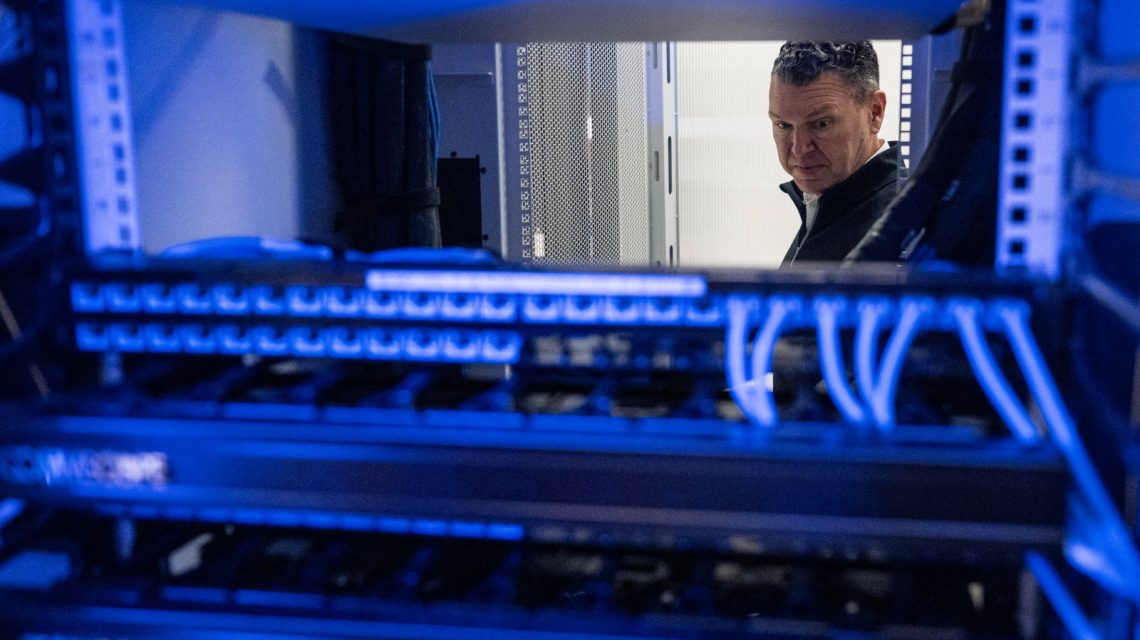
The Trump administration is exploring a ban on Chinese-made optical transceivers in response to security concerns about reliance on China for America’s AI infrastructure. This move highlights rising apprehension that such dependence could jeopardize security.
Planned Ban on Chinese Imports
Officials are reportedly drafting plans to bar Chinese imports of optical transceivers by the end of 2026. These devices play a crucial role in transmitting data over fiber-optic cables in data centers. However, the Federal Communications Commission could still modify or reverse these proposed measures, according to sources cited by Reuters.
The AI competition between the U.S. and China extends to infrastructure. The U.S. has tightened export controls on advanced AI chips to impede China’s technological advancements, particularly those that might benefit the People’s Liberation Army. Meanwhile, reports suggest Chinese state-backed hackers have infiltrated vital American infrastructure and consumer devices, showcasing their potential to gather intelligence or disrupt systems in a crisis.
“As with the risk from the other products the Trump Administration is looking to ban, there are real concerns with the transceivers around data collection, disruption, and long-term dependence on Chinese suppliers,” said Adam Segal from the Council on Foreign Relations.
The White House did not immediately comment on this development.
Understanding Optical Transceivers
Optical transceivers are integral to communication networks, converting electrical signals into light pulses and vice versa. They are used across Ethernet systems and long-distance telecommunications. Within AI data centers, these components establish high-speed optical connections between numerous AI chips, critical for processing large data sets and training models like ChatGPT and Claude.
Rationale Behind the Ban
U.S. officials worry that depending on Chinese suppliers could pose risks if supply lines were cut. Dmitri Alperovitch of the Silverado Policy Accelerator stresses that banning Chinese-made transceivers would help secure the AI supply chain and limit dependencies that could be exploited. China has shown its readiness to leverage its dominance in rare earth minerals during past trade tensions. This tactic was evidenced by the recent export curbs on Japan.
Despite potential benefits, experts warn a ban could also elevate costs and create uncertainty, particularly for large-scale cloud computing companies like Amazon. Such impacts might slow AI development in the short term.
China has criticized U.S. restrictions, arguing they disrupt supply chains and harm international relations. “Such practices do no good to anyone. They are market-distorting acts of bullying,” Liu Chang, a spokesperson for the Chinese embassy in Washington, commented.
 Twitch Streamer Hasan Piker Discusses Controversial Commentary
  A Shifting Political Landscape: The Decline of Autocratic Power
  Trump Delivers Warning to Iran, Cuba at UN General Assembly
  Lukashenko and Putin’s Unique Relationship and Belarus’ Strategic Role
  Beijing’s Tactical Undermining of U.S. Supremacy Through AI
  Alan Ritchson Faces Backlash Over Political Remarks