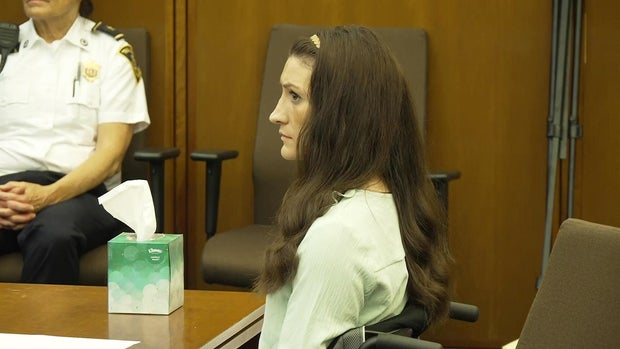
The trial of Lindsay Clancy, charged with the first-degree murder of her three children on January 24, 2023, continues to draw significant attention in Duxbury, Massachusetts. Psychiatrists who treated her are set to testify in what promises to be a pivotal day in the proceedings.
Clancy is accused of killing her children, 5-year-old Cora, 3-year-old Dawson, and 8-month-old Callan. Her defense argues she acted during an extreme episode of postpartum psychosis, exacerbated by overmedication.
Testimonies are being heard at Plymouth Superior Court. The trial is being streamed live on CBS News Boston and their YouTube channel.
On Friday morning, testimonies began with Kimberlee Hardy, former director of the Kingsbury Club. Hardy highlighted that Clancy often spent time with her children at the club’s playroom and appeared happy with them. Another testimony came from Sarah Carney, a long-time family friend, marking her as the 57th witness for the prosecution.
Clancy’s mental health is central to her defense. Her ex-husband, Patrick Clancy, revealed that Lindsay expressed suicidal thoughts and concerns about harming the children after changing medications in December 2022. She was subsequently admitted to McLean Hospital about a month before the tragic incident.
A childhood friend shared that Clancy texted her about experiencing ‘dark thoughts’ due to her medication. Clancy sought to reduce these thoughts by adjusting her medication. Another friend and a coworker corroborated by describing Clancy’s feelings of being ‘zombielike’ and highlighted negative drug side effects right before the tragic event.
Clancy’s diary entries further revealed her mental state. In one entry, she expressed feelings of ‘drowning every day.’
Prosecutors showed prescription medication found in her home, noting many pills were left untaken despite her being prescribed multiple drugs for her mental well-being.
If you or someone you know is struggling with emotional distress or in a suicidal crisis, reach out to the 988 Suicide & Crisis Lifeline by calling or texting 988.
Additional mental health support can be found through the National Alliance on Mental Illness HelpLine, available Monday through Friday, 10 a.m.–10 p.m. ET, at 1-800-950-NAMI (6264) or via email at [email protected].