
Stacy Librandi had no prior experience in disaster relief when she first arrived in Haiti in 2010. As she stepped onto the Port-au-Prince airfield, she was met with the sight of thousands of displaced people living in tents, surrounded by heaps of supplies like food, water, and medical aid. The magnitude 7 earthquake had struck Haiti in January, and Librandi was part of a group of volunteers determined to help. Although she planned a short stay, she ended up remaining for weeks. Sixteen years later, she is still in Port-au-Prince, where she has established the Humanitarian Emergency Response Organization (HERO), the leading emergency medical ambulance and medevac service in Haiti.
“I never saw my life going this way,” Librandi shared with 60 Minutes. “I decided to give this a shot, and it became a new beginning for me.” Librandi’s efforts during the 2010 earthquake led to a recognition from the U.S. Coast Guard for HERO’s vital support in rescue operations.
Librandi’s Early Life
Librandi was born in San Diego, California, and adopted as a baby. Growing up, she led an unconventional life, dropping out of school to travel as a “nomad.” She married young and settled in the Bronx, New York, attempting to build a family and photography business. However, after a fire destroyed her apartment in 2009, she found herself living out of her car with a failed marriage and struggling business. The earthquake in Haiti prompted a spontaneous decision to fly to the country and help those in need.
Origin of HERO
Upon arriving in Haiti, Librandi faced challenges in distributing aid. Observing supplies rotting on the tarmac, she took action. With a translator and a team, she filled a truck with aid and distributed it to nearby camps, setting up a process that required organization and communication. Her innovative approach quickly gained traction, and similar methods were adopted by others on the ground.
Today, HERO provides the highest level of pre-hospital care throughout Haiti’s 10 states, functioning as a primary emergency response service akin to 911 in the United States. Librandi initially faced skepticism due to the unfamiliar concept of reliable emergency services. Nonetheless, by combining a membership model with partnerships with insurance companies and local entities, HERO grew to become a sustainable operation.
Adapting to Challenges
Haiti has faced numerous challenges, especially after the assassination of its president in 2021, leading to gang control in parts of the country. HERO’s role expanded significantly during this time. Librandi coordinated crucial evacuations and facilitated international communications, leading to the establishment of medevac and air shuttle services.
Today, HERO boasts a fleet of helicopters and 10 ambulances, employing approximately 120 staff. The team includes a range of medical professionals and collaborates closely with local hospitals. They are also planning the launch of their own Level II Trauma Center. Discussions are underway with South American and African nations to replicate HERO’s successful model abroad.
HERO’s ability to persistently navigate Haiti’s complex environment is due in large part to its predominantly Haitian workforce, a key factor to its ongoing success.
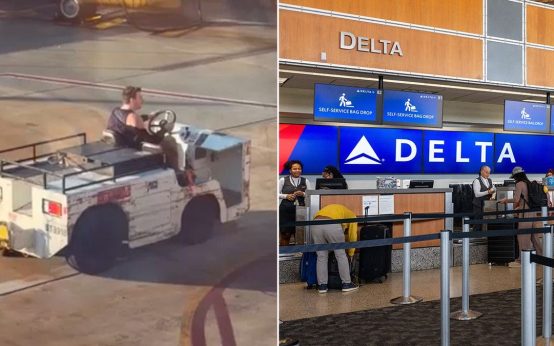 Reckless Airport Tug Incident Disrupts California Airport
  Corey Pavin’s Wife Lisa Faces Continued Cancer Treatment
  Congress Probes Child Protection Failures at Amateur Athletic Union
  Screencaps: Unique Sports and Pop Culture Insights
  Couple Discovers Nighttime Coyote Visits Through Surveillance Footage
  When Family Relationships Strain: Understanding Boundaries and Expectations