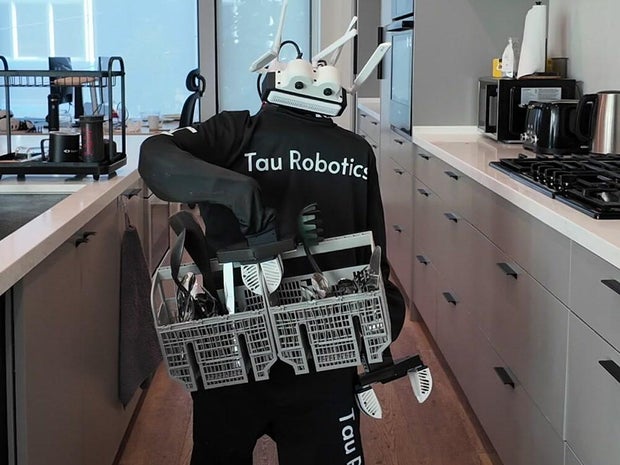
By August 11, 2026, Tau Robotics launched a pilot program allowing San Francisco residents to hire humanoid robots for cleaning services. At $30 an hour, these robots, trained through AI, handle tasks like vacuuming and taking out the trash. The initiative invited 1,000 households, marking a step towards using robots in daily home management.
The robots are equipped with names like Chelsea and Elon and cost $50,000 to produce. According to Alexander Koch, CEO of Tau Robotics, the robots are trained to first perform on par with humans and eventually surpass them. Currently, these robots require human oversight via remote operation to assist when they encounter difficulties, such as navigating stairs or identifying cleaning zones.
Service Expansion and Technological Development
Currently, Tau’s service is invite-only, but plans are in place to scale to 1,000 weekly cleanings by 2027 and to extend into other cities and internationally by 2028. While Tau Robotics isn’t the only player in this field, with IX Technologies among others launching similar products, experts predict a five-to-ten-year timeline for robots to reliably manage household tasks.
Human technicians play a vital role, stepping in when the robots face challenges. Using VR goggles, technicians view the robots’ actions and intervene to prevent mishaps. This human oversight is critical given the robots’ limitations, such as an inability to climb stairs or independently identify cleaning locations.
Safety, Security, and Privacy Concerns
Safety wields significant challenges. Despite appearing agile, these robots are heavy and could pose risks if they fall or accidentally hit nearby individuals. The robots’ inability to operate autonomously necessitates human supervision, ensuring they maintain safe distances from humans. If malfunction occurs, a shutdown protocol exists to minimize potential hazards.
Security and privacy are additional concerns. As the robots record videos to refine AI capabilities, there is unease around potential capture of private information like documents within homes. Koch ensures that data security is managed internally by Tau, but privacy implications remain a topic of discussion.
Ken Goldberg, an engineering expert, points to the robots’ current clumsiness and advocates for caution, especially around children. The technology requires further advancement before complete reliance on robotic home assistance becomes feasible. While Barclay’s and Morgan Stanley Research anticipate significant growth in the humanoid robot market, skeptics like Goldberg project a more extended timeline for widespread domestic use.
 President Trump and AI Executives Convene at White House
  Bill Gates Warns of AI’s Potential to Cause Mass Devastation
  Debate Over AI Regulation Postponed Until After Midterms
  Zuckerberg and Trump Align on ‘Superintelligence’ as AI Warnings Mount
  Constraining AI Systems: A Path to Safety
  Challenges Facing President Trump: Nuclear Issues, Climate Crisis, and AI