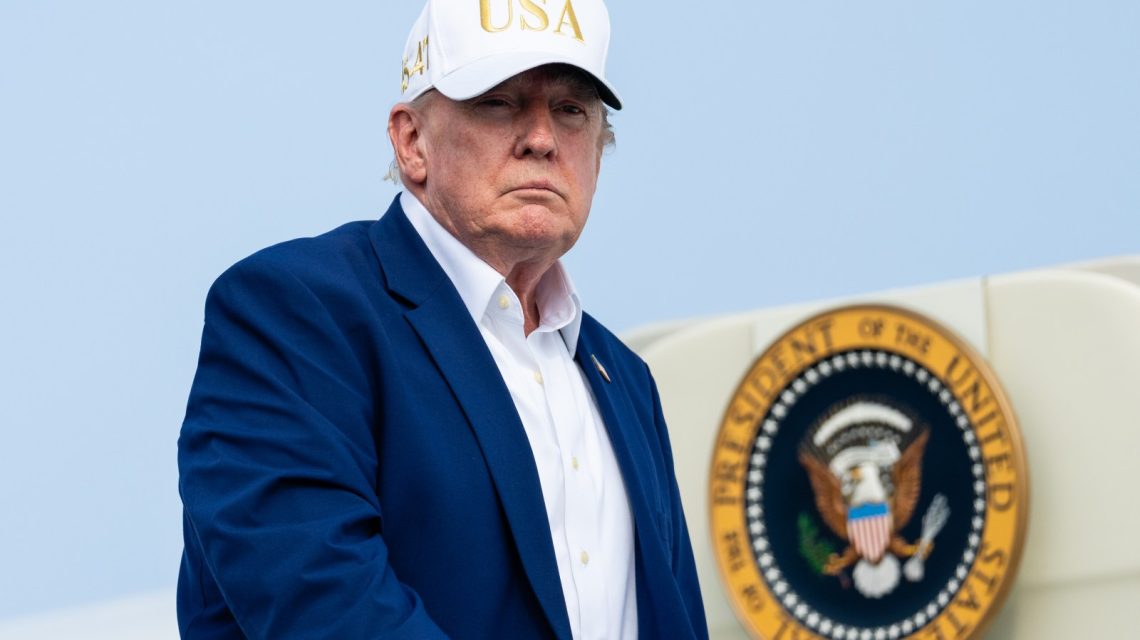
President Donald Trump provided an unclear response Tuesday when asked about declaring a national emergency before midterms to promote his voting proposals. He conversed with Wayne Allyn Root on Real America’s Voice, discussing voter ID and mail-in ballot limits in the SAVE America Act, which the U.S. Senate has yet to pass, causing Trump’s frustration.
“Stranger things have happened,” Trump replied when questioned about his power to declare a national emergency. “I’ll leave it at that.” Trump and his administration consistently argue that voter ID and similar measures ensure election integrity. Trump claims these are essential for Republicans to secure victories.
Opponents argue the legislation would disenfranchise thousands lacking identification, like passports. Concerns include the potential of election results being contested if a national emergency is declared.
Democratic Senate Minority Leader Chuck Schumer reacted on X, stating, “Donald Trump wants to take over American elections. Senate Democrats are prepared to combat his unprecedented, illegal efforts at every turn. Your vote belongs to you. We will ensure it stays that way.” Newsweek reached out to the White House for comment.
Could Trump Declare a National Emergency?
The U.S. Constitution mainly assigns election administration to states, while Congress retains authority over federal election rules. Experts largely agree that a national emergency does not grant the president power to alter state election laws, delay elections, prohibit mail voting, or unilaterally impose new voter requirements.
Reports suggest a draft executive order where foreign election interference might justify emergency actions, though even proponents concede state and legislative control as mandated by the Constitution.
Critics argue any nationwide voting rule changes through emergency powers would face immediate legal challenges.
In Newsweek’s The 1600 podcast, CNN chief legal analyst Jeffrey Toobin explained to host Carlo Versano that Trump’s attempts to restrict mail-in voting might affect Republicans negatively, or even more than Democrats. “To this day, it’s unclear which party benefits from mail-in voting,” Toobin said. Historically, Republicans favored mail-in voting, and some still see it as advantageous for them. Thus, these actions are seen as both harmful and puzzling.
Where Does the SAVE America Act Stand?
As of Tuesday, the SAVE America Act (Safeguard American Voter Eligibility Act) remains unpassed in the Senate and isn’t law. While it has passed the House several times, Senate Republicans haven’t gathered adequate support for complete approval. The bill proposes U.S. citizenship proof for federal voter registration and mandates a federal photo ID for voting.
Earlier this year, Republicans progressed the bill to Senate debate, but passage remained uncertain. On August 7, Senate Majority Leader John Thune, Trump, and some conservative senators postponed actions on much of the SAVE America Act after August recess due to insufficient supporting votes. Currently, Senate Republicans consider focusing on the photo ID requirement exclusively, according to The Hill.
For further details, contact Newsweek editors Jason Lemon and Geoffrey Rowland.
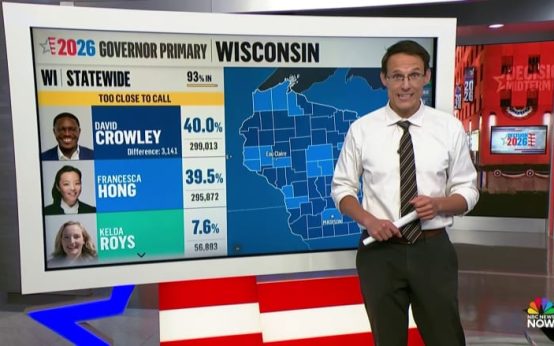 Key Updates from Political Primaries Across the US
 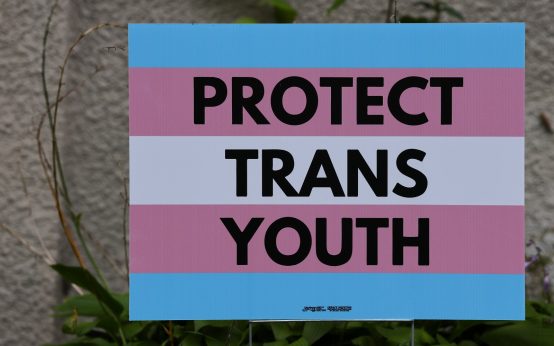 Trump Administration Ends Medicaid Funding for Gender-Affirming Care for Minors
  Tight Race in Wisconsin’s Democratic Gubernatorial Primary
  Democrats in Vermont Nominate New Candidate Against Gov. Phil Scott
 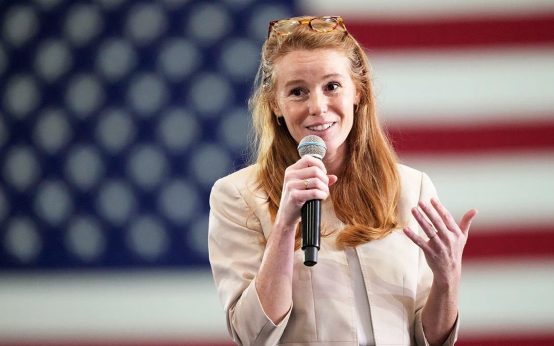 Rebecca Cooke Wins Democratic Primary for Wisconsin’s 3rd Congressional District
  Lisa Demuth Wins Republican Primary for Governor in Minnesota