
When a trustee can disregard a governing document anytime it disagrees, it’s not a trust, it’s merely a suggestion. This is similar to what occurred recently when U.S. District Judge Allison Burroughs issued her second stay since March. Her decision blocked the Trump administration from ending Temporary Protected Status (TPS) for over 1,000 Somali nationals. This action came six weeks after the Supreme Court had clarified that district courts cannot interfere with TPS termination unless on constitutional grounds.
Homeland Security’s general counsel called this “defiance, obstruction, and delay,” while Representative Andy Ogles deemed it grounds for impeachment. Both are reacting to an issue, but the true flaw is Congress’s lack of enforcement. A stay is not a final decision. It’s a temporary hold until higher authority intervenes. While Mullin v. Doe aims to be this authority, Judge Burroughs’s stay highlights a deeper problem.
The Supreme Court’s Role
In June, a 6-3 Supreme Court ruling decided that Congress prohibits the judicial review of TPS terminations based on statutory grounds. The Court did not prevent the raising of constitutional claims, as this would conflict with due process doctrine elsewhere in federal law. Somali plaintiffs seized this opportunity. Shortly after the First Circuit used Mullin to reverse similar stays for Ethiopia and South Sudan, plaintiffs revised their arguments, focusing on equal protection and due process. Burroughs found these claims convincing enough to halt the TPS termination temporarily.
This isn’t just about one judge in Boston. There is a wider issue at play, with the Supreme Court attempting to prevent district judges from stopping federal policies beyond their immediate scope. The Court previously ruled in Trump v. CASA that a single district judge cannot impose rulings on non-parties without a certified class. Mullin established the same for TPS on statutory terms. Both rulings left space for constitutional claims, considering the importance of hearing equal protection arguments.
A Broader Pattern and Congressional Action Required
The current system allows plaintiffs to circumvent statutory arguments by presenting constitutional claims, leading to extended delays. This pattern contributes to the ongoing discourse about TPS. The program exists due to the need for protection against sending people back to unstable states. For example, Somalia experiences terrorism and unrest, with conflicting reports from the State Department and Department of Homeland Security.
The failure lies not in TPS, but in a statute lacking clear deadlines for judicial review. Congress created this problem by not specifying the procedure. The solution involves two main actions from Congress. They need to revise the statute so that constitutional challenges to TPS decisions proceed directly to the relevant circuit court of appeals, similar to other immigration cases under the REAL ID Act. There’s also a need to impose a timeframe, such as 60 days, for circuit courts to address emergency stays.
Oversight and Accountability
In addition to legislative changes, Congress must ensure adequate oversight. This goes beyond impeachment threats, which serve more as political theater than practical solutions. Alternate methods include filing formal complaints under the Judicial Conduct and Disability Act and conducting hearings to evaluate judicial reasoning. By employing these measures, Congress can maintain accountability without legislative stagnation.
Effective reform requires Congress to address both legislative clarity and oversight. A revised statute directing TPS claims to circuit courts on a fixed schedule, paired with robust oversight, can prevent future issues. If these actions are neglected, temporary stays such as those by Burroughs are likely to reoccur.
Jay Rogers is a seasoned financial professional with extensive experience in private equity, private credit, hedge funds, and wealth management.
Copyright 2026 Nexstar Media Inc. All rights reserved. This material may not be published, broadcast, rewritten, or redistributed.
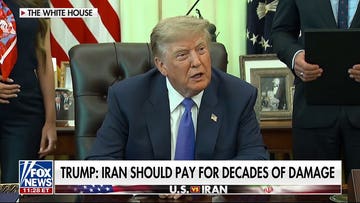 Trump Demands Iran Pay Reparations for Decades of Damage
  Candidates Leverage Community Connections in Key Congressional Races
  Challenges Facing Military Families Regarding Deportation Protections
 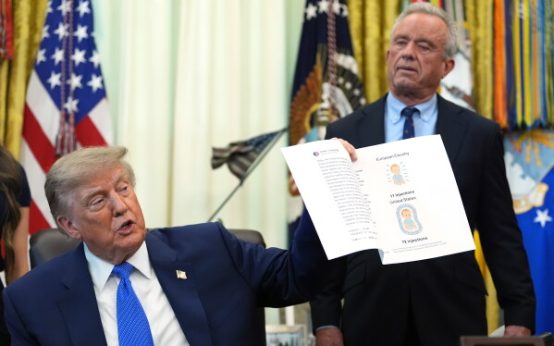 Doctors Criticize President Trump’s New Vaccine Order
  David Crowley Secures Democratic Nomination for Wisconsin Governor
  Centrist Democrat David Crowley Secures Wisconsin Primary Victory