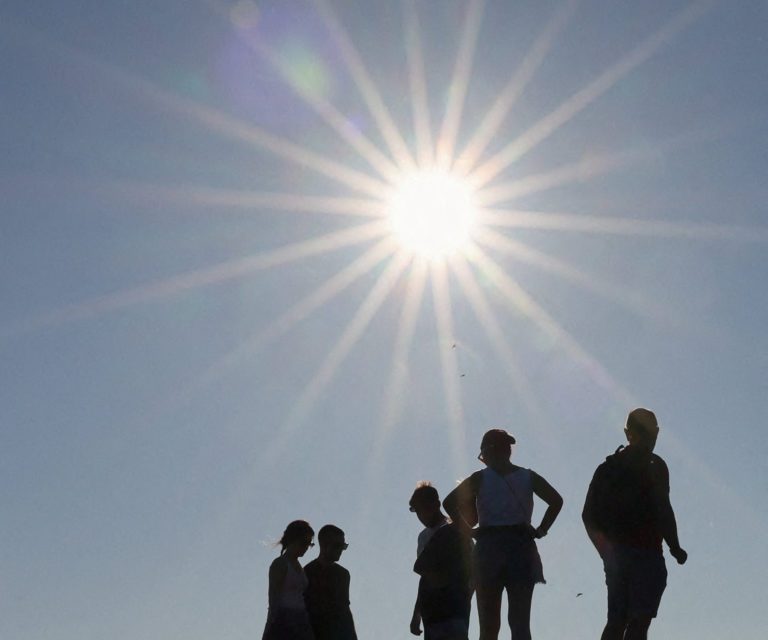
On Wednesday, people across Spain were eager to witness a rare total solar eclipse. Many rushed to purchase specialized glasses as authorities warned the public about potential wildfires in rural areas. This celestial event will be visible across a large part of northern and central Spain. NASA will begin its live coverage of the eclipse at 1:15 p.m. EDT.
The eclipse will start at sunset, aligning the sun, moon, and Earth, creating temporary darkness over regions of the Iberian Peninsula, Greenland, and Iceland. The total coverage of the sun is predicted to last less than 2.5 minutes, peaking off Iceland’s west coast. As it moves to Portugal and then Spain, the total duration will reduce to about a minute before concluding over the Mediterranean.
Given the ongoing high temperatures and risk of wildfires, Spanish authorities have initiated a significant public safety campaign. Officials estimate the eclipse will attract an additional 500,000 visitors, leading to high demand for hotel rooms, particularly in cities like A Coruña, Bilbao, and Santiago de Compostela.
In Medinaceli, a historic town in northeast Spain, sky watchers secured viewing spots well in advance. Agatha Bak, a philosophy professor from Madrid, expressed her excitement about witnessing the sudden darkness and the disappearing sun.
The Spanish Interior Ministry has established 350 official viewing sites across sparsely populated regions known as “Empty Spain.” However, access to 123 sites is restricted due to environmental and evacuation concerns related to potential wildfires. Recently, a massive wildfire in Ávila destroyed 500 square kilometers and displaced many residents. Smaller fires are still active in parts of central and southern Spain.
As part of safety measures, more than 33,500 law enforcement officers will manage observation sites and access points. Minister Fernando Grande-Marlaska emphasized the need for precaution due to high temperatures, dry conditions, and increased pressure on natural areas. Temperatures are expected to exceed 35 Celsius (95 Fahrenheit) across the eclipse path. Authorities urge visitors not to engage in activities that could ignite fires, such as lighting fires or parking on dry vegetation.
Safe viewing of the eclipse requires special glasses with filters that block harmful solar radiation. Retailers across Spain, including supermarkets and museums, have sold out of these glasses. In Madrid, eager crowds lined up outside a photo shop to secure the necessary eyewear, reassured by an ample supply.
In Greenland, Sverre Rudd, captain of the MS Spitsbergen, navigates for the best eclipse view for his passengers. The eclipse offers a rare moment of darkness in regions experiencing continuous daylight. According to Rudd, the excitement among passengers is palpable, akin to a holiday atmosphere.
In Iceland, hotel prices have surged, with Reykjavík rooms exceeding $1,000 per night as locals prepare for their first total solar eclipse in decades. However, cloudy weather might obscure the view for many. The country expects up to 20,000 additional tourists during this busy period. The Hotel Keflavík is fully booked by guests eager to witness nearly two minutes of totality.
Reykjavík’s eclipse occasion has only been rivaled by historic events like the 1986 summit between Reagan and Gorbachev, noted by hotel owner Steinþór Jónsson. The anticipation for the eclipse is the highest since then, reflecting its significance across the region.
 Google Earth Images Reveal Destruction in Gaza
  Sudan Defies U.S. Ceasefire Amid Visa Dispute
  DHS Warns Migrant Caravan Heading to U.S.-Mexico Border
  Adam Brody and Hollywood’s Political Climate
  International and Domestic Investigations Unfold
  Reparations Debate Heats Up in New York Amid Delays