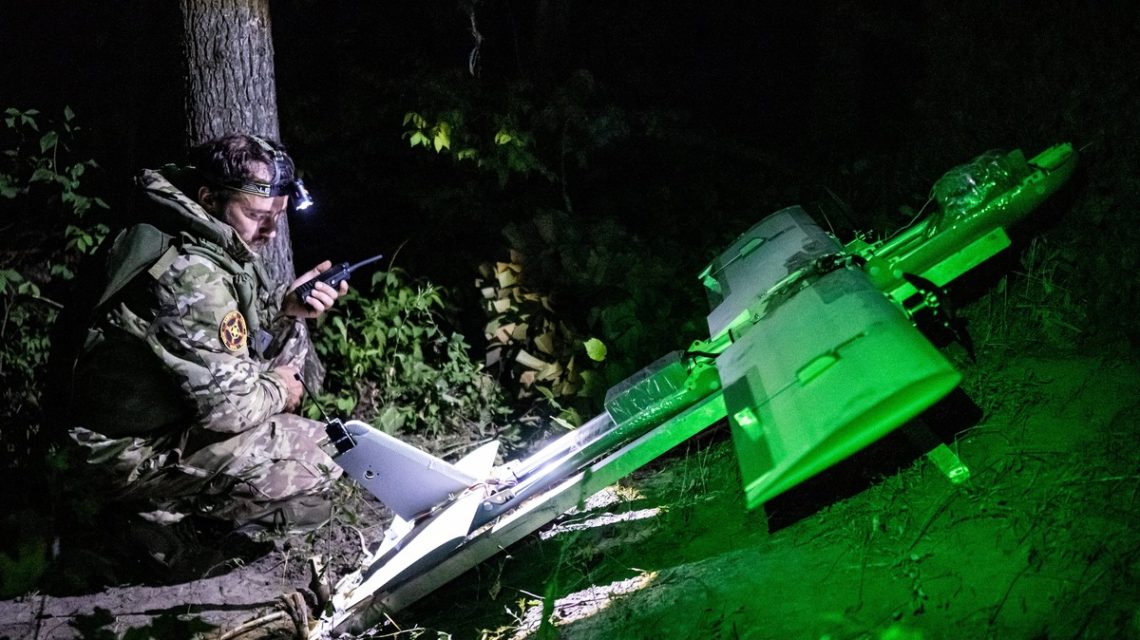
Russia has developed at least 10 concealed sites capable of launching long-range drones into NATO territory. A recent report highlights concerns that Moscow may conduct a limited attack on alliance soil soon.
The Telegraph reported that Russia has added multiple new ‘launch rails’ at bases near Belarus and Ukraine. These structures enable troops to deploy fixed-wing drones for missions or assaults. Analysts from intelligence firm DroneSec examined satellite images and concluded that at least 20 of these launch rails can accommodate Russia’s advanced long-range drones.
According to reports, most of these sites, set in remote locations or integrated into military facilities and airports, were used recently to target Kyiv, the Ukrainian capital. Russia denies plans to attack NATO territory, dismissing such claims as baseless.
“This launch site expansion shows how Russia has expanded its ability to launch greater numbers of drones while at the same time using technology to make the types of drones used more difficult to intercept,” DroneSec CEO Mike Monnik said in a statement.
Drone Warfare’s Evolution
The landscape of drone warfare has changed significantly due to almost four and a half years of intensive conflict in Ukraine. The battle extends beyond territorial gain, encompassing a technological race that NATO countries are monitoring closely.
Russia is known for deploying Iranian-designed Shahed drones, including a Russian version called Geran-2. Ukrainian intelligence reveals that Russia is expediting production of jet-powered variants with longer ranges. Russian facilities now produce around 3,000 upgraded Geran-4 and Geran-5 drones monthly.
These advanced drones, primarily manufactured in Yelabuga, Tatarstan, where Russia has set up a drone hub, can cover up to 1,000 kilometers. If launched from Russian territory near Ukraine or Belarus, they could potentially reach NATO areas hundreds of miles from its eastern edge.
Drone and missile incursions into NATO airspace have increased since Russia’s large-scale invasion of Ukraine in February 2022. This situation often prompts the deployment of fighter jets in bordering countries to neutralize unmanned vehicles.
When 20 drones entered Poland in September 2025, NATO accused Russia of testing the alliance’s defensive reactions. Concerns escalated when a Russian cruise missile crashed in eastern Poland near Ukraine.
Russia’s Hybrid Tactics
These airspace violations coincide with growing uncertainty regarding the U.S.’s commitment to European defense. U.S. President Donald Trump criticized Europe’s low defense expenditure and dependency on American troops, while the Pentagon assesses troop deployments.
Germany’s General Carsten Breuer suggested that Russia uses drones to test NATO’s response. He said hybrid attacks, which include cyberattacks, misinformation, and infrastructure sabotage, occur daily in NATO nations.
NATO contends that Russia has waged hybrid warfare with the alliance for years, though a large-scale attack is improbable. Officials suggest Moscow might conduct minor military operations against Baltic states or Poland to gauge NATO’s reaction. Alternatively, Russia might increase hybrid assaults.
The Journal suggests Russia could capture limited NATO territory or intensify hybrid attacks as early as September, as per U.S. intelligence. Simultaneously, NATO prepares for possible scenarios involving Russian military advances into a Baltic state.
 Controversy Over Pentagon’s Plan to Livestream Execution of Fort Hood Shooter
  Russian Strikes and Diesel Deal Spark Controversy
  Cartels Facing New Challenges in the Americas
  Increasing Number of Americans Seek Luxembourg Citizenship Amid Political Tensions
  Jack Keane Defends Israel Amid UN Criticism, Pillay’s Nobel Victory
  Empire State Building Honors Fox News’ 30th Anniversary