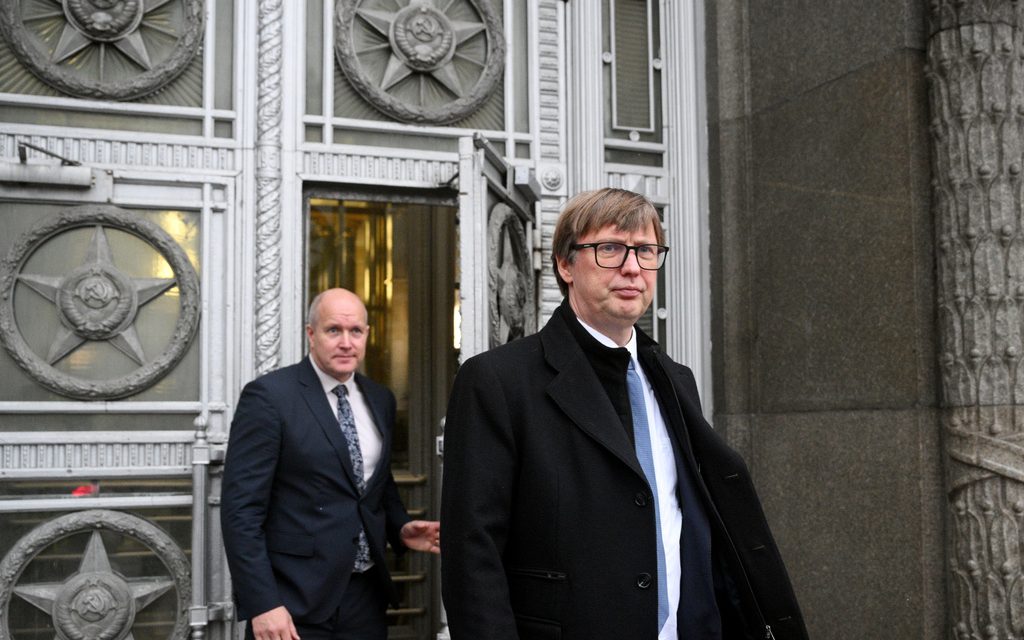
Russia has accused Estonia of actions that bring the countries close to “open war.” The Russian foreign ministry filed a formal protest against Estonia’s decision to close its road border crossings with Russia. The ministry labeled this as one of several hostile actions by Estonia in recent years. Russia reserves the right to respond to protect its national interests. The ministry warned Estonia about the potential consequences of such actions.
Estonia’s Border Closure and Accusations
Tensions escalated when Estonia announced its plan to close road crossings with Russia from December 1 for six months. This decision followed Estonia’s accusation of a foiled arson plot at a drone factory by Russian intelligence, which Russia denied.
Estonian foreign minister Margus Tsahkna rejected Russia’s accusations, asserting that Russia poses real security threats in Europe. Tsahkna claimed that Russia’s accusations aim to distract from its own undermining activities.
As part of NATO and the European Union, Estonia would receive support if Russia attacked its territory. NATO is monitoring the security situation in Estonia.
Allegations from the Russian Foreign Ministry
Russia accused Estonia of closing the border as part of numerous hostile actions against Russia. It alleged that Estonia tacitly allowed Ukraine to use its airspace to attack Russia. Russia previously accused NATO Baltic states of similar actions, despite NATO’s denials.
Estonia’s foreign ministry refuted such claims, stating they do not allow military operations by other countries on their territory. Russia also accused Estonia of obstructing Russian cargo ships in the Baltic Sea.
Estonia banned Russian and Belarusian grain transit through its territory, aligning with E.U. tariffs citing Russia’s seizure of Ukrainian grain.
Russia further accused Estonia of oppressive measures against Russian-speaking residents but Estonia maintains no official ban on the Russian language, mandating Estonian in official settings.
The Breakdown of Relations
Relations have been strained for years, worsened by Russia’s invasion of Ukraine. Estonia regained independence in 1991 after Soviet rule and joined NATO and the E.U. in 2004.
The invasion of Ukraine led to a complete breakdown in diplomatic ties, with Estonia closing Russian consular offices and expelling ambassadors.
Tensions persist as the war drags on. Incidents such as alleged Russian jets entering Estonian airspace and Estonia’s border closures have raised concerns.
Future Implications
In recent developments, Russia has increased pressure on neighboring countries. Estonia cited acts of sabotage as the reason for border closure, accusing Russia of broader European destabilization attempts.
The possibility of open conflict remains uncertain. Experts believe a limited Russian operation to test NATO unity could occur rather than a direct invasion. An armed attack would trigger NATO’s collective defense obligations, risking a wider war in Europe.
Uncertainty about U.S. commitment to Europe could make Russia more willing to test NATO. Estonian defense officials stress the need for military preparedness against possible Russian aggression.
 Evacuation of Thousands from Don Toliver Concert Due to Unknown Irritant
 Confusion Over Istanbul Lioness Search
 U.S.-Israel Alliance: Balancing Costs and Benefits
 Elderly Man with Alzheimer’s Survives 11 Days in Amazon Rainforest
 Pope Francis’ Personal Reflections Revealed in New Diary
 U.S. Criticizes Canada’s Defense Spending and Partnership