The trial of Duane “Keffe D” Davis started with prosecutors offering a detailed account of the events they claim led to Tupac Shakur’s 1996 murder. They argue that Davis orchestrated a retaliatory attack after Shakur and his entourage assaulted Davis’ nephew, Orlando Anderson, earlier on the Las Vegas Strip.
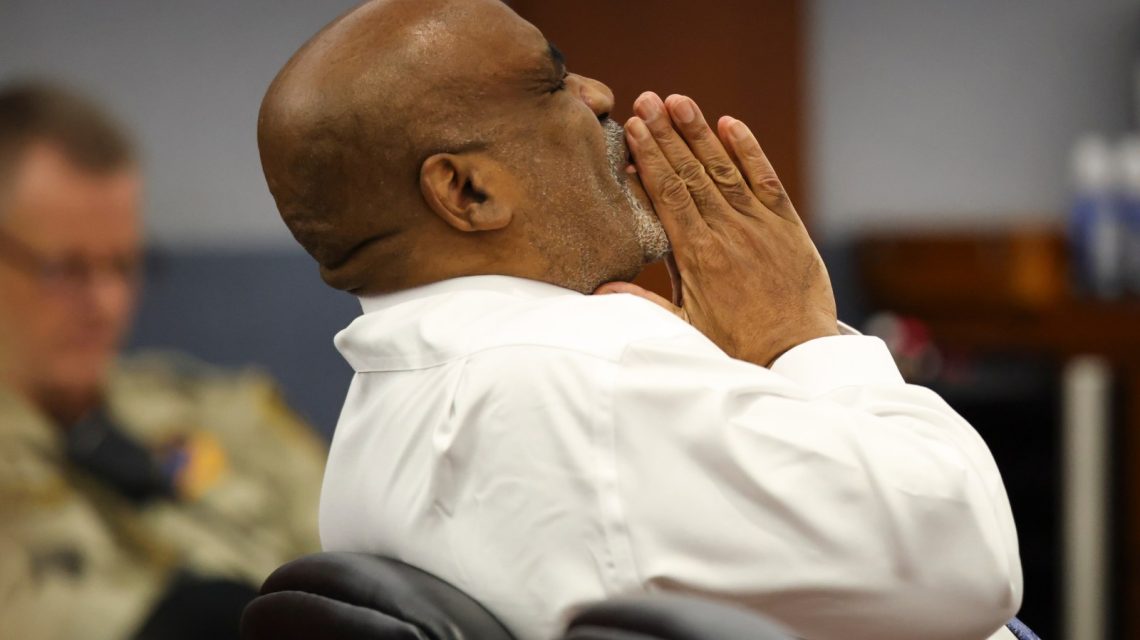
Davis, wearing a blue suit and tie, remained expressionless as prosecutors described how a gang rivalry escalated into one of America’s most infamous unsolved killings. Although Davis did not pull the trigger, prosecutors claim he was central in planning the retaliation and supplying the weapon.
The defense, led by attorney Michael Sanft, challenged the prosecutor’s claims, dismissing them as unfounded by stating, “There’s no facts.”
The Retaliation Allegations
Prosecutor Marc Wall outlined the events leading to Shakur’s death, starting long before his murder. Tensions existed between Mob Piru gang members associated with Death Row Records and the South Side Compton Crips led by Davis. An earlier incident at Lakewood Mall heightened these tensions when Mob Piru member Trevon Lane had a chain taken by South Side Crips.
The conflict reached its peak on September 7, 1996. Shakur and his entourage attacked Anderson in the MGM Grand casino after a Mike Tyson fight. This assault, caught on surveillance video, is seen as pivotal in this case.
Prosecutors argue Davis’ rage over his nephew’s attack led to retaliation. Wall noted Shakur was “an artist,” though his Mob Piru association placed him at the center of the gang dispute.
Davis’ Interview With Investigators
A significant part of the prosecution’s case includes statements Davis allegedly made about Shakur’s murder while facing unrelated federal drug charges. A federal task force contacted Davis during a narcotics investigation, where he reportedly shared details about Shakur’s murder, believing he could provide valuable information.
The jury learned that Davis gave a detailed account of the shooting during a recorded meeting with investigators. This interview, released in 2009, allegedly captures Davis describing his involvement and identifying others present that night.
Prosecutors claim Davis’ actions, like traveling to New York to involve Eric “Zip” Martin, highlight his cooperation with authorities. These recorded statements are key evidence in the trial.
Details From the Trial’s Opening Statements
Prosecutors recounted Davis’ alleged explanation for not firing the shots himself. Davis apparently told investigators that he sat in the front passenger seat as Brown drove the Cadillac. He passed the gun to the back seat, where DeAndre “Dre” Smith and Anderson sat, as Shakur’s vehicle was not on his side.
According to the prosecution, Davis expressed that he would have fired if the situation allowed, demonstrating his involvement and intent. They argue the shooting resulted from gang tensions and the deliberate decision to retaliate for Anderson’s beating.
Defense’s Argument on Lack of Evidence
The defense contends the case relies heavily on statements made years ago, without hard evidence. Sanft emphasized there are “no facts” linking Davis to the murder beyond past statements.
While acknowledging undisputed facts like Shakur being shot and .40-caliber casings found, Sanft argues prosecutors lack independent proof for key parts of their theory. He highlighted an investigation hampered by cold leads and strained inter-agency relations.
The defense questioned Jason Johansson’s investigation, asserting it depended too much on Davis’ own accounts and a later memoir without verifying through independent evidence. They argue the prosecution’s case relies on unverified statements from questionable witnesses.
Trial Proceedings
After the opening statements, testimonies from witnesses who may shed light on the events are expected. Prosecutors aim to prove Davis orchestrated the attack and supplied the weapon, although he wasn’t the gunman. Davis pleaded not guilty and could face a life sentence if convicted. The trial is anticipated to last several weeks.