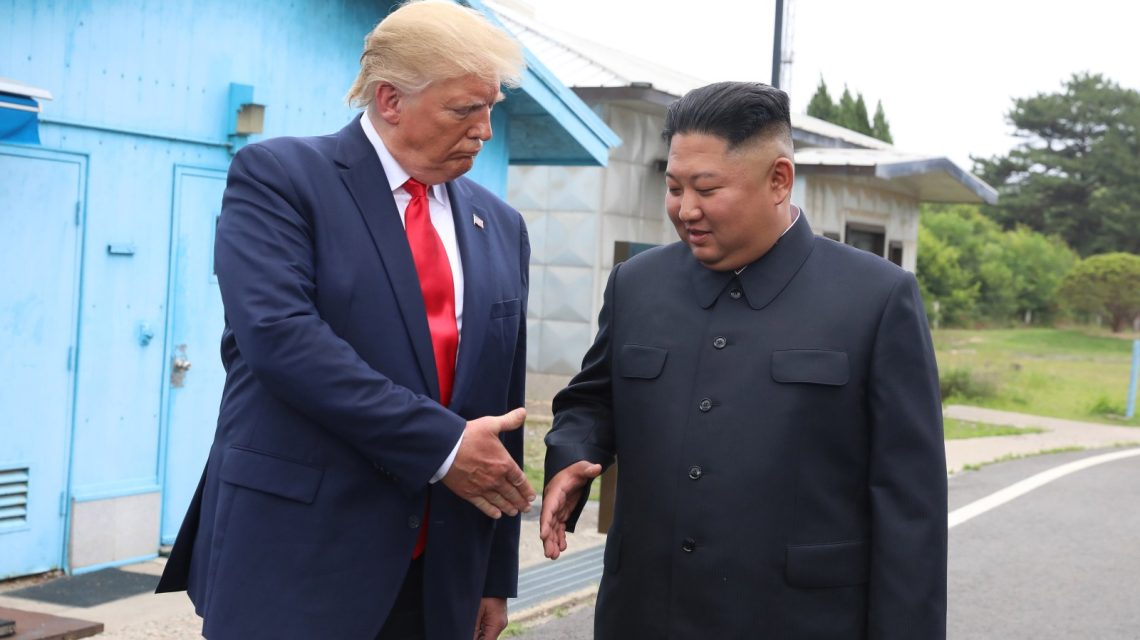
Analysts in South Korea caution that President Donald Trump’s intention to stop funding military drills with South Korea might bring minimal benefits to the United States while damaging trust with Seoul and other significant regional allies. This warning followed Trump’s Tuesday post on Truth Social expressing dissatisfaction with the ‘costly’ exercises and instructing Secretary of War Pete Hegseth to reduce them. Trump praised his ‘very good relationship’ with North Korean leader Kim Jong Un and noted South Korea’s refusal to send forces to support the U.S. in Iran’s ‘denuclearization’ efforts.
During his first term, Trump met Kim three times seeking unsuccessfully to reduce North Korea’s nuclear weapons and missile programs. He remains open to meeting Kim again.
Concession to Kim?
Trump’s post coincided with the start of the 10-day Ulchi Freedom Shield exercise by American and South Korean forces to prepare for potential conflict with North Korea. Pyongyang’s Foreign Ministry labeled Ulchi Freedom Shield as a preparation for war.
Since Trump’s last meeting with Kim in 2019, North Korea has strengthened its position, testing advanced intercontinental ballistic missiles, expanding nuclear facilities, and incorporating nuclear capability into its constitution. Additionally, veterans from the Russia-Ukraine conflict have gained modern warfare experience potentially relevant if conflict resumes on the Korean Peninsula.
Trump’s decision to scale back the exercises was criticized by Sean King, an Asia scholar, who stated that Washington appears ‘fickle and unreliable.’ He noted that flattery from Kim and Chinese President Xi Jinping could further distance Trump from traditional U.S. allies.
King highlighted Iran’s ties with North Korea, sharing missile components and test data, indicating that Tehran’s relationship with Pyongyang contrasts Trump’s concerns over Iran.
Newsweek has contacted the White House and North Korean Embassy in Washington, D.C., for comments.
Mixed Signals Across the Pacific
Trump’s critics have often accused him of favoring strongman leaders, including Kim, while disparaging European allies. His statement surfaced as the USS George Washington departed for the Middle East, leaving the Western Pacific briefly without an American aircraft carrier.
Elbridge Colby, the Pentagon’s policy head, recently reassured allies that the U.S. remains committed to regional security, but mixed messages from Washington might be noted by both allies and adversaries.
Kuyoun Chung from Kangwon National University remarked that allies like Japan, South Korea, and Taiwan may question if reassurance from Pentagon officials truly limits presidential decisions, particularly as U.S. military assets shift from the Indo-Pacific to the Middle East.
Kim’s Takeaway
Experts suggest Trump’s actions demonstrate that pressure influences his presidency. Kim might see the U.S. partially accommodating North Korea’s demands without Pyongyang offering concessions, possibly encouraging Kim to await further U.S. concessions.
This could be viewed as a sign that a possible fourth summit may not achieve nuclear concessions but might serve a domestic aim of Trump’s amid struggles with Iran.
Ban Kil Joo from the Institute of Foreign Affairs and National Security pointed out Trump’s move might embolden North Korea, Russia, and China, potentially miscalculating, which raises international security risks.
 Challenges Facing Polling and Public Understanding
  U.S. Air Force Withdraws Bomber Aircraft from UK Base
  Former U.S. Ambassador to Greece Faces Ethical Violation Allegations
  Maintaining America’s Infrastructure: A Crucial Task
  Supreme Court’s Impact on Democratic Representation
  Woman Rescued After 20 Hours at Sea from Royal Caribbean Cruise