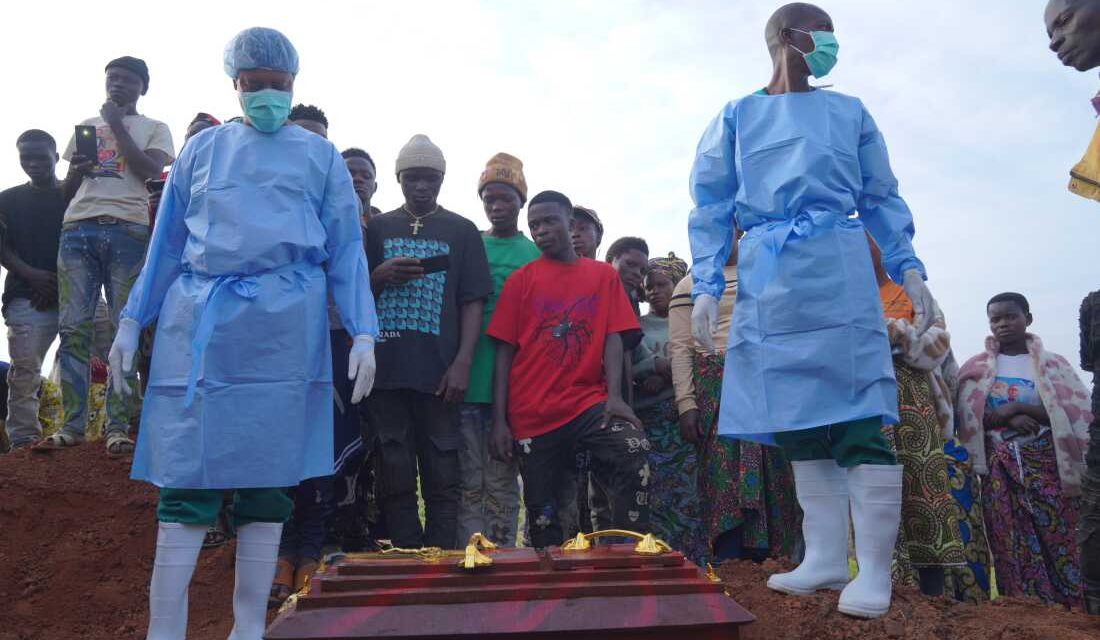
BUNIA, Congo — The Ebola outbreak in Eastern Congo has reached 5,000 cases, according to government data released on Wednesday. Responders warn that the virus is spreading rapidly, posing significant challenges in one of the country’s most remote regions.
The Congo Ministry of Health reported 5,021 cases, including 2,378 deaths as of Sunday, highlighting the difficulties faced due to insecurity, displacement, and intense population movements. The outbreak has infected and killed people faster than any previous occurrence.
The World Health Organization (WHO) estimates that this outbreak may surpass the 2014-2016 West African outbreak, which was the deadliest with over 11,000 deaths. From the initial case detection, the current outbreak has spread approximately three times faster.
The outbreak “has spread rapidly and the risk of further national and international spread remains high,” WHO Director-General Tedros Adhanom Ghebreyesus stated at a convened agency meeting. “We must be frank: the epidemic is far from being under control,” he continued.
Thérèse Anyiya, a nurse in Bunia, Ituri’s capital, expressed exhaustion due to demanding work conditions. Some health workers have gone on strike due to unpaid wages. “If the managers don’t take things seriously, we too will end up withdrawing. The way this epidemic is being managed is exhausting,” Anyiya told The Associated Press.
A significant issue is the absence of approved vaccinations or treatments for the Bundibugyo virus, the cause of the current outbreak. Many new cases are appearing outside monitored populations, indicating fast spread and overwhelmed surveillance teams.
Violence Hampers Health Efforts in Ituri
In Ituri province, the worst affected area, violence has hampered the response as health workers face targeted attacks. On Monday, a health team in the Aru territory was attacked after reporting a suspected case. Residents set fire to an ambulance and damaged other vehicles, as stated by Michael Wani, president of the Union of Cultural Associations for the Development of Ituri.
Dr. Martin Cwinyay highlighted the importance of bringing response efforts closer to communities, particularly in rural, mining, and displaced areas. Trish Newport, Emergency Coordinator with Doctors Without Borders (MSF), emphasized the need for increased community awareness, involvement in the response, and knowledge of symptoms and actions to take if infected.
Challenges Impacting Care and Survival Rates
The virus is believed to have started spreading from Mongbwalu as early as February, well before the outbreak’s official declaration on May 15. Responders face threats from rebel groups, community anger from longstanding trauma, and poor transport routes into affected territories.
Although the 2014-2016 outbreak is considered the deadliest concerning virus types causing Ebola, data indicates this Bundibugyo outbreak has resulted in a higher death percentage as effective care and support lag. Patients either delay reporting symptoms or fail to report them altogether.
The situation varies across the six affected provinces, with a case fatality rate of 47.4% overall, yet some areas like North Kivu province report much higher rates of 70% due to response challenges.
 Alan Alda Reflects on Life, Career, and Parkinson’s
  Voice Disorders Linked to Dementia Risk
  Understanding the Misperceptions and Inaction in Addressing Sexual Violence
  Americans Seek Ibogaine Treatments Abroad Amid Health Risks
  Study: Risks of Borg Consumption at College Parties
  Faith and Healing: Insights from ‘The Angels Among Us’