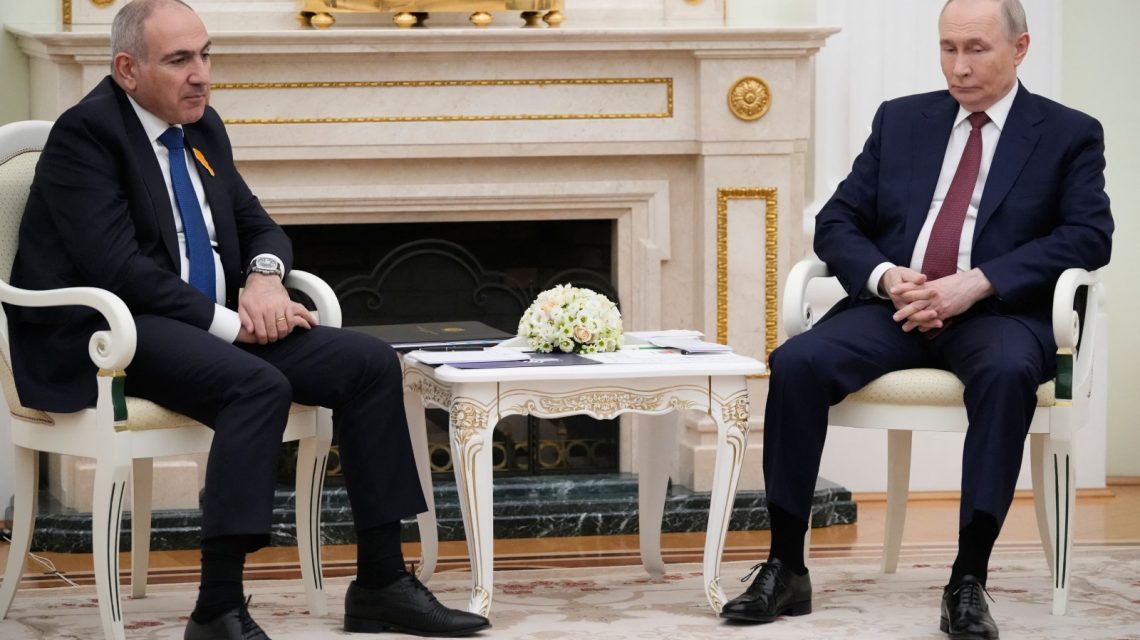
Armenia is advancing with plans to leave the Russia-led Collective Security Treaty Organization (CSTO), marking a change in regional alliances. Armenian Prime Minister Nikol Pashinyan addressed parliament, reinforcing a February 2024 decision to cease CSTO cooperation. This move stems from the organization’s lack of support in Armenia’s recent conflicts with Azerbaijan.
Pashinyan stated, “We will not activate our work in the CSTO.” He added, “I will be pleased if the organization decides to expel the Republic of Armenia.” Kremlin spokesperson Dmitry Peskov responded by acknowledging Armenia’s choice, saying they are free to decide.
Richard Giragosian, of the Regional Studies Center in Yerevan, labeled Armenia’s language as overdue, citing CSTO’s unreliability in face of Azerbaijani aggression. Despite diplomatic progress with Azerbaijan, Russia’s CSTO support appears ineffective for Armenia.
Historically, Russia’s influence over Armenia stretches to an 1828 treaty with Qajar Iran. Armenia became independent in 1991, maintaining Russian military ties. Initially joining the Soviet-era Collective Security Treaty, Armenia remained a part of its successor, the CSTO. Azerbaijan and Georgia left the treaty in 1999.
The Nagorno-Karabakh conflict, where Armenia supported the Artsakh Republic, kept tensions high with Azerbaijan. Recent fights resulted in Azerbaijani gains and Armenian losses. Russian protection was questioned post-2022 invasion of Ukraine.
Pashinyan remarked that Russia’s traditional security role faces challenges, limiting protection. Inside the CSTO, Armenia finds itself allied with Belarus, Kazakhstan, Kyrgyzstan, Russia, and Tajikistan. Among them, only Belarus supports Russia’s Ukraine stance. The CSTO intervened in Kazakhstan during unrest.
Russia still promotes strong CSTO ties. CSTO Joint Staff Chief Colonel General Andrey Serdyukov highlighted collective security’s growing importance. Mher Sahakyan, China-Eurasia Council director, noted CSTO’s failing role for Armenia since 2018.
In Armenia, attacks by Azerbaijan and a leadership transition deepened rifts with Russia. Russia’s alliance with Turkey intensified Armenia’s concerns. Thus, Armenia suspended, not ended, CSTO ties as a political signal.
As Russia pushes Armenia to declare allegiance in a changing world order, Armenia remains cautious and strategic.
U.S. involvement gained traction as relations with Russia wavered. Joe Biden accelerated diplomacy with Armenia. Donald Trump later facilitated a peace agreement between Armenia and Azerbaijan, dubbed the “Trump Route for International Peace and Prosperity”.
This strategic partnership includes a 27-mile rail connection through Armenian territory. The agreement occurred before Trump’s second term in 2025. Even with Armenia’s possible EU membership bid, ties with Moscow endure. Armenia remains in Russia’s Eurasian Economic Union (EAEU).
Giragosian commented on Armenia’s balancing act between West and Russian economic relations. He emphasized Armenia’s “diversification” policy, seeking broader security partnerships.
Though Trump’s diplomacy is praised, U.S. actions shifted focus to Armenia’s southern border, engaging in military maneuvers against Iran. These operations align with TRIPP’s interests but have wider trade implications.
As Armenia navigates geopolitical ties, Sahakyan advises a careful approach, avoiding picking sides and embracing a balanced strategy. Despite deeper U.S.-Armenia ties, Sahakyan doubts U.S. focus on the South Caucasus. While beneficial, he sees the region as a limited interest for the U.S.
 Tragic End to Search for Missing Australian Hiker
  Private Meeting Signals Potential Cross-Party Collaboration in U.S. Politics
  North Carolina Doctor Arrested in Alleged Road Rage Shooting
  Democratic Candidate Crowley Emphasizes Shared Goals in Wisconsin
  U.S. Strategy Towards Iran Shifts to Economic Containment
 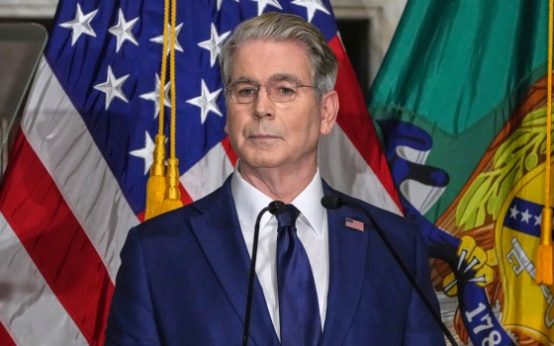 Treasury Secretary Announces Economic Pressure on Iran