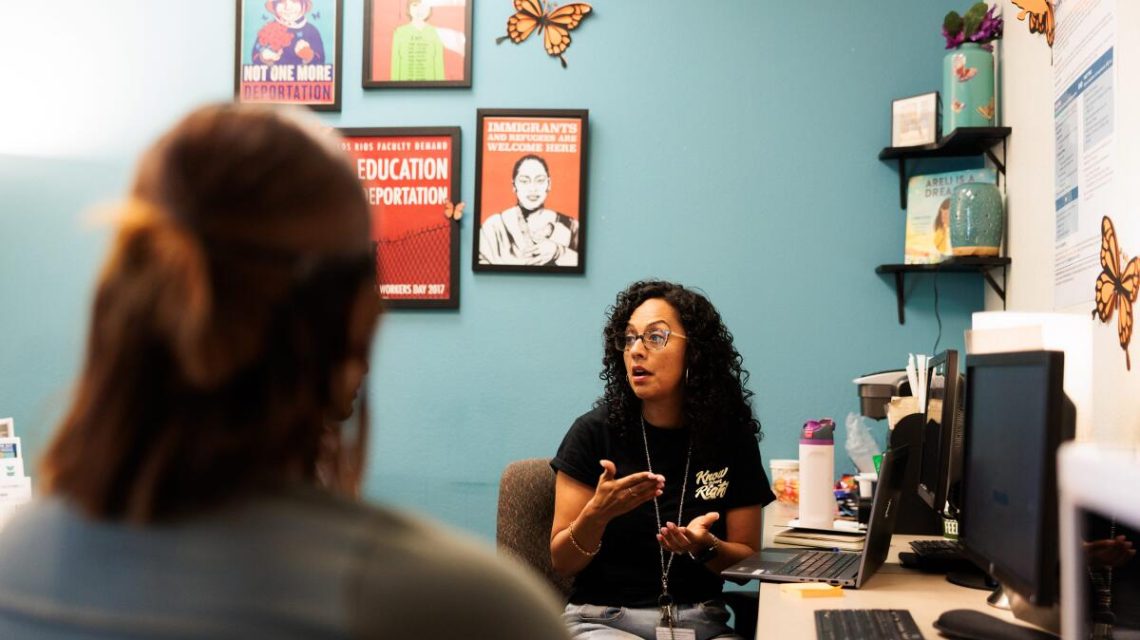
At Folsom Lake College, a flier informs students without legal status that they can pursue higher education despite political challenges. It encourages perseverance, saying, “Keep going.” Nearby, Alicia Alejo manages the Undocu-Falcons Center, providing support like legal assistance, mental health services, food pantries, and financial aid. During Trump’s deportation policy, Alejo notes students are less involved in campus life, often choosing online classes.
California stands out nationally for supporting undocumented students. The state offers in-state tuition and financial aid under the California Dream Act, covering community college fees and requiring staff support for undocumented students. Despite these efforts, applications for state financial aid from undocumented students have decreased, influenced by Trump’s immigration enforcement and the decline of the Deferred Action for Childhood Arrivals (DACA) program.
The Department of Justice has challenged California and 16 other states over tuition aid for undocumented students, causing hesitancy in pursuing higher education. Christian Espinoza, a former undocumented student, illustrates this struggle. After excelling in high school, he transferred to UCLA where he benefited from scholarships and programs like the UndocuBruins Fellowship. However, after being detained by Immigration and Customs Enforcement, he left the U.S. due to ongoing immigration challenges following Trump’s election.
Without work permits, undocumented students face difficulties in securing internships or jobs. California universities and lawmakers have developed non-federal employment opportunities. Dream Summer awards fellowships for students at social justice organizations, while UC has faced legal challenges regarding their employment of undocumented students. Despite advocacy and legal rulings, UC has not hired undocumented students.
Proposed legislation advocates for campus jobs for undocumented students, potentially leading to state employment post-graduation. Educators promote entrepreneurial skills, as undocumented individuals can legally operate businesses in the U.S. Initiatives aim to keep students enrolled, emphasizing the potential loss of talent without such support.
Overall, California’s efforts help undocumented students pursue education, but legal and policy challenges remain hurdles for many.
Villarreal writes for The Hechinger Report, an organization focused on education inequality and innovation.
 U.S. Economic Isolation Strategy for Iran Faces Resistance from China
 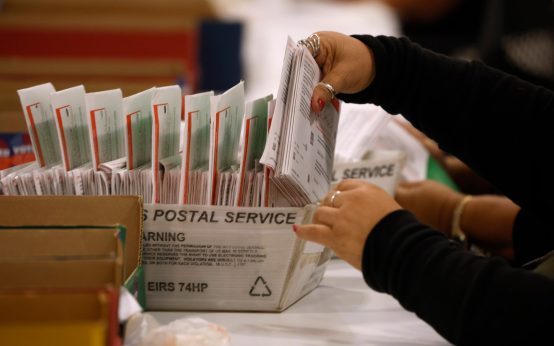 Trump’s Struggles with Mail-in Voting Regulations
  Supreme Court’s Decision on Mail-in Voting Sparks Controversy
  The Latest Developments in U.S. Politics and Policy
  Abdul El-Sayed and Jesse Watters Clash Over Key Issues in Michigan Senate Race
  The U.S.-Canada Trade Dispute and Lessons in Coercive Diplomacy