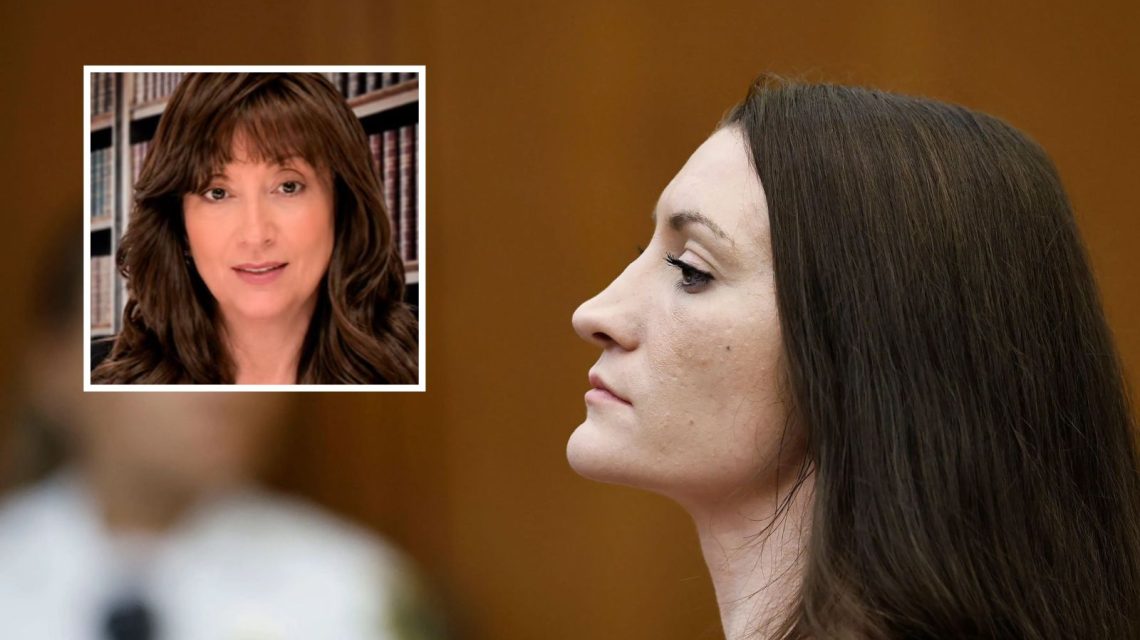
As the murder trial of Lindsay Clancy draws to a close, a civil rights attorney closely following the case has shifted her perspective on Clancy’s criminal responsibility. Weeks of testimony have influenced her belief, and she suggests this might likewise impact the jurors.
Clancy stands accused of murdering her three young children at their Massachusetts home in January 2023, subsequently attempting suicide. Her defense claims she was afflicted by postpartum psychosis and experiencing command hallucinations, making her unable to comprehend the wrongfulness of her deeds. Prosecutors argue Clancy, despite facing severe mental-health issues, remains culpable for the homicides.
Shari Karney, a civil rights attorney and victims’ advocate, initially backed the notion of Clancy’s criminal responsibility. Through testimony, however, including evidence on Clancy’s declining mental health, Karney now endorses the defense’s argument concerning Clancy’s psychosis.
Karney’s evolved viewpoint emerged as the prosecution’s final witness, forensic psychiatrist Dr. Gregory Saathoff, presented in court. During cross-examination, defense attorney Kevin Reddington highlighted discrepancies in prosecutor Shanan Buckingham’s opening characterization of Clancy’s awareness and treatment-seeking behavior, with the prosecution’s expert witness Saathoff conceding this minimized the reality of Clancy’s circumstances.
Karney initially perceived deliberate actions but her view altered after hearing testimonials from medical professionals. She ultimately accepted the defense’s argument that Clancy experienced psychosis, command hallucinations, and a breakdown of reality.
The trial centers on Clancy’s criminal responsibility, where her defense acknowledges Clancy’s actions but asserts postpartum psychosis impaired her understanding. Meanwhile, prosecutors argue Clancy still comprehended her actions.
The prosecution’s argument is backed by Saathoff, who maintains Clancy’s methodical nature during the incident and questions her claims of hearing voices.
Karney’s concern extends beyond Clancy’s case. She highlights grave gaps in Clancy’s mental health care, noting Clancy sought treatment extensively yet her care remained fragmented. Despite her appeals for help, coordination between her various healthcare providers was lacking, impacting her treatment negatively.
Karney critiques the telehealth approach in Clancy’s treatment, arguing that severe psychiatric symptoms warranted direct, intensive evaluation.
Furthermore, Karney suggests gender roles may have influenced the handling of Clancy’s symptoms, claiming women’s mental health complaints relating to postpartum conditions often face dismissive treatment.
Karney relates Clancy’s case to the Andrea Yates case from 2001, stating lessons remain unlearned, raising doubts about coordinated care and preventive measures.
The trial raises significant questions regarding postpartum mental health, psychiatric treatment coordination, and legal interpretations. With testimonies wrapped up, closing arguments are anticipated.
Five Quick Takeaways From the Lindsay Clancy Trial:
- The trial seeks to unravel Clancy’s criminal responsibility amid mental health issues, not the act itself.
- Clancy’s repeated attempts for psychiatric help have served as crucial defense arguments.
- Discrepancy in expert testimony about Clancy’s mental status highlights defense-prosecution contrast.
- A prosecution expert’s concession challenges the portrayal of Clancy’s mental health journey.
- The trial initiates broader discussions on mental health care systems and legal processes.
Clancy’s trial unfolds within Plymouth Superior Court, Massachusetts, attracting significant attention. Clancy has not testified, relying instead on expert medical witnesses.
Clancy’s possibility of acquittal depends on whether jurors deem her mentally capable during the crimes. Massachusetts law stipulates that individuals found not criminally responsible can be committed to psychiatric facilities under court supervision. The trial’s closing phases loom with jurors soon deliberating on the core dispute: Clancy’s mental condition when committing the acts.