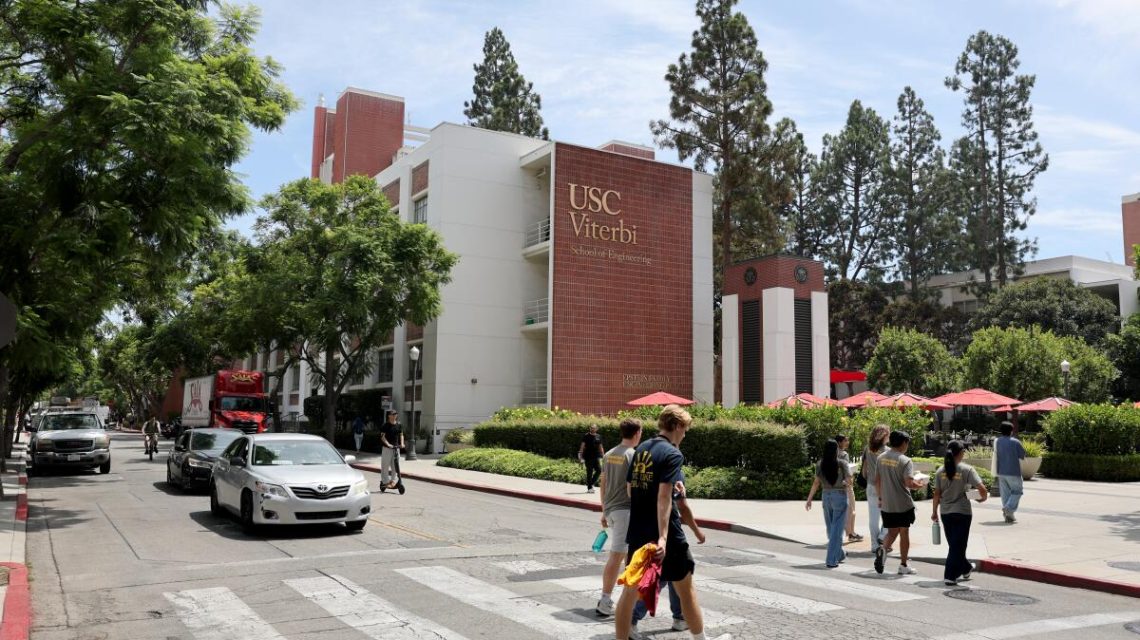
The University of Southern California (USC) and the University of California, Los Angeles (UCLA) are integrating artificial intelligence (AI) and digital innovations into their academic offerings as the new school year begins. They are introducing AI-focused majors and initiatives, anticipating that these programs will equip students with skills that match job market demands.
AI Programs at USC and UCLA
USC’s Viterbi School of Engineering is debuting an undergraduate degree in artificial intelligence. This degree is offered through the Mark and Mary Stevens School of Computing and AI, part of the engineering faculty. Over four years, students will learn to develop AI technology applicable in diverse fields such as drug discovery, robotics, and agriculture. An ethics course is a curriculum requirement.
In contrast, UCLA has launched what it describes as the country’s first standalone Department of Digital Humanities. This program introduces a bachelor’s degree in digital humanities, integrating AI and digital tools with areas like sociology, archaeology, and history studies.
These initiatives are part of a broader trend in higher education across California and the United States. Universities are adjusting to new technologies many students have engaged with through chat bots or social media. Campuses like USC and the University of San Francisco are teaching students to create AI systems, while others focus on how AI can serve society. Ethics courses remain an integral part of these programs to address concerns about AI-related ethical issues.
Other California Universities’ Approaches
UC Santa Barbara is introducing an AI major, and San Diego State University started an AI and human responsibility bachelor’s degree last year. This combined focus on computer science and AI ethics is unique among California State University campuses.
Although major AI degrees aren’t offered at every campus, some institutions are embedding AI education within existing programs. Notably, Stanford and UC Berkeley don’t have standalone AI degrees at the undergraduate level. Berkeley does offer a master’s degree in artificial intelligence and machine learning, in addition to having AI as one of several computer science tracks. Caltech takes an integrated approach, embedding AI learning across various fields without setting apart an AI major.
Insights from Education Experts
“They’re meeting market demand,” said Michael Horn from the Harvard Graduate School of Education. He emphasized universities’ efforts to keep education relevant to student and employer needs.
Engineering programs promote AI majors as more than mere coding courses, while humanities programs emphasize bridging technology with liberal arts. While the success of these new degrees remains to be verified, there is a concern about the longevity of such programs given the rapid pace of technological advancements.
Practical Application of AI Learning
USC freshman Duncan Deng illustrates applied AI learning. As a robotics enthusiast, he explored the use of image recognition technology in agricultural processes, demonstrating potential labor savings in crop pollination. Deng’s aim is to innovate within agriculture by leveraging AI.
Erik Johnson, USC Viterbi’s vice dean, outlined USC’s ongoing AI initiatives, highlighting their intent to teach students not only to use but also design AI systems. Ethical considerations are embedded in the curriculum, covering topics such as responsibility for self-driving car incidents and bias in policing algorithms.
Murali Annavaram, an engineering professor, compares AI to calculators, emphasizing the need for students to critically evaluate AI model outputs. Employers seek engineers who can efficiently and accurately apply AI tools.
UCLA’s Digital Humanities Expansion
UCLA’s new department is an extension of their well-received digital humanities minor. Demand has justified developing it into a full department, capitalizing on Los Angeles’s status as a media, tech, and arts hub.
Alexandra Minna Stern, UCLA Humanities Division dean, described the program as providing critical and historical perspectives on AI. The department prepares students to engage with AI ethically and creatively within the workforce.
Graduates like Cynthia Gong and Kedaar Sridhar have found the digital humanities minor beneficial in their careers. These courses have equipped them with unique skills integrated into various professional settings, such as real estate and tech companies.
 Sally Yates Leads Cornell Investigation Amid Sexual Assault Allegations
  Teaching My Daughter to Stand Up Against Bullying
  Scrutiny Intensifies on Cornell University’s Rape Allegations
  Headmaster Encourages Students to Speak Up
  Chicago’s Historic Election for School Board President
  Students Rally Against Sexual Violence